Discover the 10 cities of the Brazilian fruit circuit near São Paulo
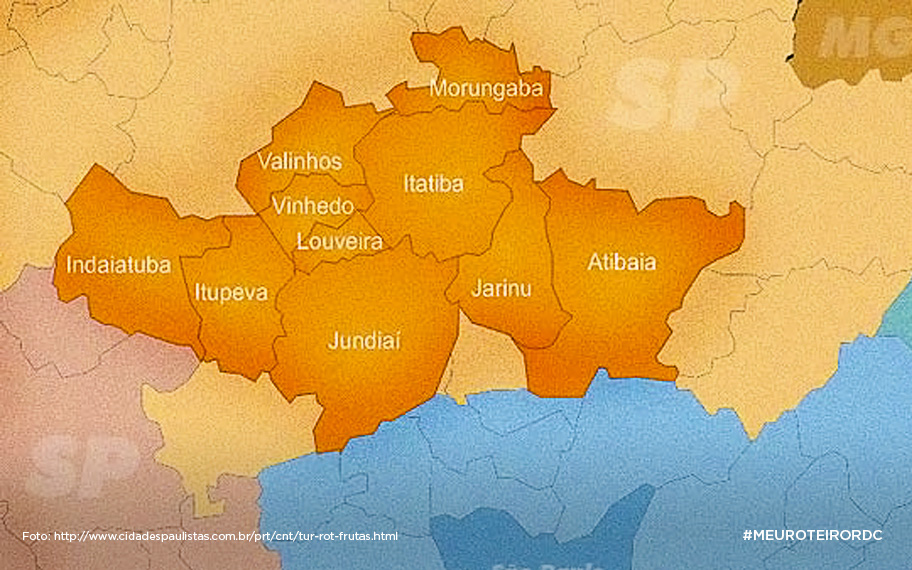
Comprised of the cities of Atibaia, Indaiatuba, Itatiba, Itupeva, Jarinu, Jundiaí, Louveira, Morungaba, Valinhos, and Vinhedo, the Fruit Circuit is known for its many rural properties and has gained fame over the years for the numerous festivals that celebrate regional products.
You have likely heard of the Grape, Strawberry, or Persimmon Festivals.
If not, we will highlight below the main attractions of each of these municipalities in the São Paulo interior.
Origin of the Tourism Hub
As expected in a region with a diverse agricultural output, the gastronomy is rich and of excellent quality.
The immigrants who settled in the area to work on the plantations brought their customs and food habits, especially those of Italian origin.
The region began to be identified as the Fruit Route during the 1990s, and in 2000, the Rural Tourism Association of the Fruit Circuit was officially founded.

This idea emerged due to the area’s prime location (between São Paulo and Campinas), which began attracting many people interested in living there.
The rural property owners saw an opportunity to open their doors to visitors, seeking new sources of income.
After drawing the attention of public authorities, the Tourism Hub of the Fruit Circuit was officially created on October 2, 2002.
How to Get There and the Best Time to Visit
Being close to the São Paulo capital, the circuit offers short trips (or day trips) as an option for those wishing to learn more about this region.
It is easily accessible by car or bus from São Paulo, via the Bandeirantes Highway and Via Anhanguera.
Buses leave from the Tietê or Barra Funda stations depending on the final destination.
Visitable all year round, the area has a pleasant climate conducive to fruit cultivation, which pleases visitors.
Cities that are Part of the Fruit Circuit
Atibaia
Located just 60 km from São Paulo, Atibaia promises a delightful visit for all kinds of visitors.
It’s a major strawberry producer and hosts the Strawberry Festival and Flower Festival.
For a taste of these delicious fruits, consider a visit to Empório dos Morangos, known for their pesticide-free, semi-hydroponic, and sustainable cultivation.
The region also offers horse farms (like Haddad and Scarelli) for riding and animal interaction, numerous fishing ponds, and wineries.
For lunch, a stop at Fazenda Paraíso is worth it for a delicious meal in a family-friendly atmosphere.
Surrounded by the Mantiqueira Mountains, the municipality boasts beautiful landscapes at places like Edmundo Zanoni Municipal Park and Major Lake.
For a complete view of the surroundings, climbing Pedra Grande in Itapetinga State Park, an environmental conservation unit, is highly recommended.
History lovers should visit the city’s historical center and Estação Atibaia.
Also, don’t miss the regional handicrafts at the Artisan’s Hall or at the Arte com as Mãos store, located near the Fernão Dias highway.
Indaiatuba
Known as the City of the Sun, Indaiatuba is about 79 km from the São Paulo capital and is chiefly known for its organic grapes and acerola production.
The municipality organizes celebrations like the United Nations Festival, offering traditional dishes, and the Tradition Festival, held in the charming Swiss community of Helvetia, founded in 1888, which preserves its ancestors’ traditions.
Worthy visits include the Itaici Monastery, composed of a church and eight chapels surrounded by beautiful gardens, and the Pau Preto House, a construction dating from the early 19th century that was listed as a heritage site in 2008.
One of the major attractions is the Water Park, featuring lakes, waterfalls, walking and biking trails, a zoo, and an aquarium.
The Ecological Park, covering a broad area of the city, offers gardens, paddle boats, and a children’s park, hosting various sports and cultural events.
The city also has museums like the Water Museum, located at the Cupini Water Intake Reservoir and intended to be a reference in environmental education, and the Railway Museum, a guaranteed hit with children.
Itatiba
Known as Princess of the Hill due to its rugged terrain, Itatiba is a charming city about 80 km from São Paulo.
With beautiful natural scenery and rich historical heritage, the municipality is a major producer of persimmons and hosts a festival in honor of the fruit.
Other known celebrations include the traditional San Genaro Festival.
Rural tours, such as at Fazendinha Cheiro do Mato, offer animal interactions and experiences like tractor rides.
A highlight is Fazenda Pereiras, known for its historical and geographical wealth, and a chapel.
Here, you can hike and explore local biodiversity.
Another highlight is a workshop for building musical instruments. For fruit plantation tours, visit Sítio São José for food tasting and purchase delights like jams and jellies.
For a panoramic view of the city, ascend to Luiz Carlos Boer lookout. Nature enthusiasts can explore the city parks, such as Ferraz Costa Park, Antonio Fattori Linear Park, and Luiz Latorre Park.
A popular visit, especially for those with children, is Zooparque Itatiba, Brazil’s largest private zoo with 500,000 m² of green space and over 1,200 animals.
Itupeva
73 km from São Paulo, you’ll find Itupeva, a former district of Jundiaí that sought independence to improve living conditions for its residents.
A significant attraction in the region is Sítio Sassafraz, offering interaction with various animals like horses, chickens, pigs, sheep, and ducks.
Visitors can pick organic fruits, vegetables, and herbs at a small cost.
The ranch also offers a colonial breakfast and picnic boxes (to be enjoyed on the premises).
Another attraction is Apiário Nona Emília, at the foot of the Serra do Japi, with over 30 years of existence, offering rural and educational tourism options.
Itupeva also features attractions like Wet’n Wild water park, SerrAzul Shopping Mall (built suspended on the Rodovia dos Bandeirantes), and the Outlet Premium, an open-air mall promising good prices in over 140 stores.
Jarinu
About 80 km from the capital is Jarinu, a cozy country town with bucolic landscapes, known for its strawberry production, hosting a festival in its honor, along with other fruits like grapes, peaches, pitaya, and atemoyas.
Home to various wineries and distilleries that tourists can visit, the town also offers fishing ponds and a large number of farms.
Some welcoming visitor sites include Sítio Boa Vista, known for dairy production, Rancho do Vale for fishing and horse riding, and Sítio Pauletto with a snack bar, winery, orchid house, trails, and
More: Brazil news in English, every day from The Rio Times.
This article was produced by The Rio Times’ automated newsroom system. How we use AI · Report an error · Editorial responsibility: Matthias Camenzind, Editor-in-Chief
Living in or visiting São Paulo? See this month's events and our São Paulo city guide with rents, safety and upcoming concerts.