China’s A.I. Ambitions Face Reality Check as Funding Gap Widens
(Analysis) Tech industry data reveals Chinese AI companies DeepSeek and Alibaba have positioned themselves as contenders in the global artificial intelligence race, though experts increasingly question whether the hype matches reality.
DeepSeek captured headlines with claims its R1 model performs comparably to GPT-4 while costing merely $5.6 million to develop. This remarkable cost-efficiency narrative has sparked both interest and skepticism in global tech circles.
DeepSeek‘s pricing strategy—AI services at $0.55 per million input tokens versus $15 from competitors—triggered widespread price cuts across China’s tech sector but raised questions about sustainability and true capabilities.
The funding disparity between the US and China tells a revealing story often overshadowed by breakthrough announcements. US private AI investment reached $67.2 billion in 2023 compared to China’s $7.8 billion.
Over five years (2019-2023), the US invested approximately $328.5 billion while China invested $132.7 billion—about 60% less. Industry analysts increasingly doubt claims that Chinese companies can achieve comparable AI outcomes with dramatically less funding.
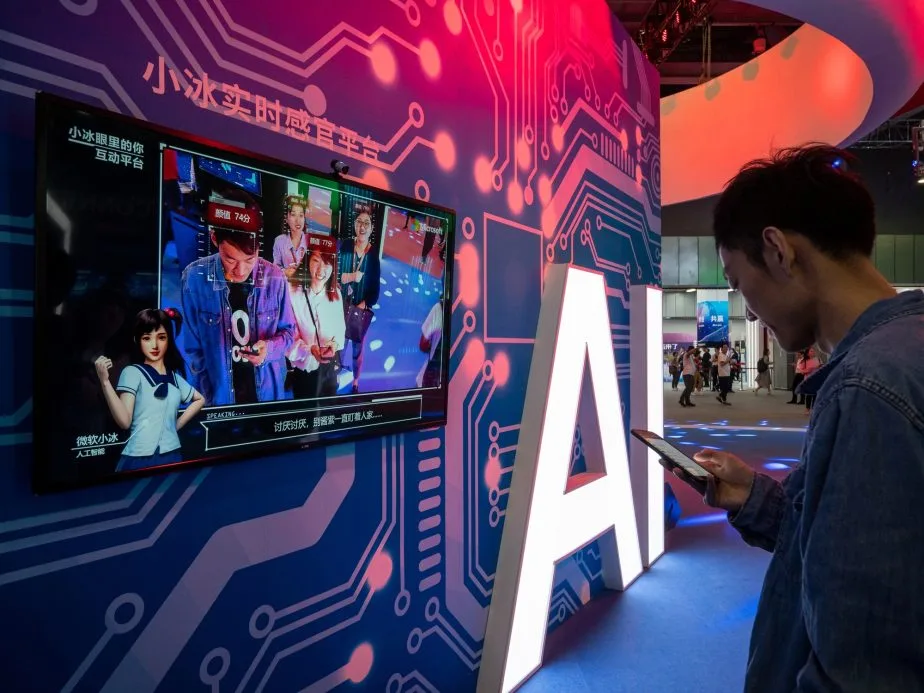
This skepticism mirrors long-standing concerns about other Chinese official figures, including GDP growth rates and defense spending transparency. Alibaba continues aggressive AI investment despite these doubts, recently partnering with Apple to integrate its models into Chinese iPhones.
China’s AI Investment Slows Sharply as U.S. Dominates
Yet the hard numbers remain stark: China recorded just $917.8 million across 100 AI deals in early 2025, far below the $2.6 billion invested during Q1 2024, while the American market vastly outpaced this with $100.5 billion in 2024.
Chinese authorities have responded to this gulf by establishing a state venture capital fund expected to mobilize 1 trillion yuan ($138 billion) over 20 years. This government-driven approach differs fundamentally from the US private-sector model, raising questions about innovation efficiency and commercial viability.
The broader Asia-Pacific region shows promising momentum despite these concerns. India has emerged as Asia’s second-largest AI investor, surpassing both South Korea and Japan with $222.8 million in deals by mid-March.
Chinese companies remain publicly committed to AI development, with 87% planning increased investments this year. However, observers increasingly question whether China’s AI sector can deliver on its ambitious promises without dramatically increasing funding or admitting the reality gap between headline-grabbing announcements and competitive capabilities.
Live Company IntelligenceGrupo Aeroportuario del Pacífico S.A.B. de C.V — the full investor dossier
Valuation & profitability
Price & risk
$338.3552-wk high
$512.65
Revenue trend · 6y
Ownership
Dividend
This article was produced by The Rio Times’ automated newsroom system. How we use AI · Report an error
Read More from The Rio Times