China has moved to protect its lead in electric vehicle (EV) technology by placing new export restrictions on key lithium battery processes.
The updated rules, issued on July 15, 2025, block the sale of advanced manufacturing techniques used in next-generation battery materials and lithium extraction. Companies must now get government approval to ship these technologies abroad.
Finished batteries and equipment can still be exported without limits, but the complex know-how behind them – including how to make high-performance materials for longer-lasting and cheaper batteries – will be kept inside China.
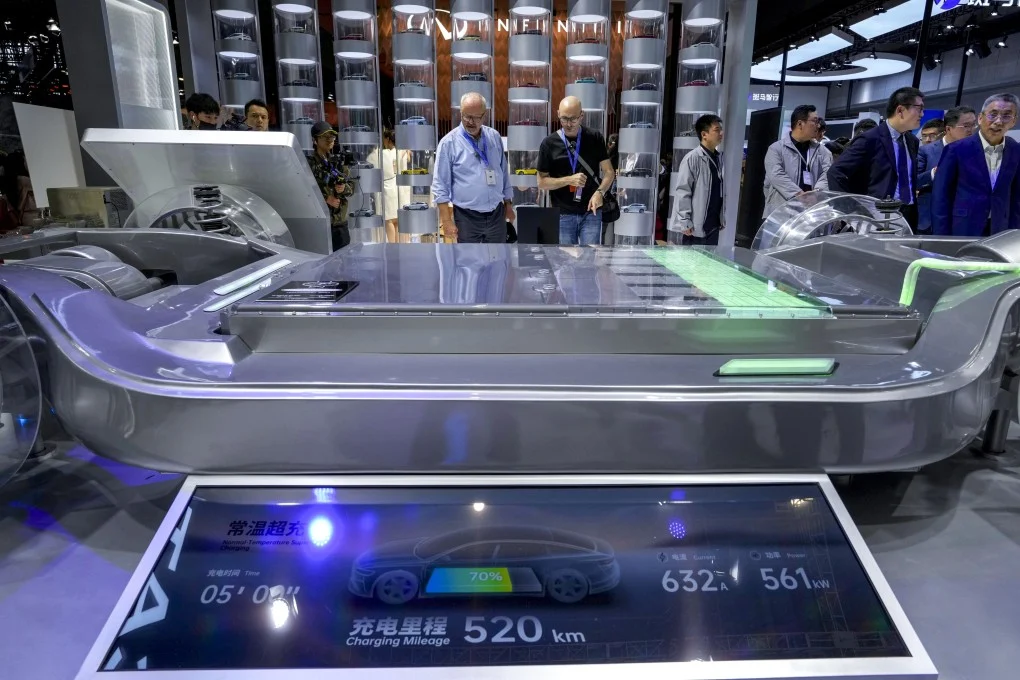
The changes target technologies used to produce LFP (lithium iron phosphate) and LMFP (lithium manganese iron phosphate) battery components. These are safer and cheaper battery types that power most EVs sold in China.
According to the China Automotive Power Battery Industry Innovation Alliance, about 75% of all new EVs sold in China in 2024 used LFP batteries. That battery type also captured 60% of the worldwide EV market last year.
The restrictions also cover methods to extract lithium from hard rock and low-quality brine sources. These techniques help Chinese companies cut costs and secure lithium without relying on high-purity raw materials.
That has been a major reason for their dominance in global battery supply. By locking these industrial secrets behind legal barriers, China aims to stop other countries from copying its battery breakthroughs.
Governments in the U.S., Japan, and South Korea have all announced plans to make more batteries locally, but China’s move creates a serious roadblock. Without access to the latest know-how, building truly self-sufficient battery industries outside China will take longer and cost more.
The technology China now controls includes innovations that help batteries last through over 1,000 charges while keeping 97% of their original power – a benchmark for long-life, low-failure EV performance.
These next-generation technologies are not yet common in mass production, which signals that China is thinking ahead and protecting its future lead. China described the new rules as a way to safeguard national security and protect economic development.
But it’s also clear this is about holding on to control. As the EV market grows, having a grip on the best battery tech means gaining leverage over who powers the transition to electric cars worldwide.
China is not closing the door entirely. It will still sell finished batteries and work with foreign partners. But it now decides who gets access to the know-how powering the EV revolution — and who does not.
That puts the rest of the world in a race to either catch up or stay dependent. This policy may not affect battery supply today, but it shapes who will lead tomorrow.
China Blocks Key Battery Tech to Keep Global EV Lead
China has moved to protect its lead in electric vehicle (EV) technology by placing new export restrictions on key lithium battery processes.
The updated rules, issued on July 15, 2025, block the sale of advanced manufacturing techniques used in next-generation battery materials and lithium extraction. Companies must now get government approval to ship these technologies abroad.
Finished batteries and equipment can still be exported without limits, but the complex know-how behind them – including how to make high-performance materials for longer-lasting and cheaper batteries – will be kept inside China.
The changes target technologies used to produce LFP (lithium iron phosphate) and LMFP (lithium manganese iron phosphate) battery components. These are safer and cheaper battery types that power most EVs sold in China.
According to the China Automotive Power Battery Industry Innovation Alliance, about 75% of all new EVs sold in China in 2024 used LFP batteries. That battery type also captured 60% of the worldwide EV market last year.
The restrictions also cover methods to extract lithium from hard rock and low-quality brine sources. These techniques help Chinese companies cut costs and secure lithium without relying on high-purity raw materials.
That has been a major reason for their dominance in global battery supply. By locking these industrial secrets behind legal barriers, China aims to stop other countries from copying its battery breakthroughs.
Governments in the U.S., Japan, and South Korea have all announced plans to make more batteries locally, but China’s move creates a serious roadblock.
Without access to the latest know-how, building truly self-sufficient battery industries outside China will take longer and cost more.
The technology China now controls includes innovations that help batteries last through over 1,000 charges while keeping 97% of their original power – a benchmark for long-life, low-failure EV performance.
These next-generation technologies are not yet common in mass production, which signals that China is thinking ahead and protecting its future lead. China described the new rules as a way to safeguard national security and protect economic development.
But it’s also clear this is about holding on to control. As the EV market grows, having a grip on the best battery tech means gaining leverage over who powers the transition to electric cars worldwide.
China is not closing the door entirely. It will still sell finished batteries and work with foreign partners. But it now decides who gets access to the know-how powering the EV revolution — and who does not.
That puts the rest of the world in a race to either catch up or stay dependent. This policy may not affect battery supply today, but it shapes who will lead tomorrow.
This article was produced by The Rio Times’ automated newsroom system. How we use AI · Report an error
Read More from The Rio Times