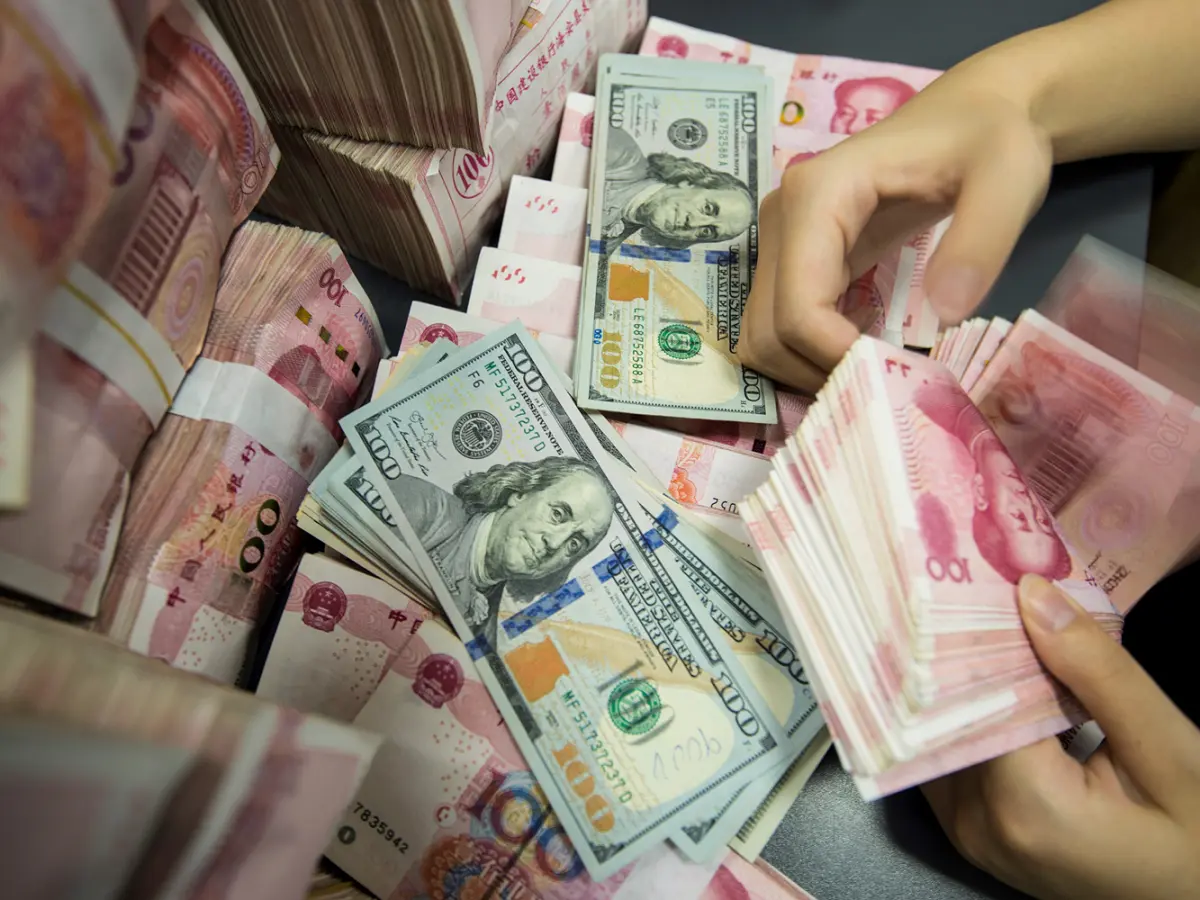
Hong Kong-listed companies are increasingly shifting borrowings from U.S. dollars to yuan. Divergent monetary policies in the U.S. and China drive this trend.
The U.S. Federal Reserve keeps high interest rates to combat inflation, while the People’s Bank of China maintains low rates to stimulate the economy.
Want Want China Holdings, a Taiwanese snack producer, exemplifies this shift. By March, it had cut U.S. dollar borrowings by 97%, reducing them to 123 million yuan ($16.9 million).
Simultaneously, yuan borrowings increased to 5.09 billion yuan. This strategic move aims to capitalize on lower interest rates.
The company’s annualized financing cost rose by 27% to 281.79 million yuan. Want Want monitor interest rate trends to manage costs effectively (Nikkei Asia).
Link Real Estate Investment Trust (REIT) also restructured its borrowing portfolio.
By March 2023, Link cut Hong Kong dollar borrowings by 70% to 9.3 billion HKD ($1.19 billion). Meanwhile, yuan borrowings increased more than fourfold to HK$23.96 billion.
This shift lowered its average borrowing cost, with the interest rate on yuan borrowings falling from 3.54% to 2.83%. Link also decreased overall borrowings by 9% to HK$55.22 billion.
Chow Tai Fook Jewellery Group followed suit, increasing yuan-denominated loans to HK$1.59 billion and cutting Hong Kong dollar loans by 57% to HK$2.53 billion.
Market Dynamics
The company reviews its capital structure regularly to balance costs and risks (Nikkei Asia).
These shifts are likely to continue due to the yield differential between currencies. Gary Ng, a senior economist at Natixis, highlights the appeal of yuan financing under current conditions.
Simultaneously, global investors are returning to Hong Kong markets. China’s efforts to resolve its property market crisis drive this return.
The Hang Seng Index has seen a significant rally, rising 11% in one month and 15% for the year.
Enhanced policy support for China’s property market and improved corporate earnings have boosted investor confidence.
Major companies like Tencent Holdings and JD.com reported strong first-quarter results.
Speculation about favorable regulatory changes, such as removing the 20% dividend tax on Hong Kong-traded stocks, also fuels optimism.
Leveraging Monetary Policies
This resurgence highlights the dynamic interplay between monetary policies, corporate strategies, and market conditions.
Companies leverage lower interest rates in China to reduce borrowing costs.
Investors are drawn to the recovering property market and attractive valuations in Hong Kong’s equity market.
China’s ongoing efforts to stabilize its economy through monetary easing and regulatory adjustments add to this trend.
These measures address structural challenges and stimulate growth, making Yuan financing more attractive.
The alignment of corporate borrowing strategies with investor interest reflects a strategic adaptation to global financial conditions.
This underscores the interconnectedness of international monetary policies and regional economic trends.
This article was produced by The Rio Times’ automated newsroom system. How we use AI · Report an error
Read More from The Rio Times