Brazil’s Real Estate Market Booms as One-Bedroom Units Lead Price Growth
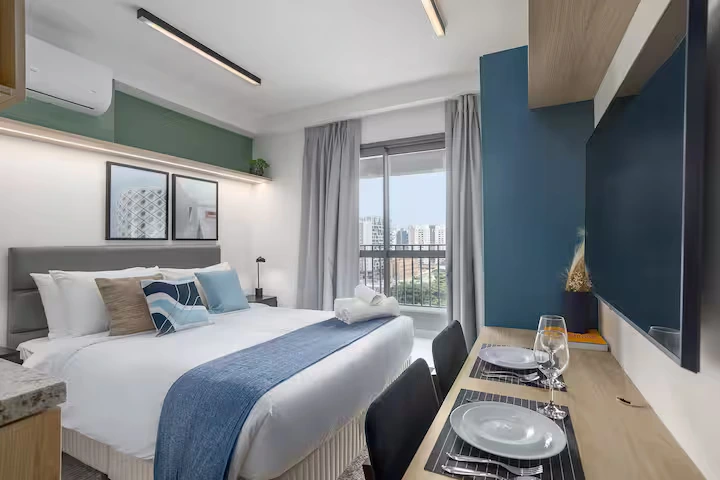
Brazil’s FipeZAP Residential Sale Index reveals one-bedroom properties surged 0.65% in March 2025, outpacing larger homes and marking a 2.16% quarterly rise.
Over 12 months, these compact units climbed 9.28%, reflecting shifting urban demand as younger buyers and single-person households prioritize affordability.
Cities in the Northeast led March’s 0.60% national price increase, with João Pessoa topping gains at 2.22%, followed by Salvador (1.69%) and Natal (1.49%).
Regional disparities highlight stark contrasts. Balneário Camboriú, a coastal Santa Catarina city, recorded Brazil’s highest square-meter price at R$14,334, while capitals like Vitória (R$12,920/m²) and São Paulo (R$11,497/m²) cemented their premium status.
Smaller properties now dominate sales, with two-bedroom units rising 0.62% and three-bedroom homes trailing at 0.54%. Analysts tie this to economic pragmatism: lower interest rates, stable inflation at 4.64%, and government housing programs like Minha Casa, Minha Vida have boosted accessibility for first-time buyers.
The broader market shows sustained momentum. Residential prices grew 7.73% in 2024—the strongest annual jump since 2013—before reaching a historic index high of 170.50 points in January 2025.
Brazil’s Real Estate Market
Yet challenges loom as prices outpace wage growth, squeezing middle-class budgets. Investors increasingly target one-bedroom rentals for higher yields, particularly in cities like Florianópolis and Cuiabá, where March prices rose 1.30%.
Demographic shifts underpin these trends. Urbanization and delayed family formation have elevated demand for compact, centrally located units. Meanwhile, mortgage rates dipping to 9% in late 2024 widened financing options, though stricter credit rules now threaten to exclude marginal buyers.
While luxury markets in cities like Rio de Janeiro stagnate, mid-tier hubs in the Northeast attract capital, fueled by infrastructure upgrades and growing service sectors.
This recalibration signals a structural market shift rather than a fleeting boom. Developers increasingly pivot toward high-density projects, betting on sustained demand for efficiency over space.
Yet affordability remains a fissure: as prices rise 2.5 times faster than inflation since 2020, policymakers face pressure to balance growth with housing equity. For now, Brazil’s real estate narrative centers on compact living—a reflection of economic realities reshaping where and how its urban population resides.
More: Brazil news in English, every day from The Rio Times.
This article was produced by The Rio Times’ automated newsroom system. How we use AI · Report an error · Editorial responsibility: Matthias Camenzind, Editor-in-Chief