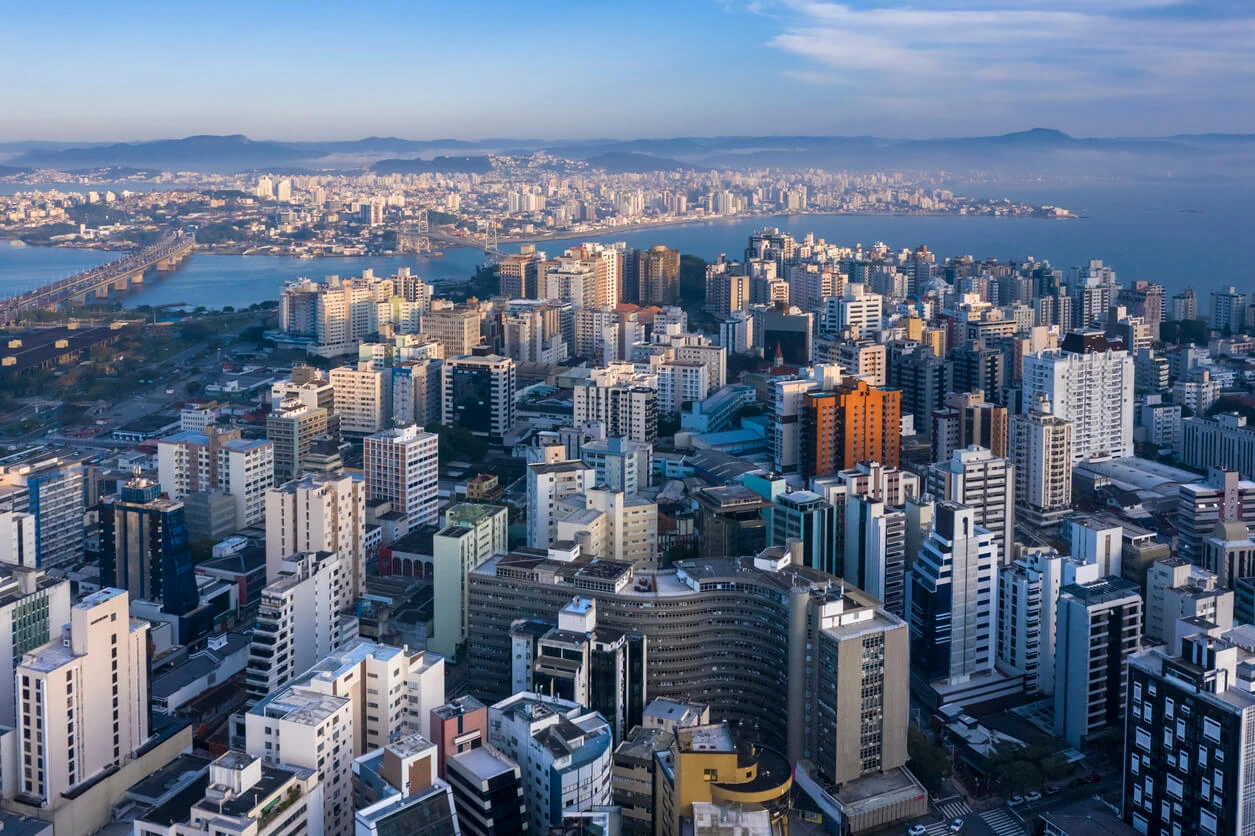
Goiânia and Florianópolis Rise as Real Estate Hotspots in Brazil
A new report by the Brazilian Chamber of Construction Industry (CBIC) highlights key trends in Brazil’s real estate market, revealing regional dynamics and shifting demand patterns.
The study, conducted in partnership with Sienge Ecosystem, CV CRM, and Grupo Prospecta, evaluated 61 cities using metrics such as housing demand, economic activity, and market saturation.
São Paulo leads the high-end real estate segment, followed by Goiânia and Florianópolis. In mid-range properties, Goiânia takes the top spot, while São Paulo and Florianópolis follow.
For affordable housing, Curitiba ranks first, with Fortaleza and São Paulo completing the list. Experts attribute São Paulo’s dominance in luxury markets to its established reputation and economic strength.
In contrast, Goiânia’s rapid growth stems from urban planning reforms and its strategic location for agribusiness. High-end real estate remains resilient against interest rate fluctuations due to its affluent clientele, who often purchase without financing.
Meanwhile, affordable housing relies on government programs like Minha Casa, Minha Vida, which offer fixed financing rates. The middle class feels the brunt of high interest rates, often opting for rentals instead of purchases.
Brazil’s Luxury Real Estate Market Thrives
Developers in São Paulo have capitalized on luxury demand with projects like Cyrela’s Vista Cyrela by Armani/Casa and Eden Park by Dror. These properties command prices in the millions of reais (e.g., R$28,000/$4,667 per square meter in 2017 to R$95,000/$15,833 per square meter today).
For example, units at Cyrela’s Heritage project launched at R$28,000/$4,667 per square meter in 2017 and now reach up to R$95,000/$15,833 per square meter. In Goiânia, local developers dominate the market with high construction quality.
Companies like Sousa Andrade have seen rapid growth; their high-end sales jumped from R$30 million/$5 million in 2023 to R$160 million/$26.7 million in 2024.
Florianópolis benefits from its proximity to Balneário Camboriú, Brazil’s most expensive residential market. It attracts both domestic and international investors seeking rental income.
Florianópolis-based ARV exemplifies this trend with projects like Privilége Cacupé, where units sell for R$2 million/$330,000. Between launch and delivery phases, properties in the region can appreciate by up to 40%. With plans for expansion through 2030, ARV aims to solidify its role in Brazil’s evolving real estate landscape.
More: Brazil news in English, every day from The Rio Times.
This article was produced by The Rio Times’ automated newsroom system. How we use AI · Report an error
Read More from The Rio Times