Brazilian Real Holds Firm as IOF Tax Debate Shapes Currency Markets
The Brazilian real opened the morning of June 4, 2025, steady against the US dollar at R$5.6387.
The previous session saw the real gain for a second consecutive day, closing at R$5.6358 after a 0.70% advance.
This performance diverged from global trends, as the dollar index (DXY) rose 0.58% against major currencies. Local factors, not global ones, set the tone for the real’s resilience.
The main driver remains the ongoing debate over the Imposto sobre Operações Financeiras (IOF), a tax on financial transactions.
President Lula and Finance Minister Fernando Haddad signaled openness to revisiting the recent IOF hike, pending fiscal reforms and congressional consensus.
This stance reassured markets and supported the real, as investors anticipate that a reduction or rollback of the IOF could boost capital inflows.
Haddad clarified that no changes would occur before a meeting with congressional leaders scheduled for Sunday.
The government’s earlier IOF increase, which affected a wide range of financial operations, sparked political backlash and remains under review.
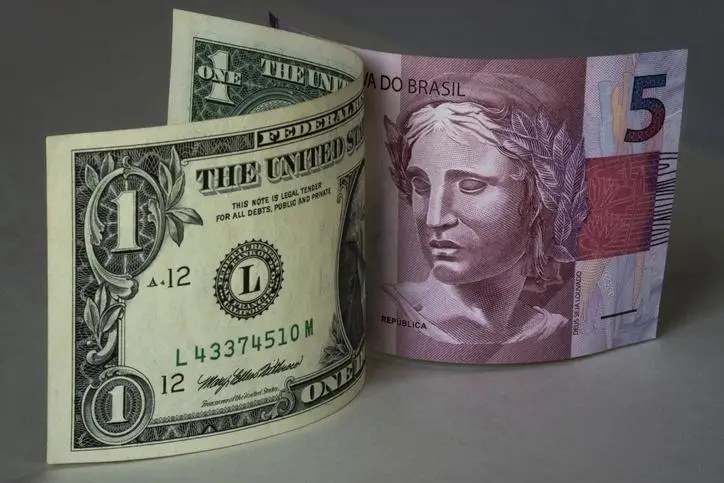
Brazilian Real Holds Firm as IOF Tax Debate Shapes Currency Markets
Market participants see the IOF debate as the key domestic risk, with the real’s direction hinging on the outcome.
On the international front, the dollar strengthened broadly due to strong US labor market data. The JOLTS report showed job openings at 7.391 million, beating analyst expectations.
Meanwhile, trade tensions between the United States, China, and the European Union remain unresolved.
The White House continues to monitor China’s compliance with recent tariff agreements, and a July 9 deadline looms for US-EU trade talks. These factors have kept global investors cautious.
Technical analysis of the USD/BRL 4-hour chart reveals a consolidation phase. The pair trades between support at R$5.63 and resistance near R$5.73.
The price sits below the 200-period moving average, indicating a bearish bias. Bollinger Bands show narrowing volatility, while the Ichimoku cloud and short-term moving averages suggest the market awaits a clear catalyst.
No significant volume spikes or ETF flows have been reported, reflecting a wait-and-see approach.
Brazil’s economic fundamentals remain stable. The country’s trade surplus, driven by strong commodity exports, underpins the real.
The Selic rate, at 14.75%, continues to attract carry trade inflows. Fiscal policy, however, remains a concern, with investors closely watching the government’s ability to deliver credible reforms.
The real’s recent gains reflect cautious optimism that the IOF tax may be softened. However, this optimism is tempered by political uncertainty and external risks.
The currency’s immediate direction will likely depend on the government’s next steps and the outcome of US labor data later this week.
For now, the market remains balanced, with traders watching both Brasília and Washington for the next move.
This article was produced by The Rio Times’ automated newsroom system. How we use AI · Report an error
LatAm Markets: Live Signals → — real-time movers, turnover leaders and FX across Latin America.
Read More from The Rio Times