Brazil · Defense
Key Facts
—The event. Brazil is set to launch its third locally built warship, the frigate Cunha Moreira, into the water on June 17, 2026.
—The yard. It is being built at the thyssenkrupp shipyard in Itajaí, in the southern state of Santa Catarina, by a Brazilian-German team.
—The class. The ship is the third of four Tamandaré-class frigates, a German MEKO design adapted and assembled in Brazil.
—The builders. A consortium named Águas Azuis groups Germany’s thyssenkrupp with Brazil’s Embraer Defense and the software firm Atech.
—The mission. The frigates will patrol the “Blue Amazon,” the vast stretch of ocean off Brazil that holds most of its offshore oil.
—The scale-up. Brazil has signed to double the program from four ships to eight, the largest surface-fleet renewal in decades.
Brazil floats its third Tamandare frigate this week, a German-designed warship built on home soil rather than bought ready-made, as the country presses one of the largest naval rebuilds in its history.
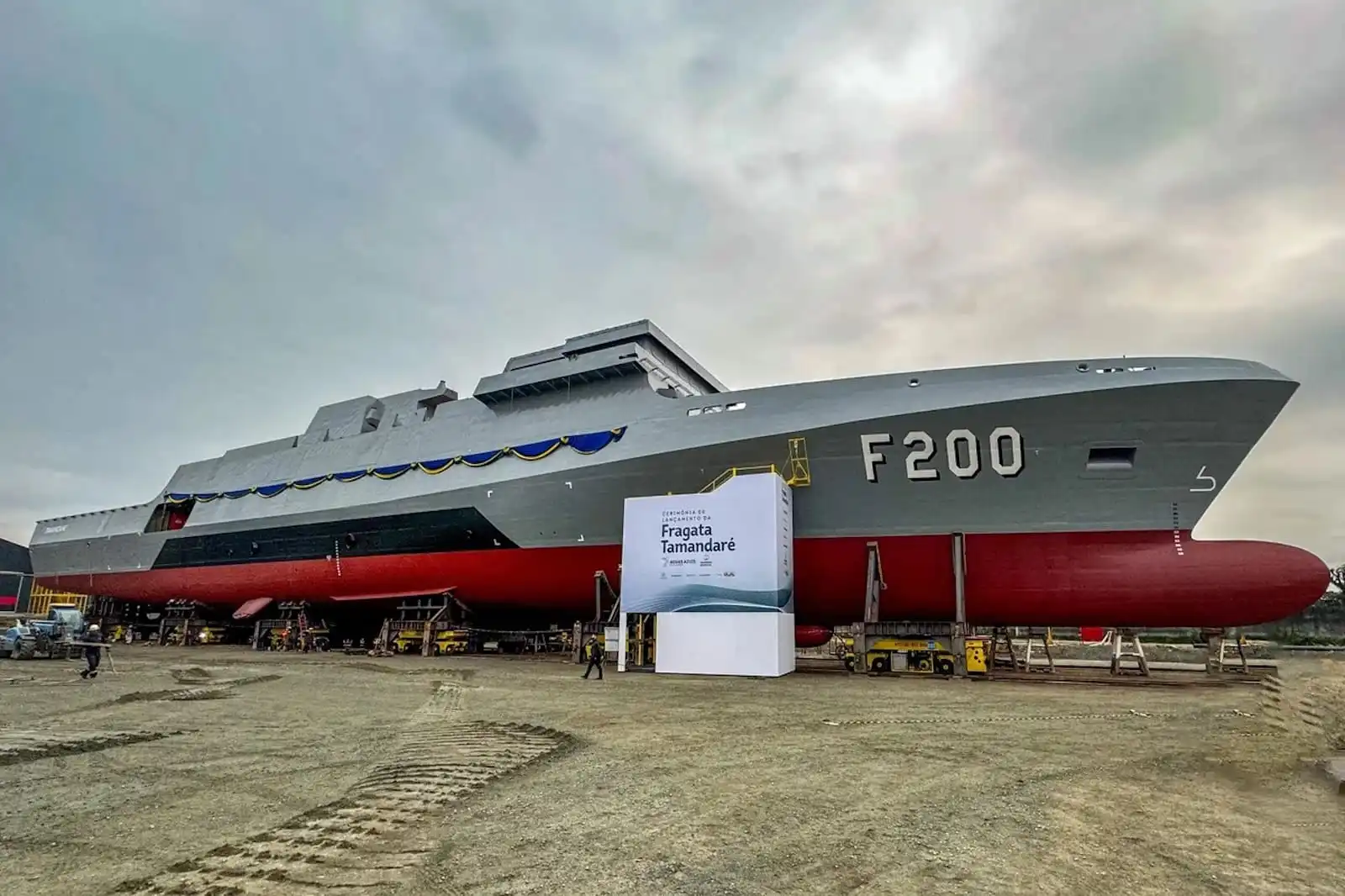
Brazil is about to put its third home-built warship in the water. On June 17, the frigate Cunha Moreira will be floated out at a shipyard in Itajaí, on the country’s southern coast.
A launch is the moment a ship’s hull first touches the sea. It is not the same as entering service; that comes later, after months of trials at the dockside and out at open water.
For a reader abroad, the headline is less the ship than the place it is being made. Brazil is building these warships itself, with foreign help, rather than ordering them finished from a yard overseas.
What the Tamandare frigate program is
The Cunha Moreira is the third of four warships in a class named Tamandaré, after a famous nineteenth-century Brazilian admiral. The ships are based on a proven German design known as the MEKO, then adapted to Brazil’s needs and assembled on Brazilian soil.
Each one runs to roughly one hundred and seven metres in length and around three and a half thousand tonnes. They are general-purpose escorts, able to fight other ships, defend against aircraft and carry a helicopter, with a crew of about one hundred and thirty.
The work is run by a consortium called Águas Azuis, Portuguese for Blue Waters. It pairs Germany’s thyssenkrupp, which supplies the design and shipbuilding know-how, with Brazil’s Embraer Defense and a local software house, Atech.
The lead ship, the Tamandaré itself, entered service in late April at a ceremony in Rio de Janeiro. It was the first warship of its kind built in Brazil in more than forty years.
Guarding the Blue Amazon
Brazil calls the waters off its coast the Blue Amazon, a nod to the size and value of the area. It stretches across millions of square kilometres and holds the bulk of the country’s offshore oil and gas.
That is the strategic logic behind the fleet. A long coastline and rich seabed need patrolling, and the navy has spent years short of modern ships able to do the job over such distances.
The new frigates are meant to replace an ageing line of escorts and give the navy more reach. They matter to investors too, because the same waters carry the pre-salt oil fields that drive much of Brazil’s export earnings.
Why building at home is the point
The deeper aim is industrial, not just military. By assembling the ships in Itajaí under a technology-transfer deal, Brazil is trying to build skills and jobs that outlast a single order.
The navy commander has framed the program as a way to train Brazilian firms in complex, sensitive technologies. That is the familiar trade-off of such deals: a higher price and a slower pace in return for know-how that stays in the country.
The bet is now being doubled. Brazil has signed a memorandum to build a second batch of four more frigates, which would take the class from four ships to eight.
The fourth and final ship of the first batch is due to have its keel laid later this year. On current plans, the Cunha Moreira itself should enter service around early twenty twenty-eight, after its sea trials are done.
For now, the milestone is simpler. A warship designed abroad but built by Brazilian hands is about to meet the water, the third in a line the country hopes will keep growing.
Frequently Asked Questions
What is being launched on June 17?
Brazil is floating the Cunha Moreira, the third of four Tamandaré-class frigates, at the thyssenkrupp shipyard in Itajaí. A launch puts the hull in the water, with trials and entry into service still to come over the following months and years.
Who is building the ships?
A consortium called Águas Azuis builds them, pairing Germany’s thyssenkrupp with Brazil’s Embraer Defense and the software firm Atech. The design is a German MEKO type, adapted and assembled in Brazil under a technology-transfer arrangement.
Why does the program matter beyond Brazil?
The frigates will patrol the Blue Amazon, the offshore zone that holds most of Brazil’s oil and gas, so they touch the security of a major energy exporter. Building them at home also signals Brazil’s push to grow a domestic defense industry rather than rely on imports.
Connected Coverage
Brazil’s Submarine Leap: From French Diesels to a Home-Grown Nuclear Boat
This article was produced by The Rio Times’ automated newsroom system. How we use AI · Report an error · Editorial responsibility: Matthias Camenzind, Editor-in-Chief
Read More from The Rio Times