Machu Picchu is in ‘free fall’ without tourists after protests in Peru
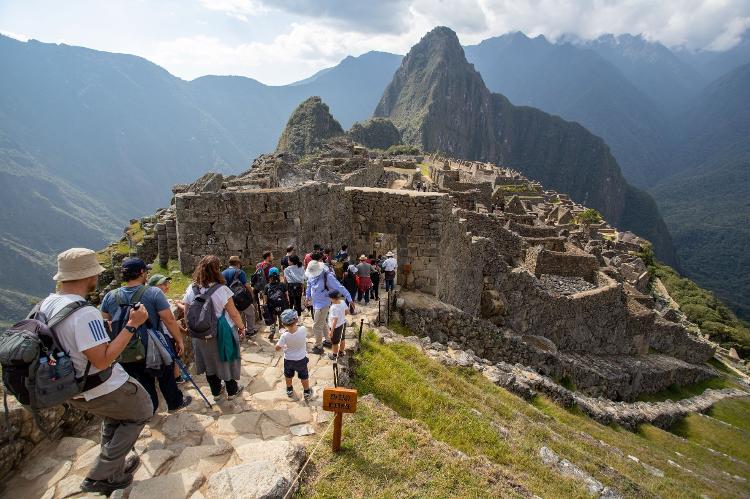
Empty, the entrance gate to Machu Picchu in Peru is a portrait of a country where violent protests have scared away tourists since December 2022, affecting entire communities that depend on tourism in this popular destination.
“Look, there’s nothing; it’s empty,” says Juan Pablo Huanacchini Mamani, the “Inca,” who attends tourists dressed in traditional costumes of colorful fabrics, sandals, and golden ornaments that glisten in the sun.
The Andean country’s economy is based mainly on tourism, a major source of employment that attracted some 4.5 million visitors before the pandemic.

However, in a matter of weeks, the situation changed in Ollantaytambo, a town about 60 kilometers from Cusco, where about 4,000 visitors arrived daily during the high season to visit Machu Picchu.
Since the beginning of December, the protests that have rocked the country have left 54 dead.
The demonstrations are calling for the resignation of President Dina Boluarte, who took office after President Pedro Castillo was removed from office and arrested on December 7 for attempting to dissolve Parliament.
Amid the protests, the city that used to receive thousands of visitors now sees only about 100 people arrive on weekends.
These are the only two days allowed by the protesters, a concession so that residents can survive.

“We live on tourism (…) Now we are short of people. When there is tourism, all our people work in hotels, restaurants, and agriculture moves,” says Juan Pablo. Today, he adds, they live in a “deep crisis”.
“FREE FALL”
According to the Ministry of Tourism data, the crisis costs US$6.5 million daily, with an 83% drop in hotel occupancy.
The regional tourism director, Abel Alberto Matto Leiva, explains that in Cusco, “75% of the population works directly, or indirectly, with tourism” in “a chain” that includes “2,500 travel agencies,” food, lodging, and transportation.
Currently, 20,000 people are unemployed, which, according to him, “continues to increase,” with projections of reaching around 120,000 by March.
Amid the crisis, some 14,000 local artisans are expected to have their opportunities drastically reduced, officials say, representing thousands of traders with little or no income.
Without any help, artisans feel “totally forgotten,” says 67-year-old Filomena Quispe, 35 of them selling handicrafts in a small store near Cusco’s Plaza de Armas.
The situation also makes many store owners opt not to open their doors to cut costs.
“We are in free fall, and we don’t know when it will stop,” laments the Cusco Chamber of Hotels vice-president, Henry Yabar, who has also closed his establishment, a three-star hotel with about 15 rooms.
Yabar says that the political crisis has been a “fatal” blow to tourism and reports that there have been “95% cancellations” in hotel reservations.
According to him, of Cusco’s 12,000 hotels and inns, “between 25% and 30% (the smaller ones) have already gone bankrupt.”
He said he hoped the state would implement an emergency plan and make tax concessions for those affected by the situation.
“We have hope for an improvement in July,” Yabar added, “for those who survive.”
With information from UOL
This article was produced by The Rio Times’ automated newsroom system. How we use AI · Report an error · Editorial responsibility: Matthias Camenzind, Editor-in-Chief
Read More from The Rio Times