“The thousand days of Allende”: the Chilean series that seeks to revalue democracy
Sputnik spoke exclusively with Sergio Gándara, producer of the television series that will portray the years of Salvador Allende’s government until the 1973 coup d’état and which will be released to commemorate the 50th anniversary of the tragic events.
On May 15, filming began in Santiago on “The Thousand Days of Allende,” which will cover in its four episodes the years of the Popular Unity government, from Allende’s inauguration in 1970 until the coup d’état of September 11, 1973, led by General Augusto Pinochet, which ended with the suicide of the Chilean president and gave rise to the last civil-military dictatorship (1973-1990).
The production, directed by Nicolás Acuña (Los archivos del cardenal, El reemplazante), will star Alfredo Castro (No; El Club) as Salvador Allende and Benjamín Vicuña (Fuga, La memoria del agua) as Fidel Castro.
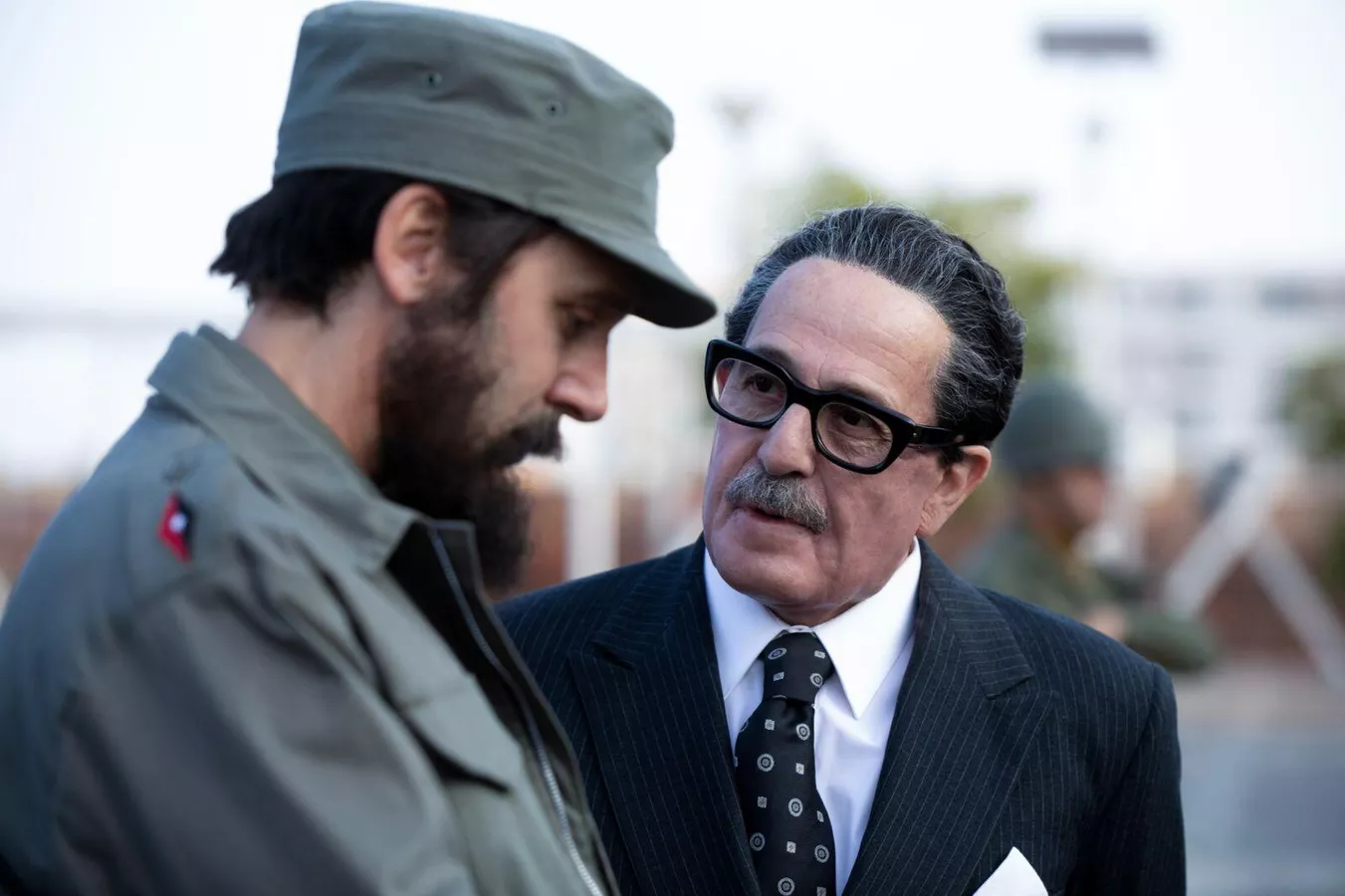
Although the start of the project was delayed longer than expected because of the Covid-19 pandemic, it was also necessary to wait for the end of Sebastián Piñera’s government (2010-2014 and 2018-2022) to begin filming, the series producer, Sergio Gándara, told Sputnik.
“We had to wait to raise state funds from the Chilean National Television Council for this project for the right-wing government to pass. Because we knew that in that context, it was very difficult for them to accept that this story existed,” explained the co-founder of the Chilean production company Parox.
“We saw it very difficult for ‘The Thousand Days of Allende’ to have state financing in the context of the Piñera government since we were coming from the social outbreak and with a major crisis, not only of the right-wing but of the legitimacy of politics,” he said.
The project, co-produced by Televisión Española, was also funded by the Ministry of Culture, Arts, and Heritage and Televisión Nacional de Chile, said Gándara.
THE ROLE OF ALLENDE’S POLITICAL ADVISOR
The series tells the story of the days of the Popular Unity Government – a conglomerate that united socialists, communists, and Chilean social movements – through the eyes of Spaniard Joan Garcés, who was Salvador Allende’s political advisor during his term in office.
Joan Garcés “is an expert political scientist and sociologist who has written extensively on Chile and was decisive in the 1998 arrest of [Augusto] Pinochet in London, representing the victims and summoning Judge Baltasar Garzón to arrest the dictator,” recalled Gándara.
“We had the opportunity to be with Joan at least three times during September 2022, and of course, we told her about the series.”
“We even talked about the possibility of the character having her name, but she told us that for that she would have to approve the scripts, which was unfeasible. So it is a character inspired by Joan Garcés, who is called Manuel Ruiz in our series”, he explained.
THE BEST CHILEAN ACTING
The cast of “The Thousand Days of Allende” is “the best of Chilean acting”, said the producer.
“We have a luxury cast to tell this story.”
In addition to the leading roles of Alfredo Castro and Benjamín Vicuña, the cast includes Aline Küppenheim playing Hortensia Bussi, Allende’s widow; Francisca Gavilán as Payita, Allende’s secretary; Daniel Alcaíno will play the role of Pinochet; Marcial Tagle as former president Patricio Aylwin (1990-1994) and Tito Bustamante will play former president Eduardo Frei Montalva (1964-1970).
“We realized that this story was of collective interest to Chilean artists, not just ours. In that sense, we have had a splendid availability on the part of the cast,” said Gándara.
PREMIERE AND DEBATE
The 50th anniversary of the coup d’état in Chile will be commemorated next September 11, the date on which the series will be premiered, said the producer.
In this sense, Gándara explained that it is a project that “has been urgent to create, finance, produce and premiere”.
Therefore, “our commitment with the public television of Chile, Spain, and Canal 9 of Argentina is to premiere it on September 11”.
When asked about the expectations in Chile with the premiere of the series and the impact it may generate, Gándara acknowledges: “Our idea is to revalue democracy, essentially”.
“We believe that Allende was a president who defended democracy and the institutional path above all, even renouncing his project to achieve the institutional path of deep social transformations and died in the attempt”, he considered.
Another debate “is the act of Allende’s death”, said Gándara.
The Chilean president killed himself after the military coup bombed La Moneda Palace, the seat of the Executive, on September 11.
“There opens a more philosophical and moral debate in the transcendence of his death. One thing was his capacity for political leadership and another his symbolic act that transformed him into a myth,” he concluded.
With information from Sputnik
News Chile, English news Chile, Chilean entertainment
Read More from The Rio Times