Brazil · Mining
Key Facts
—Pipeline. The Brazilian Mining Institute (IBRAM) forecasts US$76.9 billion in mining investments for the 2026–2030 cycle.
—Critical minerals. Strategic minerals including rare earths, lithium, and copper will receive US$21.3 billion, a 15.2% jump from the previous five-year outlook.
—Iron ore. Iron ore projects still command US$19.8 billion, roughly 26% of the total planned pipeline.
—Revenue. The sector posted revenue of R$150.7 billion in the first half of 2026, an 8.2% increase over the same period in 2025.
—Exports. Mineral exports earned US$25.1 billion in H1 2026, up 24.1%, on 196.2 million tonnes shipped.
*Brazil’s mining industry is entering a capital-intensive expansion that will reshape its mineral export profile. The push is tilting from traditional iron ore toward the metals powering the global energy transition.*
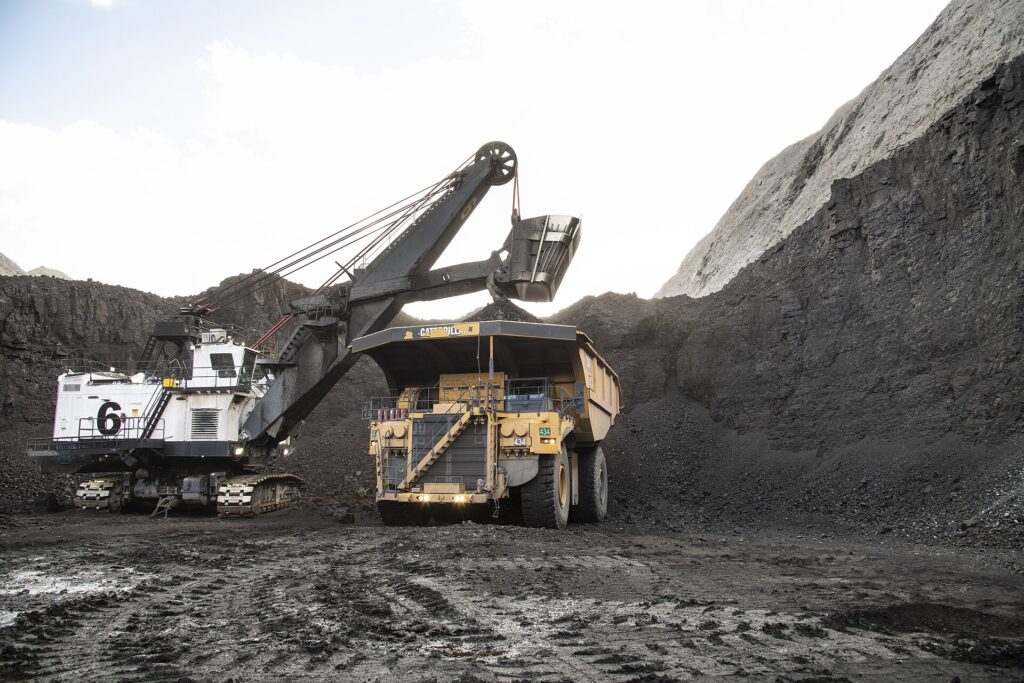
A pipeline tilted toward the energy transition
IBRAM’s US$76.9 billion projection for 2026–2030 marks a 12.5% increase over the previous five-year forecast of roughly US$68.4 billion. The revision reflects accelerating demand for minerals used in batteries, magnets, and low-carbon technologies.
Critical and strategic minerals will absorb US$21.3 billion of that total. Companies are advancing rare-earth, lithium, potash, copper, and nickel projects to supply reindustrialization and clean-energy supply chains.
For a foreign reader, it helps to understand that IBRAM is the main industry body representing large and mid-tier miners operating in Brazil. Its five-year investment surveys are widely watched because they capture board-approved projects, not just early-stage exploration dreaMs The 12.5% jump therefore signals genuine corporate conviction rather than speculative enthusiasm.
Rare earths, for instance, are a group of 17 chemically similar elements essential for permanent magnets in electric-vehicle motors and wind turbines. Lithium is the lightweight metal at the heart of rechargeable batteries.
By channeling more capital into these materials, Brazil is positioning itself as a supplier for the global push to electrify transport and decarbonize power grids.
Iron ore remains the revenue anchor
Iron ore still dominates Brazil’s mining income, generating R$71.2 billion in the first half of 2026—47.2% of total sector revenue. That share is gradually eroding as gold, copper, and fertilizer output grow faster.
Iron ore alone is slated for US$19.8 billion in fresh investment through 2030. Producers are spending to sustain output in the Carajás region and the Iron Quadrangle of Minas Gerais state.
The Carajás complex in the Amazonian state of Pará is one of the world’s richest iron-ore provinces, while the Iron Quadrangle—a mineral-rich area in southeastern Brazil—has been mined for centuries. Sustaining output in these mature districts typically means investing in new processing plants, logistics corridors, and waste-management facilities rather than simply opening new pits.
Even as its relative weight in the revenue mix shrinks, iron ore remains the financial backbone that funds the industry’s diversification into transition metals.
Live Market IntelligenceBrazil — Live Market Board
Rio Times · Live Market Intelligence
Brazil — Live Market Board
-0.55%
181,978.40
-0.55%
64,944.41
-0.07%
11,130.95
-0.06%
2,798,925
+0.00%
2,579.33
-0.21%
60,698.35
-0.79%
| Instrument | Last | Change | YoY | Prev. | High | Low | Volume |
|---|---|---|---|---|---|---|---|
| IBOV | 181,978.40 | -0.55% | +21.85% | 182,991.13 | 168,310 | 167,142 | — |
| USD/BRL | 5.16 | +0.01% | -5.13% | 5.16 | 5.18 | 5.14 | — |
| SELIC | 14.00% | — | — | — | — | — | |
| PETR4 | 41.64 | -0.05% | +35.19% | 41.66 | 41.97 | 41.15 | 41,499,400 |
| VALE3 | 72.97 | +0.83% | +30.75% | 72.37 | 73.54 | 72.66 | 17,658,000 |
| ITUB4 | 38.60 | -1.03% | +4.57% | 39.00 | 39.34 | 38.39 | 29,487,800 |
| BBDC4 | 16.85 | +0.36% | +3.50% | 16.79 | 16.90 | 16.67 | 19,416,900 |
| BBAS3 | 19.37 | +0.47% | +0.73% | 19.28 | 19.44 | 19.16 | 11,069,200 |
| B3SA3 | 14.26 | -0.21% | +12.73% | 14.29 | 14.47 | 14.11 | 33,037,800 |
| ABEV3 | 14.89 | -0.80% | +21.91% | 15.01 | 15.07 | 14.81 | 16,453,100 |
| WEGE3 | 47.59 | +0.49% | +29.99% | 47.36 | 48.08 | 47.36 | 3,364,600 |
| PRIO3 | 59.14 | -0.19% | +50.67% | 59.25 | 59.81 | 58.74 | 3,325,600 |
| SUZB3 | 41.33 | +2.35% | -23.55% | 40.38 | 41.48 | 40.35 | 3,914,900 |
| RENT3 | 34.68 | -0.09% | +0.84% | 34.71 | 34.96 | 34.35 | 7,979,100 |
| AZZA3 | 15.89 | -2.63% | -53.76% | 16.32 | 16.42 | 15.82 | 1,330,300 |
| CSNA3 | 4.30 | +0.47% | -42.65% | 4.28 | 4.41 | 4.26 | 10,076,100 |
| GGBR4 | 24.69 | +2.19% | +51.38% | 24.16 | 24.85 | 24.18 | 7,047,600 |
| ENEV3 | 24.21 | -1.38% | +70.49% | 24.55 | 24.64 | 23.99 | 9,297,000 |
Socio-environmental spending surges
Planned socio-environmental investments are approaching US$14.7 billion, expanding nearly 30% compared with the previous five-year cycle. The jump follows stricter tailings-dam regulations imposed after recent disasters.
Firms are channeling capital into dry-stacking technology, water recycling, and community programs. These outlays are now a fixed cost of maintaining a social license in Brazil’s mining heartlands.
Tailings are the finely ground rock waste left after valuable minerals are extracted. When stored behind large earth-and-rock dams, they can liquefy and cause catastrophic failures—two such disasters in Minas Gerais in the last decade killed hundreds of people and polluted major river systeMs Dry-stacking, by contrast, removes most of the water from tailings before they are compacted into stable piles, sharply reducing the risk of a dam break.
The nearly 30% jump in socio-environmental spending shows that regulators, investors, and local communities now treat safer waste management as non-negotiable.
Export value climbs on stronger prices
Brazil exported 196.2 million tonnes of minerals in the first half of 2026, a modest 2.4% volume gain. Export revenue nevertheless jumped 24.1% to US$25.1 billion, signaling higher realized prices and a richer product mix.
Gold and copper were key growth drivers in the period, offsetting a 3.1% decline in iron-ore revenue measured in Brazilian reais. The mineral trade surplus reached about US$37.6 billion in full-year 2025, covering roughly 55% of Brazil’s total trade surplus.
A trade surplus means the value of what a country sells abroad exceeds what it buys from other nations. For Brazil, minerals have long provided a large share of that surplus, helping stabilize the national currency and fund imports of manufactured goods.
The fact that export revenue rose far faster than tonnage suggests miners are selling a more valuable basket of products—more processed copper, higher-purity lithium, and gold benefiting from elevated global prices—rather than simply shipping more raw rock.
What the capital wave means for foreign players
The US$77 billion pipeline signals sustained demand for equipment, engineering services, and project finance. International METS (mining equipment, technology, and services) suppliers are eyeing contracts tied to critical-mineral and environmental projects.
For portfolio investors, the shift toward transition metals is gradually diversifying Brazil’s mining equity story beyond iron ore. The revenue mix is evolving even as iron ore remains the sector’s cash engine.
METS is industry shorthand for the ecosystem of companies that build trucks, crushers, sensors, software, and processing plants for mines. Because many of Brazil’s new projects involve complex minerals such as rare earths—which require specialized separation technology—the demand for foreign expertise and imported machinery is likely to stay high.
For investors, the question is whether the growing contribution of lithium, copper, and rare earths will eventually command higher valuation multiples than the iron-ore majors have historically received.
What to watch next
Several open questions will determine how much of the US$76.9 billion pipeline actually materializes. Will global prices for lithium and rare earths hold up as new supply comes online from other regions?
Can Brazil’s permitting agencies process environmental licenses quickly enough to keep projects on schedule? How will the next federal administration handle mining royalties and tax incentives for strategic minerals?
And will the industry’s heavy spending on dry-stacking and community programs be enough to prevent the kind of social conflict that has delayed major projects in the past? The answers will shape whether this capital wave delivers a genuine transformation or simply a larger, cleaner version of Brazil’s traditional mining economy.
More: Brazil news in English, every day from The Rio Times.
Frequently Asked Questions
How much will Brazil’s mining sector invest through 2030?
IBRAM projects US$76.9 billion in mining investments for the 2026–2030 cycle, a 12.5% increase over the previous five-year forecast.
Which minerals are attracting the most new money?
Critical and strategic minerals such as rare earths, lithium, copper, and nickel will receive US$21.3 billion, while iron ore accounts for US$19.8 billion.
How did the sector perform in the first half of 2026?
Mining revenue reached R$150.7 billion, up 8.2% year-on-year, and export earnings rose 24.1% to US$25.1 billion despite only a 2.4% increase in tonnage shipped.
Why are socio-environmental investments rising so quickly?
Planned socio-environmental spending is nearing US$14.7 billion, growing almost 30%, as companies comply with tougher tailings-dam rules and invest in community relations to secure operating permits.
Connected Coverage
Sources: Brazilian Mining Institute (IBRAM).
This article was produced by The Rio Times’ automated newsroom system. How we use AI · Report an error
Read More from The Rio Times