Brazil Markets: Ibovespa & the Real — August 11, 2026
Key Facts
- The Ibovespa edged down 0.19% to 172,180 points, with heavyweight bank stocks dragging the index lower despite a strong session for oil producers.
- Petrobras common and preferred shares both surged 3.3%, making it the most-traded name on the exchange with $618 million in turnover as crude prices firmed.
- The Brazilian real weakened 0.56% against the dollar, closing the session at R$ 5.11, tracking a broader strengthening of the US currency measured by the DXY index.
- Big banks were a clear drag, with Itaú Unibanco and Bradesco each falling 0.8%, weighing heavily on the benchmark due to their large index representation.
- PRIO led all gainers with a 6.6% jump, extending its rally as investors continued to reward independent oil producers alongside the positive momentum in the energy sector.
Today’s Focus
Brazil’s Ibovespa stock index lost 0.19% on Monday, closing at 172,180 points. The modest decline masked a sharp split under the surface: big banks pulled the benchmark lower, while oil producers soared.
Heavyweight lenders Itaú Unibanco and Bradesco both dropped 0.8%, a weight too heavy for the index to overcome. In contrast, state-controlled oil giant Petrobras jumped 3.3% in both share classes, making it the most-traded stock of the day with $618 million changing hands.
Independent oil producer PRIO stole the show with a 6.6% surge. The real weakened 0.56% to R$ 5.11 per dollar, tracking a modest dollar-strengthening session globally.
The session’s trade was a tug-of-war: financial-sector caution wrestling with sustained appetite for Brazil’s commodity exporters.
What matters today. A weak session for bank stocks single-handedly dragged the Ibovespa lower, overriding a powerful rally in Petrobras and its smaller oil-producing peers.
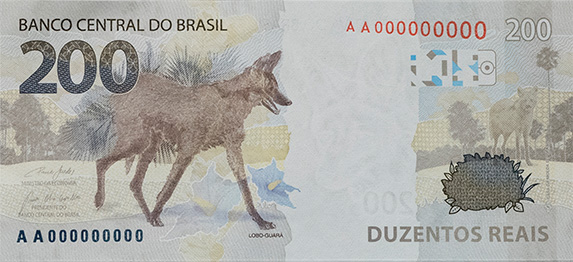
01 The session in one read

On the surface, a 0.19% dip for the Ibovespa—Brazil’s benchmark stock index—looks like a sleepy Monday in São Paulo. The index drifted to 172,180 points. That placid number, however, conceals a fierce tug-of-war between two powerful forces inside the B3 exchange.
On one side, the country’s giant banks slumped. Itaú Unibanco and Bradesco, two of the heaviest weights in the index, each fell 0.8%. Their decline acted like a gravitational pull on the whole benchmark.
On the other side, oil companies roared higher. Petrobras, Brazil’s state-controlled energy champion, surged 3.3% in both its common and preferred share classes. Independent driller PRIO shot up 6.6%, leading the entire market.
The Brazilian real closed the session at R$ 5.11 to the US dollar, a modest weakening of 0.56%. That move largely reflected a global dollar uptick measured by the DXY index, rather than any fresh domestic worry.
The session’s sector divergence suggests a local rotation rather than a broad risk-off shift. Oil-linked names rallied on firm crude and idiosyncratic demand, while banks likely felt the weight of a still-high Selic rate of 14.00%—cut recently but restrictive nonetheless—and a mildly firmer dollar. The real’s move was unremarkable in the context of a 0.56% DXY gain, implying little domestic alarm. The variable to watch is whether Friday’s services-sector growth data can revive bank shares and give the Ibovespa a clearer direction.
02 The day’s numbers
| Measure | Level | Change | Read |
|---|---|---|---|
| Ibovespa | 172,180 | −0.19% | Banks drag, oil limits losses |
| Ibovespa 52-week high | 198,657 | −13.3% below | High set in recent months |
| Ibovespa 52-week low | 134,432 | — | Floor of current range |
| USD/BRL | 5.11 | +0.56% | Real weakens with DXY up 0.21% |
| USD/BRL 52-week high | 5.5901 | −8.6% below | Real off its weakest point |
| DXY (US Dollar Index) | 99.748 | +0.21% | Broad dollar strength |
| S&P 500 | 7,753 | −0.06% | Muted Wall Street session |
The Ibovespa sits firmly in the middle of its 52-week range, having recovered from its low of 134,432 but still facing the gravitational pull of its 198,657 high. The real is in a similar mid-range pattern: far stronger than its 5.59 peak-weakness, but unable to pierce back below the R$ 4.89 level that defined its best stretch.
Global cues were soft. The S&P 500 slipped a marginal 0.06%, offering no directional help to emerging-market traders. A 0.86% rise in the US 10-year Treasury yield to 4.698% may have added a whisper of pressure to rate-sensitive Brazilian financials. Rio Times · Live Market Intelligence
Live Market IntelligenceBrazil — Live Market Board
Brazil — Live Market Board
Instrument Last Change YoY Prev. High Low Volume
IBOV
183,476.86
-0.27%
+21.85%
183,965.91
168,310
167,142
—
USD/BRL
5.16
+0.01%
-5.13%
5.16
5.18
5.14
—
SELIC
14.00%
—
—
—
—
—
PETR4
41.64
-0.05%
+35.19%
41.66
41.97
41.15
41,499,400
VALE3
72.97
+0.83%
+30.75%
72.37
73.54
72.66
17,658,000
ITUB4
38.60
-1.03%
+4.57%
39.00
39.34
38.39
29,487,800
BBDC4
16.85
+0.36%
+3.50%
16.79
16.90
16.67
19,416,900
BBAS3
19.37
+0.47%
+0.73%
19.28
19.44
19.16
11,069,200
B3SA3
14.26
-0.21%
+12.73%
14.29
14.47
14.11
33,037,800
ABEV3
14.89
-0.80%
+21.91%
15.01
15.07
14.81
16,453,100
WEGE3
47.59
+0.49%
+29.99%
47.36
48.08
47.36
3,364,600
PRIO3
59.14
-0.19%
+50.67%
59.25
59.81
58.74
3,325,600
SUZB3
41.33
+2.35%
-23.55%
40.38
41.48
40.35
3,914,900
RENT3
34.68
-0.09%
+0.84%
34.71
34.96
34.35
7,979,100
AZZA3
15.89
-2.63%
-53.76%
16.32
16.42
15.82
1,330,300
CSNA3
4.30
+0.47%
-42.65%
4.28
4.41
4.26
10,076,100
GGBR4
24.69
+2.19%
+51.38%
24.16
24.85
24.18
7,047,600
ENEV3
24.21
-1.38%
+70.49%
24.55
24.64
23.99
9,297,000
Live Company IntelligencePetroleo Brasileiro Petrobras SA ADR — the full investor dossier
Wall Street view
Valuation & profitability
Price & risk
$10.6552-wk high
$21.99
Revenue trend · 6y
Ownership
Dividend
03 Why it moved — banks versus oil in a flat global tape
The session’s single clearest driver was sector rotation. Heavy bank selling, visible in Itaú (ITUB4, -0.8%) and Bradesco (BBDC4, -0.8%), depressed the value-heavy Ibovespa. Financials are a dominant index weight, so even modest percentage moves in these names can swamp gains elsewhere.
What hurt the banks? The Selic rate, Brazil’s benchmark, sits at 14.00% after the central bank’s unanimous cut on 5 August. While lower rates are good for the economy over time, the immediate net interest margin pressure and a still-restrictive level can weigh on bank earnings sentiment.
Oil was the undeniable bright spot. Petrobras’s 3.3% surge was backed by heavy volume—$618 million in turnover, the highest on the exchange. PRIO’s 6.6% jump showed investors chasing smaller, growth-oriented producers when the crude price environment looks supportive.
The real’s 0.56% decline to R$ 5.11 was orderly. With the DXY dollar index up 0.21%, the move was largely imported. Local traders are now looking ahead to Tuesday’s release of Brazil’s IPCA inflation index and the minutes from that Copom rate decision.
04 The day’s movers
| Driver | Level / Move | Change | Note |
|---|---|---|---|
| PETR4 (Petrobras PN) | $618m turnover | +3.3% | Most-traded; oil price support |
| PRIO3 (PRIO) | $117m turnover | +6.6% | Top Ibovespa gainer; sector bid |
| VALE3 (Vale) | $224m turnover | +1.3% | Steady mining demand |
| EMBR3 (Embraer) | $216m turnover | +2.3% | Continued aerospace optimism |
| ITUB4 (Itaú Unibanco) | $155m turnover | −0.8% | Heaviest index drag |
| BBDC4 (Bradesco) | $105m turnover | −0.8% | Mirrored big-bank weakness |
| CSAN3 (Cosan) | — | −6.0% | Session’s worst decline |
| RADL3 (Raia Drogasil) | — | −4.2% | Retail-pharma hit hard |
| RENT3 (Localiza) | — | −4.0% | Car-rental slide |
The leaderboard tells a two-act story. Act one: oil. Petrobras dominated turnover at $618 million while gaining 3.3%. PRIO’s 6.6% leap was the session’s loudest bullish statement. Vale, the mining giant, added a steady 1.3% with $224 million in volume, and Embraer continued its strong recent form with a 2.3% advance.
Act two: the sell-off in Brazil’s home-facing names. Cosan plunged 6.0%, pharmacy chain Raia Drogasil dropped 4.2%, and car-rental firm Localiza fell 4.0%. These moves suggest a rotation out of domestic-consumption plays and into global commodity exporters—a pattern that often appears when traders worry about the pace of local recovery.
05 The regional scoreboard
| Index | Country | Change |
|---|---|---|
| Ibovespa | Brazil | −0.19% |
| IPC (BMV) | Mexico | −0.75% |
| IPSA | Chile | +0.11% |
| Merval | Argentina | +1.14% |
| COLCAP | Colombia | +0.94% |
| BVL (Perú General) | Peru | +0.19% |
Latin American markets moved in different directions on Monday. Argentina’s Merval led the region with a 1.14% gain, followed by Colombia’s COLCAP rising 0.94%. Chile’s IPSA edged up 0.11% and Peru’s BVL added 0.19%.
The two largest markets, Brazil and Mexico, both fell. Mexico’s IPC dropped a sharper 0.75%, making it the region’s weakest performer. The mixed picture reflects a lack of a single unifying regional catalyst, with local political and commodity dynamics driving each board.
06 The technical picture
The Ibovespa’s 0.19% decline keeps it trapped in a broad consolidation zone. The index is down 13.3% from its 52-week high of 198,657, a level that now serves as formidable resistance. The 134,432 low remains distant enough to give bulls comfort, but momentum is lacking.
Currency traders will watch the R$ 5.10 area closely. A sustained break above here could open a path toward 5.25. On the downside, the real’s recent strength was capped near 4.89. For the Ibovespa to challenge its highs, bank stocks need to stabilise and give commodity-driven gains room to lift the broader market.
07 What to watch
- Tuesday’s IPCA print: Brazil’s July inflation reading lands on Tuesday, the first major data point since the Copom rate cut. A benign number would support the case for continued easing and could lift rate-sensitive bank stocks.
- Copom minutes: The minutes from the 5 August rate decision, released Tuesday, will be scoured for signals on the pace of future cuts. Any hawkish nuance could pressure the Ibovespa and support the real.
- Bank versus oil rotation: Watch whether Monday’s pattern—selling banks, buying oil—continues or reverses. A swift bank recovery would signal that the session’s rotation was noise, not a trend.
- US CPI on the horizon: The US consumer price index due later this week matters enormously for the dollar and global rates. A hot print could upset the calm and hit emerging-market currencies, including the real.
Background: Brazil Stocks Post Worst Week Since May As Petrobras Slides.
Background: Petrobras Q2 2026 Results: Profit Nearly Doubles to US$10.4 Billion.
More: Brazil news in English, every day from The Rio Times.
Frequently Asked Questions
What is the Ibovespa?
It is Brazil’s main stock-market index, tracking the largest and most-traded companies listed on the B3 exchange in São Paulo. It is measured in points, not in a currency like reais or dollars.
Why did the Ibovespa fall if Petrobras rose so much?
Because the index is weighted by market value. The big banks—Itaú and Bradesco—have enormous weight, and their 0.8% drops overpowered the 3.3% gain in Petrobras. Think of it as a see-saw where a heavyweight on one side can lift a lighter weight on the other.
What does USD/BRL at 5.11 mean?
It means one US dollar buys 5.11 Brazilian reais. When the number rises—like Monday’s +0.56% move—the real is weakening. When it falls, the real is strengthening.
What is the Selic and why does it matter for stocks?
The Selic is Brazil’s benchmark interest rate, set by the central bank’s Copom committee. It currently stands at 14.00%. Lower rates make loans cheaper and can stimulate the economy, but they also reduce the interest income banks earn, which is why bank stocks sometimes fall when rate cuts are expected.
This article was produced by The Rio Times’ automated newsroom system. How we use AI · Report an error
LatAm Markets: Live Signals → — real-time movers, turnover leaders and FX across Latin America.
Read More from The Rio Times