Brazil Builds a New Road to Asia, Pointing West Toward the Pacific
Economy
Key Facts
Brazil is opening a new Brazil Pacific route to the world, turning its trade map westward across South America in search of a faster, cheaper way to reach the booming markets of Asia.
Brazil has long shipped its goods east across the Atlantic. Now it is trying to face the other way, toward the Pacific, in a bid to reach Asia more quickly and cheaply.
On June 23 its agriculture minister signed an order creating a new program with a clear aim. It would route Brazilian exports overland through neighbouring Bolivia to ports on the Pacific coast.
For an outside investor, the logic is geography. Brazil’s farm heartland sits closer to the Pacific than to many of its Atlantic ports, yet almost all its trade still flows the long way round.
Why a Brazil Pacific route makes sense
The prize is the journey to Asia. China is Brazil’s biggest trading partner and the main buyer of its soybeans, beef and iron ore, but the goods take weeks to arrive by the Atlantic.
A western exit could change that math. By crossing the continent to a Pacific port, cargo would skip the long Atlantic loop and cut both the time and the cost of reaching Asian buyers.
One state stands to gain most. Mato Grosso, which produces roughly a third of Brazil’s farm output, borders Bolivia and would sit at the mouth of the new corridor.
The plan also revives an old partnership. Trade between Brazil and Bolivia has shrunk to about two and a half billion dollars, down from five and a half billion in 2013, and both hope the corridor reverses that slide.
A bigger plan behind the corridor
The Bolivia route is one piece of a larger design. It belongs to a national program of five so-called bioceanic routes, meant to link Brazil to both oceans and to all its South American neighbours.
That wider program was put on a formal footing earlier this year. According to the planning ministry, the routes were formalised in February to cut the time and cost of moving goods between Brazil, its neighbours and Asia.
The money behind it is real, if early. Officials have flagged around one hundred and ninety priority projects and more than seven billion dollars in possible funding from regional development banks.
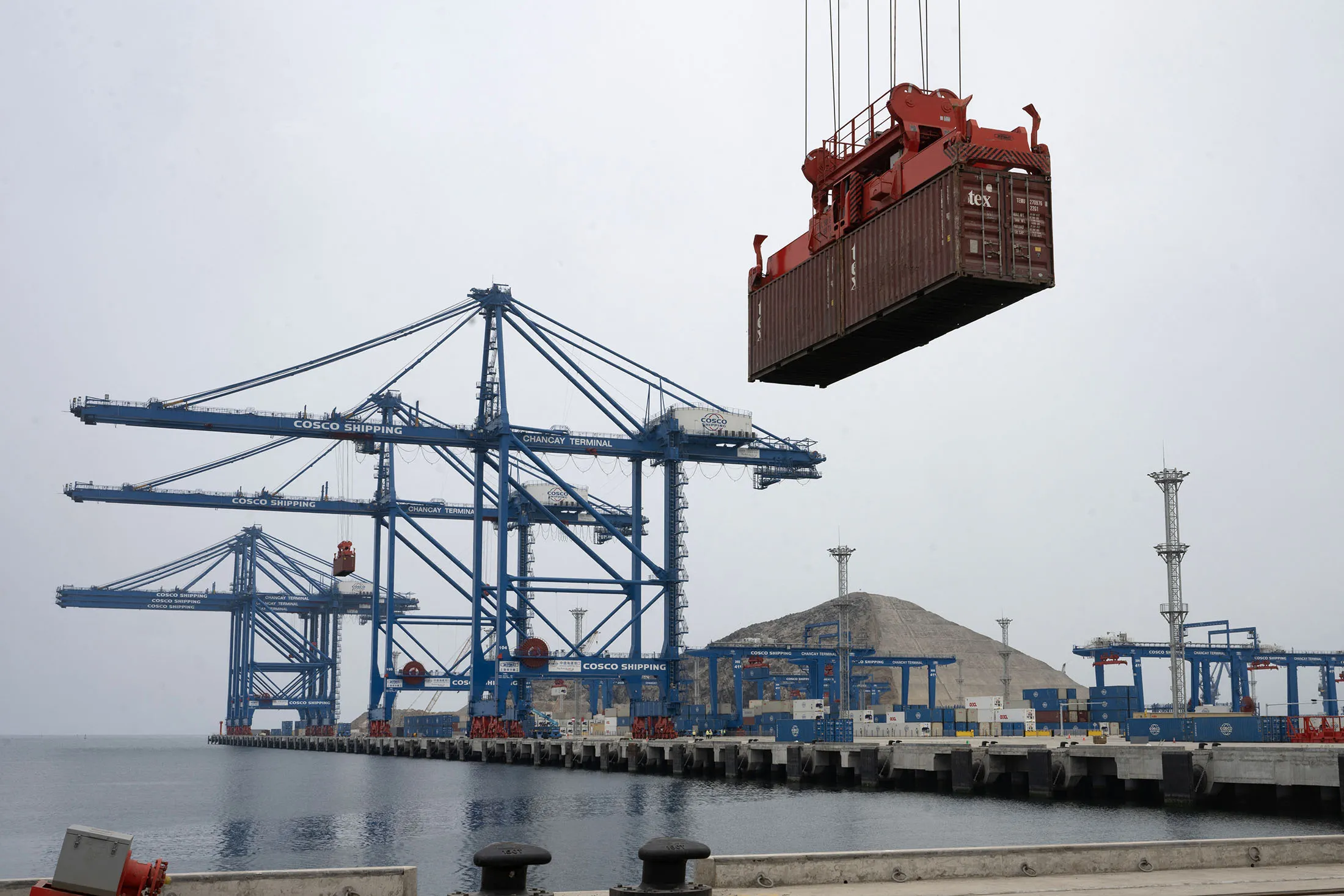
A related route looks further west still. Another corridor would connect Brazil through Peru to Chancay, a new Chinese-financed port built expressly to speed South American goods to Asia.
The time savings could be striking. Peruvian projections suggest the Chancay link might cut the average shipment to Asia from around forty days to twenty-eight, a large edge for perishable and bulk cargo alike.
It would also ease an old dependence. Today most Brazilian exports leave through crowded Atlantic ports or the Panama Canal, so a Pacific exit offers a useful alternative when those routes clog.
What the Brazil Pacific route still needs
For now the corridor is more promise than pavement. The Bolivia route still depends on building and surfacing key roads, including one stretch in western Mato Grosso now under way.
Customs are the other hurdle. Moving cargo smoothly across borders needs the tax and inspection systems of several countries to mesh, work that is only partly done.
The grander rail idea is further off. A proposed railway to the Pacific could cost tens of billions of dollars and faces steep engineering and environmental tests across the Amazon.
Live Market IntelligenceBrazil — Live Market Board
Rio Times · Live Market Intelligence
Brazil — Live Market Board
-0.56%
187,206.89
-0.56%
63,924.77
-0.28%
11,220.10
-0.16%
3,098,898
-1.87%
2,589.69
-1.41%
59,373.28
-0.32%
| Instrument | Last | Change | YoY | Prev. | High | Low | Volume |
|---|---|---|---|---|---|---|---|
| IBOV | 187,206.89 | -0.56% | +21.85% | 188,268.59 | 168,310 | 167,142 | — |
| USD/BRL | 5.16 | +0.01% | -5.13% | 5.16 | 5.18 | 5.14 | — |
| SELIC | 14.00% | — | — | — | — | — | |
| PETR4 | 41.64 | -0.05% | +35.19% | 41.66 | 41.97 | 41.15 | 41,499,400 |
| VALE3 | 72.97 | +0.83% | +30.75% | 72.37 | 73.54 | 72.66 | 17,658,000 |
| ITUB4 | 38.60 | -1.03% | +4.57% | 39.00 | 39.34 | 38.39 | 29,487,800 |
| BBDC4 | 16.85 | +0.36% | +3.50% | 16.79 | 16.90 | 16.67 | 19,416,900 |
| BBAS3 | 19.37 | +0.47% | +0.73% | 19.28 | 19.44 | 19.16 | 11,069,200 |
| B3SA3 | 14.26 | -0.21% | +12.73% | 14.29 | 14.47 | 14.11 | 33,037,800 |
| ABEV3 | 14.89 | -0.80% | +21.91% | 15.01 | 15.07 | 14.81 | 16,453,100 |
| WEGE3 | 47.59 | +0.49% | +29.99% | 47.36 | 48.08 | 47.36 | 3,364,600 |
| PRIO3 | 59.14 | -0.19% | +50.67% | 59.25 | 59.81 | 58.74 | 3,325,600 |
| SUZB3 | 41.33 | +2.35% | -23.55% | 40.38 | 41.48 | 40.35 | 3,914,900 |
| RENT3 | 34.68 | -0.09% | +0.84% | 34.71 | 34.96 | 34.35 | 7,979,100 |
| AZZA3 | 15.89 | -2.63% | -53.76% | 16.32 | 16.42 | 15.82 | 1,330,300 |
| CSNA3 | 4.30 | +0.47% | -42.65% | 4.28 | 4.41 | 4.26 | 10,076,100 |
| GGBR4 | 24.69 | +2.19% | +51.38% | 24.16 | 24.85 | 24.18 | 7,047,600 |
| ENEV3 | 24.21 | -1.38% | +70.49% | 24.55 | 24.64 | 23.99 | 9,297,000 |
What it means for investors
For investors, the signal matters as much as the asphalt. Brazil is openly trying to diversify how it reaches world markets, reducing its heavy reliance on a few Atlantic ports.
It also tilts further toward Asia. A cheaper path to the Pacific would bind Brazil’s commodity exports even more tightly to Chinese demand, for better and for worse.
There are openings in the building, too. Roads, ports, customs systems and logistics all need investment, offering opportunities to firms willing to back long-horizon infrastructure.
The wider lesson is about trade maps being redrawn. As routes to Asia gain value, the countries that control the shortest paths to the Pacific stand to capture a growing share of global commerce.
Brazil Pacific route questions, answered
What did Brazil announce?
On June 23 its agriculture minister signed an order creating a program to route exports overland through Bolivia to Pacific ports. The aim is faster, cheaper access to Asian markets such as China.
Why does it matter?
Most Brazilian trade flows east across the Atlantic, a long haul to Asia. A western exit to the Pacific could cut time and cost, while reducing reliance on a handful of crowded Atlantic ports.
Is the route ready?
Not yet. The corridor still needs new roads, smoother customs systems and major investment. A more ambitious railway to the Pacific remains a distant and costly proposal.
More: Brazil news in English, every day from The Rio Times.
Frequently Asked Questions
Why is Brazil creating a new Pacific export route?
Brazil is creating the route to find a faster and cheaper way to reach Asian markets, particularly China, its biggest trading partner and main buyer of soybeans, beef, and iron ore. By crossing overland through Bolivia to Pacific ports, cargo can skip the long Atlantic loop, cutting both travel time and shipping costs.
Which Brazilian state is leading the push for the Pacific corridor?
Mato Grosso is the primary driver of the initiative, accounting for about a third of Brazil's total farm output. The state's farm heartland sits geographically closer to the Pacific than to many of Brazil's Atlantic ports, making a western route especially advantageous.
How does the new corridor fit into Brazil's broader infrastructure plans?
The Brazil-Bolivia land corridor is one of five so-called 'bioceanic' routes that form part of a national program. Brazil's agriculture minister formally signed the order creating the program on June 23, signaling an official government commitment to redirecting trade flows westward across South America.
Connected Coverage
This article was produced by The Rio Times’ automated newsroom system. How we use AI · Report an error
Read More from The Rio Times