Bolsonaro applies for visa that could allow him to stay in US for six more months
Brazil’s former president Jair Bolsonaro has applied for a tourist visa to allow him to stay in the United States for six more months, one of his lawyers said in an interview with the British newspaper ‘Financial Times.
“Florida will be his temporary home away from home (Brazil),” said the lawyer, Felipe Aleixandre, founder of AG Immigration.
The former president “needs some stability,” according to Aleixandre, who has left open the possibility of Bolsonaro applying for a permanent visa.
This comes after Flavio Bolsonaro, son of the former president, suggested over the weekend that his father could return to Brazil “tomorrow, in six months or never”, as the newspaper ‘O Globo’ echoed.
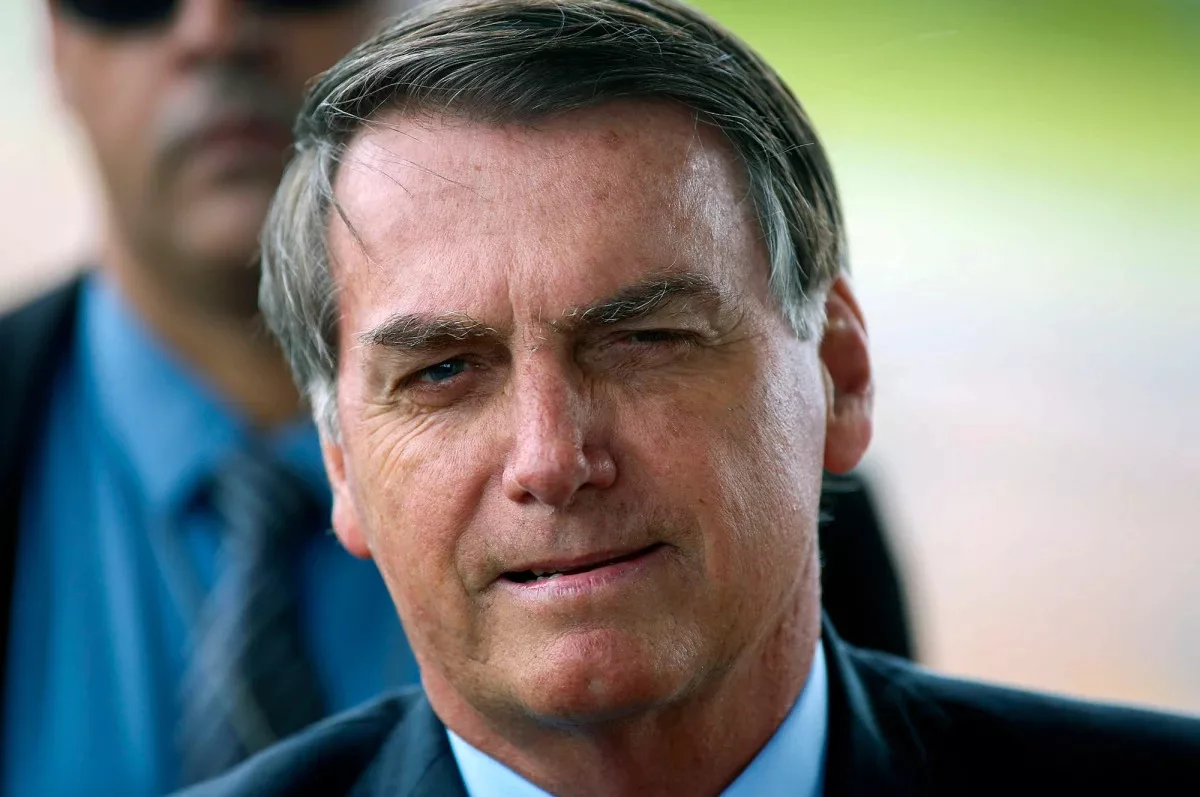
While some, such as the president of the Liberal Party (PL, right), Valdemar Costa, speak that he could return next week, others of his close circle affirm that no date is yet decided.
Bolsonaro stated a few days after being admitted to a hospital on Jan. 9 for abdominal problems resulting from the stabbing he suffered in 2018 that he would bring forward his return to Brazil to be treated by his doctors.
However, he remains in Orlando, Florida.
The foreign policy of the Lula da Silva government is in formation. The recent trip of the Brazilian representative to Argentina for the CELAC (Community of Latin American and Caribbean States) event helps to understand the paths that the South American country’s diplomacy will take.
A key element seems to be a distorted rhetoric of ‘defending democracy’ for domestic consumption while supporting and improving relations with tyrannies in the Americas without shame.
Lula da Silva was scheduled to meet with narco-dictator Nicolas Maduro, but it was canceled because Maduro feared arrest action by the U.S. Drug Enforcement Agency (DEA) in Argentina.
Although the meeting did not take place, Lula da Silva has already recognized Manuel Vicente Vadell Aquino as Venezuela’s ambassador.
On Jan. 23, Brazilian Foreign Minister Mauro Vieira met with his Venezuelan counterpart, Yvan Gil, recognizing the dictatorship’s emissary as Venezuela’s representative.
Miguel Díaz Canel, from Cuba, is another dictator with whom the Brazilian government will have an excellent relationship.
Lula met with the Cuban leader, called by many a tyrant, on Jan. 24, re-establishing strategic links between the São Paulo Forum and the Workers’ Party.
Cynically, the Brazilian president also said that “authoritarian temptations” challenge Brazil while limiting freedom of expression in Brazil and persecuting opponents through the courts.
Lula da Silva also stated, “It is important to emphasize that we are a peaceful region, which rejects extremism, terrorism, and political violence.”
Therefore, foreign policy’s first line of action is to rhetorically defend democracy and support dictatorships aligned with the São Paulo Forum in the continent.
Another key element of Brazil’s new international insertion will be the use of the BNDES (National Bank for Economic and Social Development) to support the international allies of the São Paulo Forum.
Lula da Silva confirmed that the BNDES would finance the second section of the gas pipeline in Argentina for US$ 689 million.
The project will help connect Brazil with Argentina’s “Vaca Muerta” natural gas reserve.
Although there is a vigorous justification for such work, one should not forget the history of default assumed by Brazilian state banks with other allies of the São Paulo Forum (such as Venezuela and Cuba) and Argentina’s poor record of suitable payment.
The government’s SECOM (Secretary of Communication) even had the nerve to declare on Twitter that “there is no risk of loss” in BNDES loans.
In 2021, the president of BNDES stated that there was a deficit of $1.5 billion, completely contradicting the propagandistic action of the Federal Government’s SECOM.
The third foreign action strategy is to defend multilateralism in rhetoric and practice and execute the foreign policy of the São Paulo Forum.
This is because the term “multilateralism” is treated as a magic word that would solve all our problems in the international arena, and often this word is empty of a concrete concept.
In the end, multilateralism ends up being any Marxist interpretative excuse to reduce the power of the “American empire” and put in place a supposedly fairer “new order”.
That term can be everything and be nothing. Any discussion with 3 other countries can be considered a multilateral action.
Whether it is creating a currency with Argentina to avoid the dollar, submitting to the entire globalist environmental agenda, or participating in economic forums to “fight against developed countries”.
All of these can be multilateralism.
I am speaking of multilateralism in theory and making the foreign policy of the São Paulo Forum.
Lula da Silva declared in a speech at CELAC: “There is a clear contribution of the region to the construction of a peaceful world order, based on dialogue, on the strengthening of multilateralism and the collective construction of multipolarity”.
In addition to discussing multilateralism, we intend to strengthen relations within CELAC. At the same time, the organization’s name is “Community of Latin American and Caribbean States,” as if it were a neutral institution.
It was created by the dictator Hugo Chavez in 2011 in Venezuela. Therefore, although sectors of the media and academia treat the organization only as a regional cooperation organization, it has a strong ideological influence of Latin American socialism in all its forms.
When it was founded in 2011, then-dictator Raúl Castro said in a report at the Communist Party congress that “Celac is the most transcendental event of the last hundred years.”
This comment was recorded on the Vermelho.org site, clearly marking the importance of the organization for one of the leading communist leaders of the American continent.
Therefore, what we should expect from the PT’s foreign policy for the coming years is this:
- speak in favor of democracy and support socialist dictatorships;
- use the BNDES to favor companies and governments friendly to the party; and
- make a speech on multilateralism and apply the foreign policy of the São Paulo Forum
In other words, in the end, it is a synthesis of international policy with the values of the São Paulo Forum.
More: Brazil news in English, every day from The Rio Times.
This article was drafted with automated assistance and reviewed before publication. How we use AI · Report an error · Editorial responsibility: Matthias Camenzind, Editor-in-Chief