
Markets
Key Facts
—The move. Azul, Brazil’s largest airline by cities served, upgrades its US listing from NYSE American to the main New York Stock Exchange. Trading under the ticker AZUL is expected to begin on July 9, 2026.
—The structure. Each American Depositary Share represents two common shares. The Brazilian stock keeps trading on the B3 exchange in São Paulo as AZUL3.
—The backstory. The uplisting follows a Chapter 11 restructuring completed earlier in 2026 that wiped out billions in debt. It left US carriers United and American as strategic partners.
—The scale. Azul runs roughly 800 daily flights to more than 137 destinations. It has a fleet above 180 aircraft and over 14,000 staff.
—The paperwork. Azul will file to delist from NYSE American no earlier than July 16. The timing means the exit never takes effect before the new listing is live.
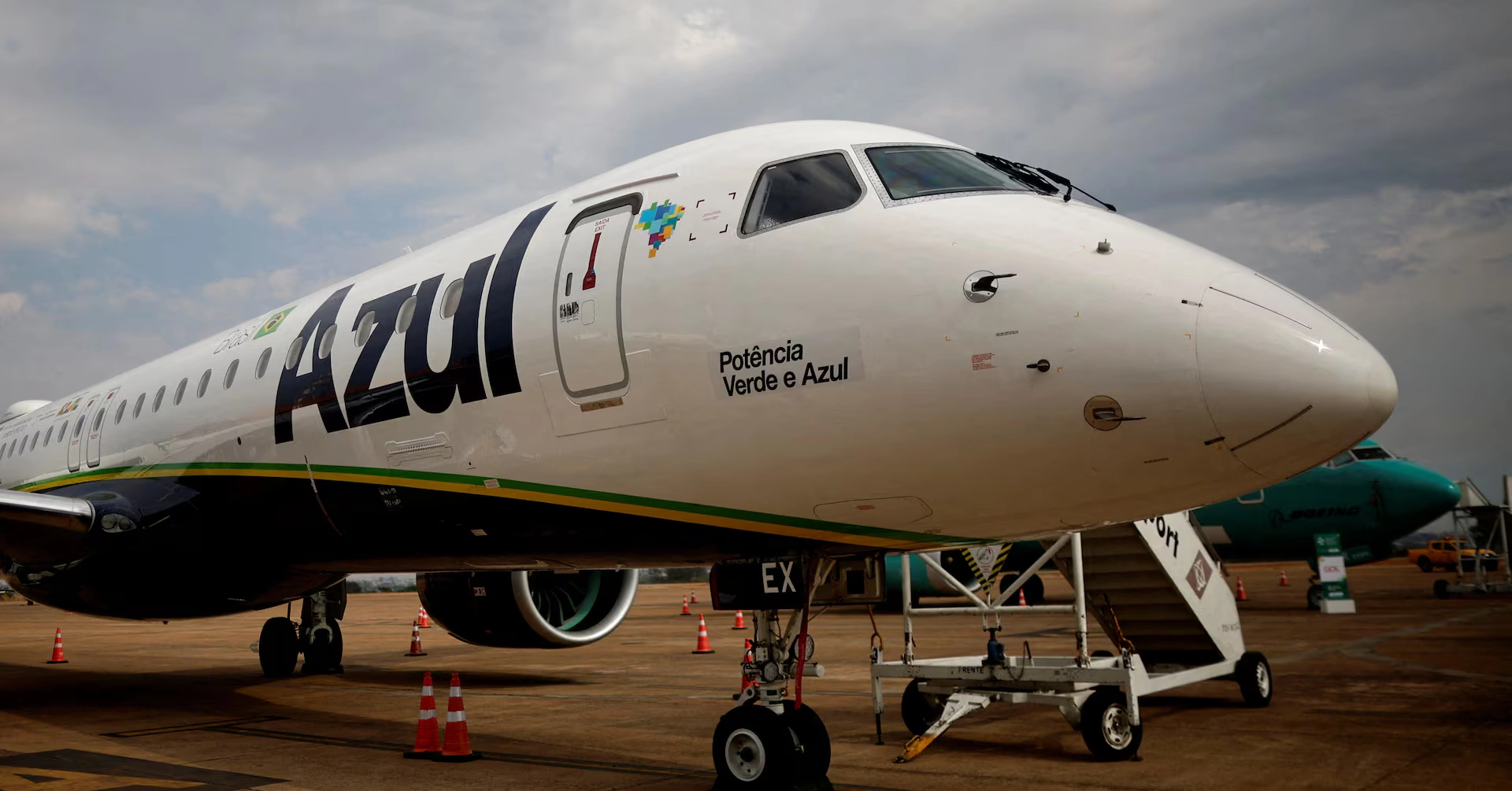
The Azul NYSE listing hands Brazil’s biggest airline by cities served a fresh start on Wall Street’s main board. It comes months after a bankruptcy restructuring that stripped out billions in debt.
Azul told investors in a July 6 statement that its American Depositary Shares had been cleared to trade on the New York Stock Exchange. Each of those shares stands for two common shares.
The carrier will step up from NYSE American, the exchange’s smaller-company venue. Those same shares only began trading there on June 1.
The company framed the switch as a way to raise its profile and reach a wider pool of large institutional investors. Its home-market shares stay put on Brazil’s B3 exchange in São Paulo, so the airline now runs a two-market structure.
Why the Azul NYSE listing matters now
For a foreign reader, the headline is less about a ticker change than about survival. Azul spent late 2025 and early 2026 inside a US bankruptcy process, and this listing is the flag it plants to say that phase is over.
Chief executive John Rodgerson called the step the start of a new chapter. He pointed to what he described as stronger governance and a simpler capital structure after the reorganization.
The move is meant to signal to global funds that the airline is now investable on ordinary terms rather than as a distressed bet. The restructuring was brutal for existing owners.
Earlier plans involved heavy dilution, fleet cuts and dropped routes. The airline traded balance-sheet repair for a slimmer, more focused operation.
The path to the main board came in stages rather than a single leap. Azul first moved its depositary shares off the over-the-counter market and onto NYSE American on June 1, always describing that as a stepping stone.
The airline itself is a relatively young player with an unusual pedigree. It was founded in 2008 by David Neeleman, the entrepreneur behind the American low-cost carrier JetBlue.
His plan was to connect Brazilian cities that bigger rivals had long ignored. That regional focus is central to Azul’s identity and to the case management now makes to investors.
By flying to smaller cities across a vast country, the airline argues it holds a network few competitors can easily copy. That gives it pricing power even in a tough cost environment.
A pattern across Brazilian aviation
Azul is not alone. Brazil’s three largest carriers, Azul, GOL and LATAM, have all passed through US bankruptcy courts in recent years.
That reckoning stripped more than two billion dollars of debt from the industry as a whole. LATAM relisted in New York in 2025 and now trades on both the NYSE and the Santiago exchange, a template Azul is loosely following.
The common thread is airlines using American capital markets to rebuild credibility after painful cleanups at home. The sector still faces real headwinds.
A spike in jet-fuel prices tied to Middle East tensions pushed Brazilian airfares sharply higher in the first half of 2026. That squeezed margins even at the strongest operators.
What does the Azul NYSE listing mean for investors?
Existing holders of Azul shares and depositary receipts do not need to do anything, since their holdings simply carry over to the new venue. What changes is visibility, as a main-board listing typically brings more analyst coverage and easier access for large funds.
Does the listing change anything for travelers in Brazil?
Not directly. For expats and frequent flyers, the listing is a sign of financial stability rather than a change to routes or fares.
A healthier balance sheet does give the airline more room to protect its network. It flies to regional destinations that larger rivals often skip.
Who now backs Azul?
The restructuring left the American carriers United and American as strategic partners, deepening code-sharing and commercial ties across the Americas. That alignment is part of what management is selling to investors as it courts a broader shareholder base.
Connected Coverage
Azul’s $950 Million Lifeline Marks Final Chapter in Brazilian Aviation’s Painful Reckoning
Latam Airlines Posts $576M Q1 Profit but Cuts Outlook on Jet Fuel
Azul Airlines Launches $700 Million Share Offering to Restructure Debt
Live Company IntelligenceAzul S.A. — the full investor dossier
Valuation & profitability
Price & risk
$0.7452-wk high
$3,400.00
Revenue trend · 6y
Ownership
Dividend
Frequently Asked Questions
When does Azul start trading on the main New York Stock Exchange, and what is its ticker?
Trading under the ticker AZUL is expected to begin on July 9, 2026. The airline is moving up from NYSE American, the exchange's smaller-company venue, where its shares had only started trading on June 1.
Do current Azul shareholders need to do anything because of this move?
No, existing holders of Azul shares and depositary receipts don't need to take any action, as their holdings simply carry over to the new venue. The main change is greater visibility, since a main-board listing typically brings more analyst coverage and easier access for large institutional funds.
Who are Azul's strategic partners after its bankruptcy restructuring?
US carriers United and American became strategic partners as a result of the restructuring, deepening code-sharing and commercial ties across the Americas. Management is highlighting that alignment as part of its pitch to attract a broader base of investors.
This article was produced by The Rio Times’ automated newsroom system. How we use AI · Report an error · Editorial responsibility: Matthias Camenzind, Editor-in-Chief
LatAm Markets: Live Signals → — real-time movers, turnover leaders and FX across Latin America.