Asia Intelligence Brief — Saturday, September 19, 2026
Executive Summary
Asia Intelligence Brief for 18 September 2026: Seoul's bus strike never began after a settlement at ten to two in the morning that handed the wage question to the Supreme Court, Thailand's Election Commission publishes its votes, a former Philippine Speaker pleads by video, and...
Asia Intelligence Brief — Saturday, September 19, 2026

Asia spent this week asking whose decision it was. Japan got the tightening it expected, and two of its leading newspapers answered by asking whether the idea was Tokyo’s or Washington’s.
The same question ran through the region in other accents. Seoul told Washington where its help ends, and Beijing sent its trade negotiator ahead of Xi Jinping with a warning attached.
Japanese households are sorting themselves into winners and losers. Savers at the largest banks get 0.5 per cent from 2 November, borrowers a dearer prime rate the same day, and rice growers watch their price slip below 3,000 yen (about US$19).
Pakistan is being tested on three fronts at once, Nepal’s new government is being judged on delivery, and Bangladesh is still arguing about who has the right to govern. Twenty-three people died after an attack on a police compound in Kohat, in north-western Pakistan, and Nepal counts at least 1,403 dead from August’s floods.
What steadies the region is ordinary life carrying on. Japan began its longest autumn holiday in 11 years, the Asian Games opened in Nagoya with 932 Japanese athletes, and the yuan stood at its strongest since July 2022.
Central Asia sounds self-assured by comparison. “We have no other Homeland,” Kazakhstan’s President Kassym-Jomart Tokayev told volunteers of a national clean-up campaign in Astana on Saturday.
Read this morning in English and in the original Japanese, Korean and Chinese. Translations from those three languages are the desk’s own, and the sources box names every outlet.
Japan Tightens, Then Asks Whose Idea It Was
Japan got the rate rise it expected and then argued about who had wanted it. The Bank of Japan, the country’s central bank, raised its policy rate to 1.25 per cent from 1.00 per cent on 18 September, and the new rate applies from 24 September.
It came three months after June’s rise and was the sixth since the bank ended its long period of ultra-cheap money in March 2024, on the count of Jiji Press, a Japanese news agency. Seven of the nine board members voted for it, and two voted against.
The Nikkei, Japan’s leading business daily, called the decision appropriate within hours. Its editorial then turned to the question the market was already asking, which is whether Washington’s wishes would now set the pace.
The paper wrote that monetary policy should rest on the bank’s “own analysis and accountability”, and it named the United States Treasury Secretary, Scott Bessent, as the man who had repeatedly asked for rises. It told Prime Minister Sanae Takaichi’s government to declare that it respects the bank’s independent judgement.
The Tokyo Shimbun, a daily published in the capital, put the worry more plainly the next morning. If markets conclude that the bank raised rates at Washington’s wish, it wrote, the bank “risks losing the autonomy of monetary policy”.
The same editorial said Mr Bessent had urged a rise almost daily. It asked Governor Kazuo Ueda to explain, more carefully than ever, that the decision was the bank’s own.
Mr Ueda framed it that way himself. He told his news conference that “the policy phase has changed”, and that underlying inflation was “roughly hitting” the bank’s 2 per cent goal, in the desk’s translation of Jiji Press.
He said going slowly “is not necessarily” the right course, and that he had no particular pace in mind. Of the two dissenters, Toichiro Asada and Ayano Sato, he said he did not regard their votes as a serious problem.
Traders heard the two dissents more loudly than the decision. Both members joined the board after Ms Takaichi took office, and Kyodo News, another Japanese news agency, said traders read their votes as a sign of government reluctance to go further.
The yen weakened through Friday, and was weakest near 158 to the dollar during the session. Then the Bank of Japan asked market participants where they would trade, a step known as a “rate check”, the Nikkei’s market news service reported.
Markets read a rate check as a warning that the government may buy yen. The yen ended Friday near 156.87 to the dollar, and Marc Chandler of Bannockburn Capital Markets told Nikkei’s market news service that the check was meant to make traders wary.
The next test comes in a quiet market. Tokyo is closed from 21 to 23 September, and a currency dealer at a Japanese bank told Nikkei that fears of intervention build quickly in thin holiday trading as the yen nears 160.
Economists in Tokyo describe a bank settling into a rhythm rather than lurching. Takeshi Minami of the Norinchukin Research Institute, the research arm of the central bank for Japan’s farm co-operatives, told Kyodo News he expects a quarter-point rise every three months, towards 1.75 per cent.
The ground under that rhythm is firmer than in past cycles. Japanese wages rose more than 5 per cent for a third consecutive year in 2026, Kyodo reported, and consumers are beginning to recover their purchasing power.
Japanese Households Sort Themselves Into Winners And Losers
Savers are being paid again, at levels Japan last saw in 1992. Mitsubishi UFJ, Sumitomo Mitsui and Mizuho, the three largest banks, will pay 0.5 per cent a year on ordinary deposits from 2 November, up from 0.4 per cent, Jiji Press reported.
Borrowers pay the other side of the same decision. Mitsubishi UFJ and Mizuho will raise their short-term prime rate, the reference for variable-rate home loans, by a quarter point to 2.625 per cent from the same date, about a 31-year high.
Most Japanese home buyers carry that exposure. About 80 per cent of borrowers choose variable rates, the comparison service Mogecheck says, and it expects existing borrowers’ base rates to reset around April 2027.
The arithmetic is small per step and heavy in total. A 35-year loan of 40 million yen (about US$253,000) costs roughly 5,000 yen (about US$32) more each month for every quarter-point rise, the commentary site Agora calculated.
The mortgage market is changing shape as a result. Online banks, once the cheapest lenders, took 41.5 per cent of applications through Mogecheck in August, against about 80 per cent in March, Jiji reported.
Takashi Shiozawa, a director of MFS, which runs the service, said banks that hold customers’ salary accounts can now fund loans more cheaply. In his words, the cost of gathering deposits has become “the key to the contest”.
Shoppers are meeting the other face of the week. Japanese food and drink makers plan price rises on 4,923 items in September, more than three times as many as a year earlier, according to Teikoku Databank, a credit research firm.
Wholesale prices point the same way. Japan’s domestic corporate goods price index, which tracks what companies charge one another, rose 7.6 per cent on a year earlier in August.
State support for electricity and gas bills ends with September’s usage, and the governor expects the pressure to travel. Price pressure that began with dearer oil is likely to spread to a wide range of goods, he said, in the desk’s translation.
Rice is the one staple moving the other way, and it divides the country. The agriculture ministry said supermarket rice averaged 2,971 yen (about US$18.82) for five kilograms in the week to 13 September, a fifth weekly fall.
It was the first reading below 3,000 yen (about US$19) in about two years, against a peak of 4,416 yen (about US$27.97) in January. The shortage that began in the summer of 2024, known in Japan as the “Reiwa rice riot” after the current imperial era, drove the price up.
Private stocks at their largest on record are now driving it down, Jiji reported. Households welcome that, while growers count their costs.
The new agriculture minister, Kazuo Yana, took office this week and spoke like a man inheriting a problem. At his first news conference on 18 September he said the situation was becoming “very severe” and one that “cannot be accepted” if farming is to continue.
“With costs rising, falling this far is too cheap,” the 70-year-old vice-chairman of a large farm business in Ishinomaki told Jiji. Fuel, fertiliser and harvesters have risen sharply amid tension over Iran, the agency noted.
A 73-year-old farm manager in Izumo asked shoppers for understanding. A retail price of 3,000 to 3,500 yen (about US$19 to US$22) would let farms keep running, he said, and he wanted consumers to know it.
The fuel behind those costs is secured for now. Shunichi Kito, chairman of the Petroleum Association of Japan, said on 18 September that refiners’ crude supplies are arranged through November.
The damage to Saudi Arabia’s East-West pipeline, which carries Gulf crude around the Strait of Hormuz, is not yet known, Mr Kito said. Neither is the time a repair will take, and he said he hoped it would come quickly.
Japan went on holiday on Saturday. Travellers filled airports and bullet-train platforms at the start of Silver Week, a five-day break that Kyodo News called the longest in 11 years.
“It is usually hard for me to take a block of leave so I appreciate the consecutive holidays,” Shigeru Matsuyama, 52, told Kyodo before a cycling trip beside the Seto Inland Sea. Six railway companies expect passenger numbers close to New Year and summer peaks.
Key Facts
Seoul Draws A Line With Washington And Keeps A Door Open
Seoul spent the week telling an ally how far it will go. President Lee Jae-myung ruled out on 18 September any South Korean deployment that would draw the country into the war around the Strait of Hormuz.
“There will be no deployment that involves or intervenes in the war. I can state that clearly.” Mr Lee said so at a televised news conference at Cheong Wa Dae, the presidential office in Seoul.
About 70 per cent of South Korea’s crude oil imports pass through the strait, the Korea Herald reported, so the war reaches Korea’s fuel tanks. Traffic there has been disrupted since a joint United States and Israeli attack on Iran on 28 February.
The pressure comes from the top. President Donald Trump has repeatedly claimed that Mr Lee declined his request for help, saying Washington should “remember” allies unwilling to help, while Korean polls show broad opposition to sending forces.
Mr Lee kept a door open inside the line. The Cheonghae Unit, a Korean navy anti-piracy force first sent to the region in 2009, already protects merchant vessels there, and Seoul is “considering and deliberating over strengthening those activities”, he said.
On Saturday his office moved to stop the line being read as a refusal. “Lee did not turn down Trump’s request for South Korea’s cooperation on Middle East-related issues,” an official told reporters, after the New York Times reported the remarks as a rejection.
The same news conference showed a president losing sleep over money promised to Washington. A near-final deal on South Korea’s investment commitment, which the Korea Herald puts at US$350 billion, is back under negotiation over terms Seoul found hard to accept.
“I have been giving this so much thought that it has kept me up at night,” Mr Lee said. “I do not think we should be swayed by any relationship, pressure or coercion. I am not saying that the US is doing that.”
At home the country is heading into Chuseok, the autumn harvest holiday, from 24 to 27 September. Two official surveys price the holiday table, and they measure different tables.
The Korea Agro-Fisheries and Food Trade Corporation, a state agency, priced a table for four across 22 regions at 196,630 won (about US$141.65), down 1.5 per cent on a year earlier. It published the figure on 19 September and credited government discounts and a farm co-operative’s half-price offers.
The Seoul Agro-Fisheries and Food Corporation priced a table for six in Seoul alone on 9 September, from 228,000 won (about US$164.25), up 5.1 per cent. It blamed a hot, wet summer for dearer vegetables.
Both figures hold, because they price different tables in different places on different dates. Eggs, at 2,370 won (about US$1.71) for ten in the national survey, were 11.3 per cent dearer than a year ago.
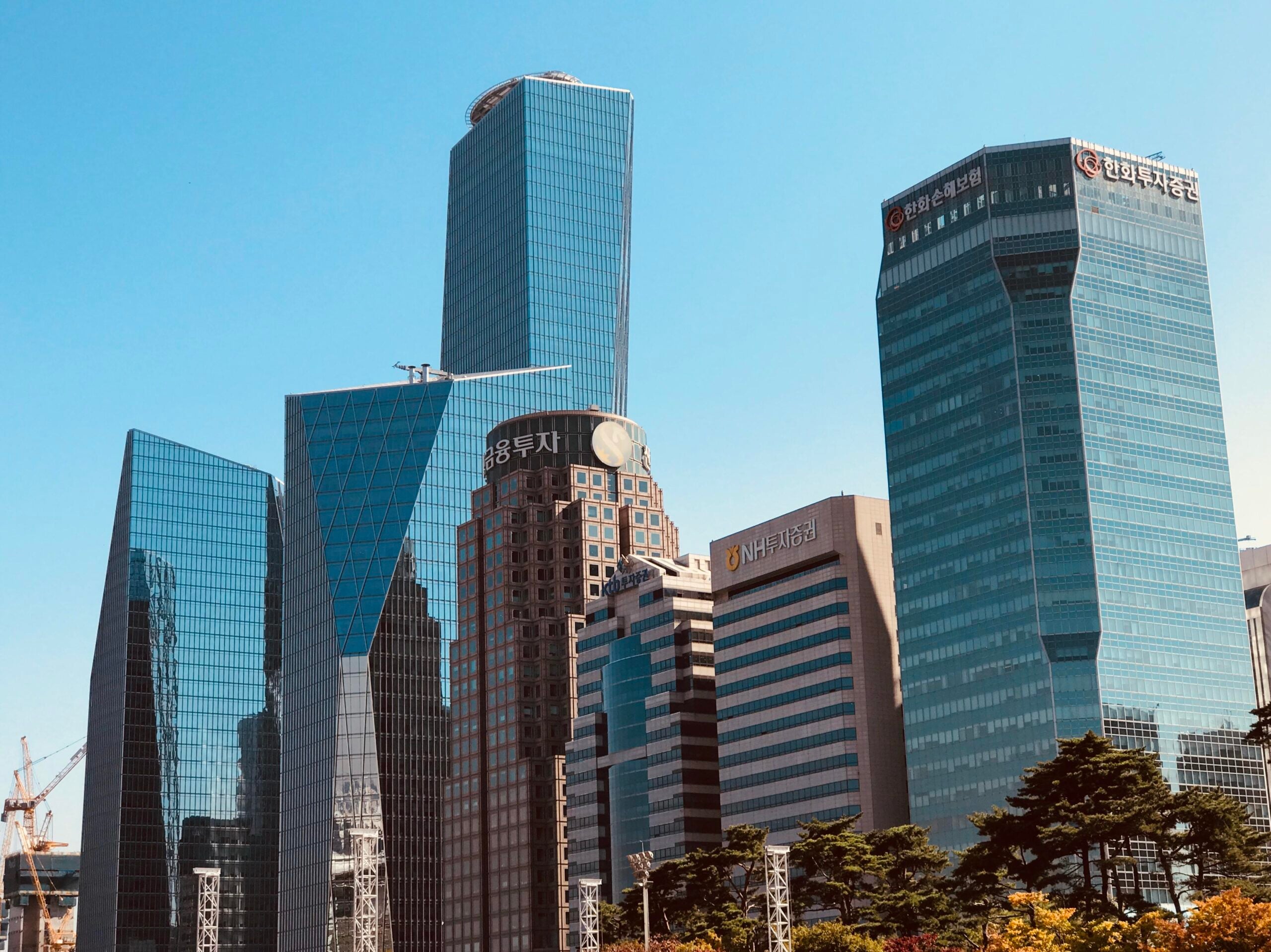
Nagoya Opens The Games With Old Grievances In The Stands
Japan opened the Asian Games on Saturday with pride, and its neighbours arrived carrying history. Emperor Naruhito declared the Games open at Mizuho Park Athletic Stadium in Nagoya, the first time Japan has hosted them since Hiroshima in 1994.
Forty-five countries and regions are competing in 43 sports, with more than 17,000 athletes and officials, according to the Olympic Council of Asia, the body that runs the Games. Japan sent 932 athletes, its largest team ever, and the hammer throwers Koji Murofushi and his father Shigenobu lit the cauldron.
The Games carry Japan’s price pressures inside them, from an original estimate of 100 billion yen (about US$633 million) for the Games and Para Games combined. That has risen above 370 billion yen (about US$2.34 billion), with a government subsidy of 13.6 billion yen (about US$86 million), Kyodo News reported.
Kyodo set the event against three decades of economic decline, in contrast with 1994, when the Games followed Japan’s bubble economy. Organisers hope a successful staging will rekindle public support, on Kyodo’s account.
Seoul arrived already offended. Before South Korea’s men’s hockey match against Bangladesh at Kakamigahara, in Gifu prefecture, on Friday, the stadium played North Korea’s national anthem.
Organisers apologised to the South Korean delegation at about 9 p.m. local time on Friday. “Playing the wrong national anthem, which represents a country, is something that should never happen at an international multisport competition,” said Ryu Seung-min, president of the Korean Sport and Olympic Committee.
It followed an earlier protest over a welcome ceremony on Tuesday. A performer dressed as Toyotomi Hideyoshi, the Japanese military leader who invaded Korea in the late 16th century, appeared at the arrival of a cruise ship used to house athletes.
Taiwan brought its own grievance and stood on it, after its sports minister, the two-time Olympic badminton champion Lee Yang, was held out of a flag-raising at the athletes’ village on Friday. The Olympic Council of Asia let him in later and called it a misunderstanding.
“We are doing our best to safeguard our rights and do not want to be subjected to any form of suppression,” Mr Lee said. Taiwan competes as Chinese Taipei and without its flag, because China claims the island.
The council’s president sounded weary of it. “We don’t mix sports with politics and we already have,” Sheikh Joaan bin Hamad Al Thani said hours before the ceremony.
Herald Business, a Seoul daily, found the evening flat. It said North Korea’s team and some others left during a performance at 7:25 p.m. local time and missed the lighting of the cauldron.
Ticket sales were below 60 per cent in 10 sports as of 7 September, on the same paper’s count. South Korea sent 50 of its 1,051 delegation members to the ceremony, a normal share, the paper noted, because training schedules keep most athletes away.
The weather is the Games’ last uninvited guest. Typhoon Dujuan could approach eastern Japan on 20 and 21 September, with up to 200 millimetres of rain possible around Tokyo, and the Tokyo Game Show cancelled its final day on 21 September.
Japan’s team chief, Kosei Inoue, said heavy rain had already delayed or postponed some competitions. The Japanese Olympic Committee was “holding thorough meetings” to be ready if the storm arrives, he said.
Beijing Arrives Aggrieved, And Quietly Exposed
Beijing spent the week remembering and preparing at the same time. On 18 September China marked the 95th anniversary of the September 18 Incident of 1931, when Japanese troops blew up a railway near Shenyang and used it as a pretext for invasion.
A bell tolled at the 9.18 Historical Museum in Shenyang before about 1,000 people, Xinhua, China’s state news agency, reported. The state-run Global Times wrote that “some in Japan still cling to militarist fantasies”, and read Ms Takaichi’s cabinet reshuffle of 17 September as a step towards constitutional revision.
The trade negotiator set off the next morning. China’s commerce ministry said Vice-Premier He Lifeng would lead a delegation to the United States from 19 to 23 September, guided by “the important consensus of the two heads of state”.
He meets Mr Bessent and the trade representative Jamieson Greer in New York on Sunday, Bloomberg reported. Energy disruptions from the Iran war, artificial intelligence and a tariff truce that expires in November top the agenda.
China also arrives exposed, a point its own statements this week left aside. “A US naval blockade has sharply curtailed crude oil flows to China,” Bloomberg reported, raising the prospect of cuts at the independent refineries that make up a third of China’s refining capacity.
China has an interest in reopening Hormuz “but limited leverage to force either side to change course”, said Jesse Marks, founder of Rihla Research and Advisory. He is a former Middle East policy adviser in the US government, Bloomberg reported.
Xi Jinping follows on Wednesday 23 September, the first state visit by a Chinese leader in more than a decade, the Associated Press reported. Mr Trump plans to greet him at Joint Base Andrews outside Washington, which is unusual, and to hold talks and an arrival ceremony at the White House on Thursday.
Washington armed itself the day before the negotiator left. Mr Trump signed the Lindsey O. Graham Sanctioning Russia and Iran Act on 18 September, which allows tariffs of up to 100 per cent on the largest buyers of Russian oil and gas, at the president’s discretion.
Beijing answered on Saturday in measured language. A commerce ministry spokesperson said China reserves the right to take “all necessary measures” to protect its sovereignty and development interests, and hoped the United States would “work with China in the same direction”.
India, the other large buyer, sounded unhurried. It said on 17 September that it would keep buying oil “through diversified sourcing”, Agence France-Presse reported.
Engineers India, a state-run firm, is in early talks with Saudi Arabia and the United Arab Emirates on about US$1 billion of pipelines and terminals that would bypass Hormuz. “Definitely, the conflict has opened more opportunities for us,” its chairman Atul Gupta told reporters, The Hindu reported on 19 September.
The currency moved as Beijing guided it. The offshore yuan reached its strongest level since July 2022 on Friday, after the central bank set a firmer daily reference rate for an eighth consecutive session, Bloomberg reported.
The next signal comes on Sunday 20 September, a working day in China under this year’s holiday schedule. All 21 market participants in a Reuters poll expect the loan prime rates, the benchmark lending rates for banks’ best customers, to stay at 3.00 and 3.50 per cent.
At home the housing market is quietly changing character. Second-hand homes made up 52 per cent of transactions in the first eight months of 2026, against 27 per cent in 2020, a housing ministry official said on Friday, calling it a new phase.
Hong Kong spent Saturday in mourning rather than in markets. Chief Executive John Lee and three former leaders attended a vigil for Tung Chee-hwa, the city’s first chief executive, who died on 8 September aged 89.
A public memorial follows on Sunday. Condolence books have been open to the public since Friday, RTHK, Hong Kong’s public broadcaster, reported.
Pakistan Holds Its Nerve On Three Fronts
Pakistan faced three pressures in one week, and the first was violence. It came in Kohat, a city in the north-western province of Khyber Pakhtunkhwa, which borders Afghanistan.
On Friday an explosives-laden vehicle blew up near the mosque of the Old Police Lines, and gunmen stormed the compound. The death toll rose to 23 on Saturday, and 91 injured people were taken to hospital, the Rescue 1122 emergency service said.
Friday’s count of 21 dead included 15 police officers. Security forces killed eight attackers in an operation that lasted about 20 hours, the Express Tribune, a Pakistani daily, reported.
A group called Ittihadul Mujahideen Pakistan, led by the Afghanistan-based militant Hafiz Gul Bahadur, claimed the attack, the same paper said. Its editorial called the attack “an indictment of the regime in Kabul”, meaning Afghanistan’s Taliban government.
The province’s police chief spoke with resolve. “The police, CTD and security forces fought bravely. The brave personnel are the pride of the nation,” said Zulfiqar Hameed, naming the Counter Terrorism Department among them.
The second front is the kitchen. Pakistan’s Sensitive Price Indicator, a weekly index of 51 essential goods in 17 cities, rose 10.64 per cent on a year earlier in the week to 17 September.
That is back in double digits from 8.62 per cent a week before, and fuel carried the rise. Diesel rose 7.29 per cent in a single week and petrol 6.40 per cent, and onions cost 117.77 per cent more than a year earlier, the Pakistan Bureau of Statistics said.
Some staples are cheaper than a year ago, with potatoes down 35.31 per cent and sugar 20.95 per cent. Prices rose 8.79 per cent for the lowest-spending households and 11.13 per cent for the highest.
The fuel importers are asking to be paid, and their association, the Oil Companies Advisory Council, says 66.7 billion rupees (about US$240 million) in price-differential claims are outstanding with the regulator. The Express Tribune put that sum at roughly five cargoes of petrol.
The third front is the capital, where the opposition Pakistan Tehreek-e-Insaf, the party founded by the former prime minister Imran Khan, and the religious party Jamaat-e-Islami prepare marches. Interior Minister Mohsin Naqvi said no group advance on Islamabad would be allowed, and warned that violators would face contempt proceedings.
He tied the fronts together. The nation was attending the funerals of its martyrs while others prepared sit-ins, he said, and he urged the Khyber Pakhtunkhwa government to fight terrorism rather than march.
Abroad, Pakistan pledged itself without conditions. Lt Gen Ahmed Sharif Chaudhry, the armed forces’ spokesman, told Arab News on 17 September that Pakistan would go “to any extent” to defend Saudi Arabia.
“Nothing stops us, nothing bars us,” he said of the defence of the kingdom and of the Haramain Sharifain, the holy mosques of Mecca and Medina. The Foreign Office added that decisions on the use of force remain an operational matter.
Kathmandu Is Judged On Delivery, Dhaka Still On Its Right To Govern
In Dhaka the argument is still about who has the right to govern. The Bangladesh Nationalist Party of Prime Minister Tarique Rahman has held power for seven months, since the election of 12 February, and its opponents are already marching.
Nahid Islam, convener of the National Citizen Party, which leaders of the 2024 student uprising founded, and the opposition’s chief whip, joined a long march from Dhaka to Rangpur. An 11-party alliance around Jamaat-e-Islami, Bangladesh’s largest Islamist party, leads it. “There is no security among the public,” he told a rally in Bogura on Saturday, and he called on the home minister to resign.
The “two votes” he spoke of were February’s general election and the referendum on the July Charter, a package of political reforms, held the same day. “They stole the result of one vote and formed the government through theft,” he said of the election.
He said the government is now denying the result of the other vote by forming a committee to amend the constitution. He called its members “usurpers and extortionists” and told the crowd: “We will not give them more time this time.”
The fear he named is felt in households. A 13-year-old boy, Ishiat Shahriar Opratim, was found dead in Cumilla on Saturday after leaving home with his mother’s iPhone, and police suspect the phone may have been the motive, the Daily Star reported.
Ain o Salish Kendra, a Bangladeshi rights group, counted 254 child deaths in media reports from January to August. “How safe are children when they leave home for something as ordinary as meeting friends?” the Daily Star asked.
Even unions loyal to the governing party are pushing back. Its workers’ groups at Chattogram port gave the government two days to halt plans to lease the New Mooring Container Terminal, the port’s largest, to Dubai-based DP World.
They plan protests from 22 September, and say the terminal earned 45 billion taka (about US$366 million) in revenue and 25 billion taka (about US$203 million) in net profit in 2025-26. The port authority’s chairman had warned that refusing DP World could affect 2.3 million Bangladeshi workers in Abu Dhabi, the unions said.
Nepal’s new government is judged on what it delivers, and its prime minister set that test himself on Constitution Day. Balendra Shah warned that even a strong constitution can become “just a piece of paper” if those who implement it are not honest, and promised zero tolerance for corruption.
The floods of 26 August along the Bhotekoshi and Trishuli rivers left at least 1,403 people dead and 6,150 missing, the Kathmandu Post reported from government figures. A preliminary government assessment put damage and losses at 408 billion Nepali rupees (about US$2.66 billion).
Finance Minister Swarnim Wagle is taking the case abroad, to the Asian Infrastructure Investment Bank in Doha on 28 and 29 September and to the International Monetary Fund meetings in Bangkok in October. “It’s a global menace. We felt it in Nepal, but the cause and the consequences are truly global and regional,” he told the Indian agency ANI.
His visit to the United States is not yet confirmed, he told the Kathmandu Post. Daily life shows the strain in smaller ways, as Kathmandu restaurants drop tandoori bread and fried dishes for lack of cooking gas.
“We are incurring losses daily. How can a business survive like this?” asked Krishna Pandey, who has cut nearly half his menu. Raj Luitel’s tandoor, which earned about 7,000 Nepali rupees (about US$46) a day, has been cold for weeks.
Sri Lanka’s government is pressing for accountability while its opponents protest a change to the higher courts. INTERPOL has issued a blue notice for the former minister Basil Rajapaksa at the request of the Criminal Investigations Department, Public Security Minister Ananda Wijepala told the Daily Mirror.
A blue notice asks police forces abroad for information on a person’s identity, location or activities. A leader of the main opposition party, Samagi Jana Balawegaya, has called for protests on 24 and 25 September against the proposed 22nd amendment to the constitution.
The amendment would raise the retirement age of top judges by two years and add judges to the top courts, the Associated Press reported. The government says it would cut court delays.
Central Asia Speaks With Quiet Self-Assurance
Central Asia’s leaders spent the week sounding sure of themselves. Kazakhstan’s President Kassym-Jomart Tokayev told volunteers of the Taza Qazaqstan clean-up campaign in Astana on Saturday that building a just and clean country is “the sacred duty of each of us”.
“Care about the well-being of Kazakhstan. We have no other Homeland,” he said. He also warned that “unthoughtful words can cause far greater damage than certain actions”.
He turned foreign praise into an instruction. After citing visiting American congressmen who admired Kazakhstan’s clean streets, he said: “Nevertheless, we must work to improve the social well-being of our citizens, not for image.”
Kazinform, the national news agency, listed the week’s sources of pride on Saturday. Elena Rybakina won the US Open and US$5.5 million in prize money and became world number one.
Mr Tokayev also announced commercial agreements with South Korea worth US$19 billion during a state visit to Seoul. Mr Trump congratulated him ahead of the 35th anniversary of independence on 16 December, Kazinform added.
Uzbekistan’s President Shavkat Mirziyoyev spent 18 and 19 September in Karakalpakstan, the autonomous republic in the west beside the Aral Sea. Projects worth nearly US$7.6 billion were launched or begun there, with 8,000 jobs expected, the Daryo news site reported from the presidential press service.
“This reflects significant confidence in our country and the opportunities we are creating for businesses,” said Saida Mirziyoyeva, head of the presidential administration. The region also knows the limits of that confidence.
One tripped plant can still darken four countries. On 14 August the loss of two units at Kyrgyzstan’s Toktogul hydropower station cut power across Kazakhstan, Kyrgyzstan, Uzbekistan and Tajikistan, the Astana Times recalled on 16 September.
Neighbours are also asking for favours. Afghanistan’s Taliban foreign minister, Amir Khan Muttaqi, asked Kyrgyzstan to support Taliban positions at the United Nations Security Council when Bishkek takes up its first two-year seat in 2027, Daryo reported on 18 September.
What This Means From Latin America
The question Asia asked this week travels well. Brazil’s Selic rate (the country’s benchmark interest rate) stands at 13.75 per cent, and every central bank in the region is judged partly on whether it is seen to decide for itself.
Japan’s steady tightening matters for money borrowed cheaply in yen and invested elsewhere. Unwinding such positions has moved the Brazilian real and the Mexican peso in past cycles, and the real stood at 5.1359 to the dollar on 18 September.
November Brent settled at US$103.87 a barrel on 18 September, down US$0.95 on the day. It is the benchmark Latin American producers budget against, while Japan’s refiners buy Gulf crude priced off Dubai and Oman and shipped through or around the disrupted Strait of Hormuz.
Any trade arrangement Mr Xi and Mr Trump reach next week touches Latin American farm exporters, who sell into the same Chinese market. The tariff truce that expires in November is the date to hold in mind.
The new American tariff power is discretionary, which makes it a planning risk for exporters in every hemisphere. The law takes effect within 30 days of signing, on The Week’s account.
What We Are Watching
- China’s loan rates on Sunday — 20 September, a working day in China. All 21 market participants in a Reuters poll expect the one-year rate held at 3.00 per cent and the five-year at 3.50 per cent.
- He Lifeng meets Bessent in New York — 20 September. The vice-premier’s delegation is in the United States from 19 to 23 September, and Jamieson Greer joins the talks.
- Typhoon Dujuan near Tokyo — 20 and 21 September. Up to 200 millimetres of rain is possible around Tokyo, with Asian Games medal events in its path.
- Takaichi and Trump in New York — Tuesday 22 September, on Jiji Press’s account, during the United Nations General Assembly, two days before the Trump and Xi summit.
- Xi Jinping’s state visit to Washington — 23 to 25 September. He arrives at Joint Base Andrews on Wednesday, with talks and an arrival ceremony at the White House on Thursday.
- The Bank of Japan’s new rate — The 1.25 per cent rate applies from 24 September, after Tokyo’s markets reopen from a three-day closure on 21 to 23 September.
- Korea’s Chuseok holiday and prices — 24 to 27 September. Government discounts of up to 40 per cent on farm goods run until 30 September.
- Sri Lanka’s protests over the judiciary — 24 and 25 September. The opposition protests against the 22nd amendment, which would raise top judges’ retirement age by two years, the Associated Press reported.
- Chattogram port workers’ protest deadline — Protests from 22 September if the government does not halt the terminal lease to DP World.
- The Asian Games close in Nagoya — 4 October. Some events began days before the opening ceremony to fit a crowded schedule, with venues in Aichi, Gifu, Shizuoka, Tokyo and Osaka.
The Bigger Picture
Every capital in this brief was asked, in one form or another, who decides. Tokyo’s newspapers asked it of their central bank, Seoul answered it for Washington, and Beijing recalled 1931 while its negotiator flew to New York.
The region sits across a spectrum this week, steadier in some places than others. Japanese savers are being paid again, the Asian Games opened and Kazakhstan’s president speaks of duty, while Tokyo ran a rate check to steady the yen.
The strain is heavier elsewhere. Kohat buried 23 people, Nepal counts at least 1,403 dead and 6,150 missing, Pakistan’s weekly prices run 10.64 per cent above a year earlier, and a US naval blockade has curtailed China’s crude.
Nepal’s finance minister is going abroad to seek help, and Seoul is weighing how far to protect its ships. None of this asks a reader to move money this week, only to watch who is deciding and where the strain falls.
Sources: Jiji Press on the Bank of Japan decision, Governor Ueda’s news conference, deposit and prime rates, food prices, mortgages, rice and the Petroleum Association of Japan. Also Nikkei for its editorial of 18 September and its market news service on the yen. Also the Tokyo Shimbun editorial of 19 September. Also Kyodo News on economists’ views, Silver Week and the Asian Games, Mogecheck on variable-rate borrowers, and Agora on mortgage costs. Also the Korea Herald on President Lee, the presidential office and the anthem apology, and Herald Business on the opening ceremony. Also Financial News and SBS Biz on the two Chuseok price surveys. Also The Hindu, carrying the Associated Press, on the Olympic Council of Asia, Taiwan and the early start of competition, and on Engineers India. Also the Taipei Times on the flag-raising, and Business Standard on Typhoon Dujuan and, carrying Bloomberg, on the New York trade talks. Also Local 10, carrying the Associated Press, on Xi Jinping’s itinerary. Also the Global Times on the commerce ministry’s reply, its 9.18 editorial and the housing ministry. Also RTHK on the anniversary and on Tung Chee-hwa, KFGO, carrying Reuters, on the loan rate poll, and The Star, carrying Bloomberg, on the yuan. Also The Week on the sanctions law and Malay Mail, carrying Agence France-Presse, on India’s reply. Also the Express Tribune on Kohat, prices, fuel, the marches and Saudi Arabia, and The Daily Star on Bangladesh. Also Wikipedia on the date of Bangladesh’s election and referendum. Also the Kathmandu Post on Nepal, and the Daily Mirror and WRAL, carrying the Associated Press, on Sri Lanka. Also Kazinform, Daryo, Kun.uz and the Astana Times on Central Asia. Primary sources: China’s commerce ministry on He Lifeng’s visit of 19 to 23 September 2026, and the State Council holiday notice that makes 20 September 2026 a working day. Also Japan’s agriculture ministry weekly rice prices and the Pakistan Bureau of Statistics weekly price index, both as reported. Market figures are the house settlements of 18 September 2026. Reporting from 16 to 19 September 2026. Currency conversions use the house table of 18 September and are approximate.
Frequently Asked Questions
Why did Japan’s newspapers question the Bank of Japan’s rate rise?
Because they feared the decision would be read as Washington’s rather than Tokyo’s. The Nikkei called the rise to 1.25 per cent appropriate, but wrote that monetary policy should rest on the bank’s “own analysis and accountability”. It named the United States Treasury Secretary, Scott Bessent, as the man who had repeatedly asked for rises, and told the government to declare that it respects the bank’s independent judgement. The Tokyo Shimbun wrote the next morning that a bank seen to act at Washington’s wish “risks losing the autonomy of monetary policy”. It asked Governor Kazuo Ueda to explain that the decision was the bank’s own.
What changes for Japanese savers and borrowers, and when?
From 2 November, Mitsubishi UFJ, Sumitomo Mitsui and Mizuho pay 0.5 per cent a year on ordinary deposits, up from 0.4 per cent and the most since 1992. From the same date Mitsubishi UFJ and Mizuho raise their short-term prime rate, the reference for variable-rate home loans, to 2.625 per cent. About 80 per cent of borrowers choose variable rates, on Mogecheck’s account. Agora calculated that a 35-year loan of 40 million yen (about US$253,000) costs roughly 5,000 yen (about US$32) more a month for each quarter-point rise. The policy rate itself applies from 24 September.
What is planned for Xi Jinping’s visit to Washington?
Xi Jinping arrives at Joint Base Andrews on Wednesday 23 September, and Donald Trump plans to greet him there, the Associated Press reported. Thursday brings an arrival ceremony, talks and a state dinner at the White House, and a private tea follows on Friday. Vice-Premier He Lifeng is in the United States from 19 to 23 September and meets Scott Bessent and Jamieson Greer in New York on Sunday. China’s commerce ministry said on 19 September that it reserves “all necessary measures” against the new US sanctions law. The tariff truce between the two countries expires in November.
What does this week change for someone living in Latin America?
Three things, in plain terms. First, Japan’s slow tightening makes money borrowed in yen dearer to hold, and unwinding such positions has moved the Brazilian real and the Mexican peso in past cycles. Second, November Brent settled at US$103.87 a barrel on 18 September, the price Latin American producers budget against. Third, any trade arrangement between the United States and China next week touches Latin American exporters who sell into the same Chinese market. None of this asks a reader to move money this week.
This article was produced by The Rio Times’ automated newsroom system. How we use AI · Report an error