USA & Canada Intelligence Brief August 17, 2026: Two Days And A Phone Call
Executive Summary
USA Canada Intelligence Brief August 17: a constructive Sunday call, two days before a 50% tariff on $20bn of Canadian goods takes effect.
Rio Times · USA & Canada Intelligence Brief August 17
Key Facts
—A one-hour call on Sunday Canada’s Canada–US trade minister, its chief negotiator and the American trade representative met virtually, in a session a spokesperson called constructive.
—Two days left A 50% tariff on roughly $20 billion of Canadian goods takes effect at 12:01 am eastern on Wednesday.
—Three grievances named The proclamations signed on 20 July answer three American grievances — Canada’s auto tariffs, provincial alcohol bans and dairy quotas. What they actually tax is alcohol, dairy and a 500-line basket of other goods.
—No treaty exemption Unlike most other tariffs, these carry no carve-out for goods that comply with the continental trade agreement.
—What is excluded Energy, potash, fish, critical minerals and goods already under separate tariffs are outside the measure.
—What Ottawa may give Items reported on the table include Canada’s retaliatory auto tariffs, provincial restrictions on American alcohol, and dairy quota structure.
USA & Canada Intelligence Brief August 17 — Two governments spent Sunday on a video call and have two days left.
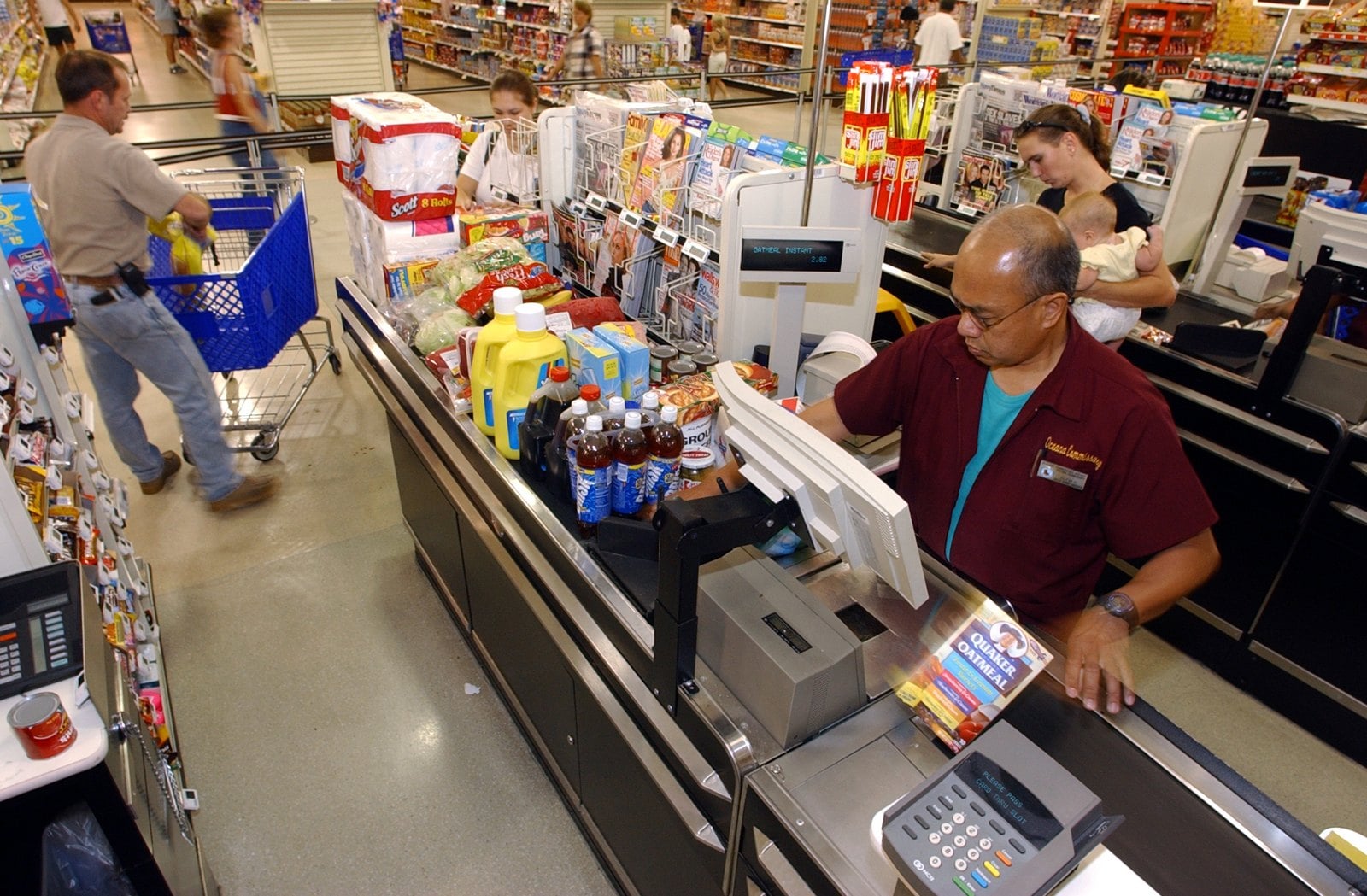
What is actually being negotiated is cars, whisky and milk.
The Talks – One Hour on a Sunday
Described as constructive
Dominic LeBlanc, the minister responsible for Canada–US trade, chief negotiator Janice Charette and United States Trade Representative Jamieson Greer held a one-hour virtual meeting on Sunday. A spokesperson for LeBlanc described it as constructive.
They took stock of the work done by their respective negotiating teams, the spokesperson said, and discussions are continuing. LeBlanc and Charette had spent the weekend in Washington after meetings the previous week.
A run of meetings without an outcome
Sunday’s session followed a ninety-minute meeting in Greer’s office on Thursday, their fourth in three weeks. Asked then how many more would be needed, LeBlanc said they would have as many meetings as it takes.
Frequency is not progress and neither side has announced terms. Two days before a deadline, that distinction is the whole story.
The Tariff – Cars, Whisky and Milk
Three proclamations, three sectors
The president signed three proclamations on 20 July imposing 50% tariffs on Canadian goods, citing what the administration characterised as discriminatory treatment of American products. Each is named for an American grievance — Canada’s auto tariffs, provincial alcohol bans, dairy quotas — but the goods actually taxed are alcohol, dairy and a basket of some 500 unrelated tariff lines: cement, furniture, textiles, machinery, motorcycles, hockey sticks. Canadian cars and parts are exempt, because they already carry separate duties. The measures cover roughly 20 billion dollars of imports on the trade representative’s estimate.
Unusually, there is no exemption for goods that would otherwise qualify under the continental trade agreement. Energy, potash, fish, critical minerals, civil aircraft and goods already under separate tariffs are excluded.
What Washington says it wants
The administration points to Canada’s 25% counter-tariff on non-compliant American-made vehicles, a near-total halt on American alcohol purchasing by Canadian provinces, and the structure of dairy quotas. Ottawa’s own ask — relief from the separate steel, aluminium, auto and lumber duties — is the other half of the trade, and it has threatened to match any new tariff. Items reported on the table include eliminating the retaliatory auto tariff, lifting the provincial alcohol restrictions and reworking those quotas.
Those are specific, enumerable concessions rather than vague commitments. That is usually a sign a deal is possible.
The Treaty – Why This Outlasts Wednesday
Sixteen years declined
The administration said at the 1 July joint review that it would not extend the continental trade agreement for another sixteen years. Canada and Mexico both confirmed; the United States alone did not. That triggered an annual rolling review running to 2036.
The three can still confirm the sixteen-year extension in writing at any one of those annual reviews. If none of them does, the agreement expires in 2036. Unanimity on a yearly clock is a materially different standard from automatic renewal.
A tariff reverses, a structure does not
Wednesday’s measure can be undone with a signature and probably will be at some point. An agreement placed under annual review for ten years changes how every factory investment in North America is priced.
Capital committed to a plant expects the rules to hold for longer than a year. That sentence is the most consequential in this brief.
Negotiators held a constructive one-hour call on Sunday with two days left before a 50% tariff on cars, whisky and milk — while the treaty underneath it all now runs on annual renewal for a decade.
Mexico – The Silent Third Party
Same agreement, same clock
The agreement binds the United States, Canada and Mexico, so the annual review reaches Mexican industry on precisely the same schedule. Continuation at the end requires all three governments to agree.
Mexico has no part in Wednesday’s deadline and every part in the structure behind it. It is a full party and a spectator at once.
And a second argument arriving
China’s embassy in Washington rejected American accusations of tariff evasion through third countries last week, answering a White House report that named more than forty countries. That charge reaches any economy hosting Chinese-owned plants that export north.
Mexican industrial parks host exactly that investment. The nearshoring case assumed hosting foreign factories was straightforwardly beneficial, and this tests the assumption.
The Consumer – Negotiating Into a Weaker Market
Down 0.6% and 51
American retail sales fell 0.6% in July, to 763.6 billion dollars for the month, the steepest drop since May 2025 and against a consensus of about 0.1% growth. Consumer sentiment slid about 8% early this month to a preliminary 51.
The control group used to calculate economic growth fell 0.4%. Economists attribute much of the decline to tax refunds being exhausted after supporting second-quarter spending.
A prize worth less than it was
Canada is negotiating access to a market where spending has just weakened and confidence has dropped sharply. Its own labour market added 75,100 jobs in July, a third straight monthly fall in unemployment, to a two-year low of 6.4%.
Domestic execution has not been Ottawa’s problem. The variable it needs is one it does not control.
What This Means From Latin America
Watch the structure, not the deadline
Wednesday will resolve one way or another and be forgotten within a quarter. A decade of annual reviews with a unanimity requirement at the end will be priced into every North American industrial decision until 2036.
Mexican industrial property, automotive supply chains and export financing all depend on certainty of access. That certainty has been formally shortened and nobody has priced it yet.
And the sectors chosen tell you something
Energy, potash and critical minerals were excluded from the tariff while alcohol, dairy and a long list of finished goods were not. Washington is willing to tax finished consumer goods and unwilling to tax its own input costs.
Latin American exporters of raw materials should read that exclusion carefully. It is a statement about where American leverage stops.
The Bigger Picture
Canadian and American negotiators held a one-hour virtual meeting on Sunday that a spokesperson described as constructive, with discussions continuing and no terms announced. A 50% tariff on roughly 20 billion dollars of Canadian goods takes effect at 12:01 am eastern on Wednesday, with no exemption for goods complying with the continental trade agreement. It is named for the auto dispute but taxes alcohol, dairy and some 500 other tariff lines; cars and parts are exempt, already being under separate duties.
Energy, potash, fish, critical minerals and civil aircraft are excluded. Washington points to Canada’s 25% counter-tariff on non-compliant American vehicles, provincial restrictions on American alcohol and dairy quota structure, all of which are reported to be on the table. Ottawa wants relief from the separate steel, aluminium, auto and lumber duties in return.
For Latin American readers the structure outlasts the deadline. The agreement now runs on annual review for a decade with unanimity required at the end, and Mexico sits on the same clock without a seat at Wednesday’s negotiation.
USA & Canada Intelligence Brief August 17: What We Are Watching
- Today – Whether negotiators present the president a path to a deal as intended.
- Wednesday – The 50% tariff, from 12:01 am eastern.
- Coming years – The annual review of the continental agreement, now running a decade.
- Ongoing – The transshipment argument, which China’s embassy in Washington rejected last week.
- 26 August – The personal consumption expenditures index, at 8:30 am eastern.
- 15 and 16 September – The Federal Reserve meeting, priced at roughly a 25% to 30% chance of an increase, down from about 65% in late July.
Go Deeper
The full US & Canada Intelligence Dossier — the interactive risk dashboard, the six people who matter and the downloadable PDF — is updated daily by the Rio Times Intelligence Desk.
More from the Rio Times Intelligence Desk on August 17: the Africa Intelligence Brief, the Asia Intelligence Brief and the Europe Intelligence Brief. For how these stories developed, see the USA & Canada Intelligence Brief for August 15 and the USA & Canada Intelligence Brief for August 14.
The USA & Canada Intelligence Brief August 17 returns tomorrow morning.
The Big Picture
Frequently Asked Questions
What happened in Sunday’s trade talks?
Dominic LeBlanc, the minister responsible for Canada–US trade, chief negotiator Janice Charette and United States Trade Representative Jamieson Greer held a one-hour virtual meeting that a spokesperson for LeBlanc described as constructive. They took stock of work done by their respective negotiating teams and discussions are continuing, with LeBlanc and Charette having spent the weekend in Washington after meetings the previous week.
What exactly does the tariff cover?
Three proclamations signed on 20 July impose 50% tariffs covering roughly 20 billion dollars of imports, with no exemption for goods that would otherwise qualify under the continental trade agreement. They are named for American grievances over autos, alcohol and dairy, but what they tax is alcohol, dairy and a basket of some 500 other tariff lines — Canadian vehicles and parts are exempt, already being under separate duties. Energy, potash, fish, critical minerals, civil aircraft and goods already subject to separate tariffs are excluded.
What is Canada being asked to give?
The administration points to Canada’s 25% counter-tariff on non-compliant American-made vehicles, a near-total halt on American alcohol purchasing by Canadian provinces, and the structure of dairy quota arrangements. Items reported on the negotiating table include eliminating the retaliatory auto tariff, lifting the provincial alcohol restrictions and reworking those quotas.
Why does the treaty review matter more than the tariff?
The administration declined at the 1 July joint review to extend the continental agreement for another sixteen years, while Canada and Mexico confirmed, triggering an annual rolling review that runs to 2036. The three can confirm the extension at any of those reviews; if none does, the agreement expires. A tariff can be reversed with a signature, whereas an agreement under annual renewal changes how every long-horizon factory investment in North America is priced, and Mexico sits on the same schedule.
Sources: The Canadian Press, CP24, Quartz, CBC News
This article was produced by The Rio Times’ automated newsroom system. How we use AI · Report an error