Copper Slides as China Demand Fears Hit Chile, Peru Supply
Key Facts
- Copper slipped again with the CPER copper futures tracker settling at 38.33 dollars, down 1.13% day-on-day.
- Chile remains the world’s top copper producer with Peru holding second place, anchoring global supply from Latin America according to industry and government data not contradicted by recent reporting.
- China still sets the tone for copper demand as its construction, manufacturing and grid spending dominate global consumption and drive sentiment across metals markets.
- The energy transition keeps a structural bid under copper because electrification, renewables and electric vehicles all require far more wiring and high-grade metal than fossil-heavy systems.
- Southern Copper eased in the latest session closing at 178.96 dollars with a 0.20% daily decline, reflecting cautious positioning in a Peru- and Mexico-heavy miner.
- Freeport-McMoRan also traded lower ending at 61.64 dollars, down 1.72% on the day as investors trimmed exposure to large-scale copper producers.
Today’s Focus
Copper futures, as tracked by CPER, moved lower again with a 1.13% daily drop, underscoring investor unease about near-term demand despite a widely acknowledged long-term need for the metal.
The benchmark miners followed the move, with Southern Copper slipping modestly and Freeport-McMoRan underperforming as investors reassessed exposure to large Latin American and US-linked copper assets.
Behind the price action is a familiar push-and-pull: China’s uneven recovery and policy uncertainty versus the powerful structural demand from the global energy transition, which increasingly depends on Chilean and Peruvian supply.
For Latin America-focused readers, the story is less about a single down day and more about how political decisions in Santiago, Lima, Beijing and Washington will shape future copper flows and investment returns.
What matters today. What matters now is whether China’s policy mix and Latin American supply politics tighten or ease the copper market, a combination that will show up first in futures and the big miners’ share prices.
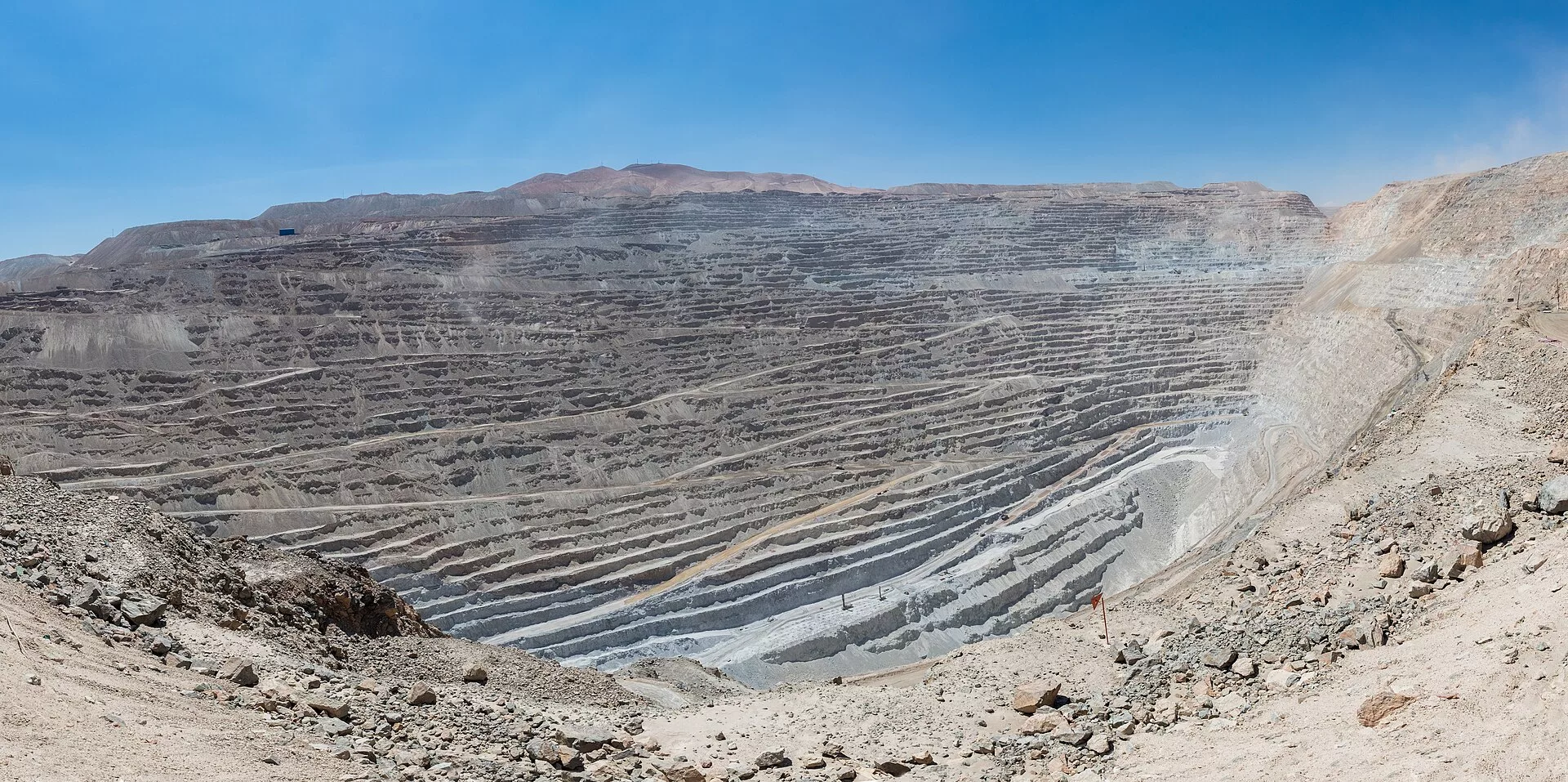
01 The session in one read
Copper futures, as represented by CPER, ended the latest settled session lower, with a 1.13 percent day-on-day decline that left the tracker at 38.33 dollars and signalled a cautious tone among traders.
Equity investors mirrored that caution, with Southern Copper edging down 0.20 percent to 178.96 dollars and Freeport-McMoRan falling 1.72 percent to 61.64 dollars as risk appetite for big copper producers softened.
For a foreign investor looking at Latin America, the move is a reminder that copper sits at the junction of global growth nerves and the still-building investment wave around clean energy and electrification.
The latest session’s decline in copper futures and the pullback in leading miners point to a market still caught between short-term macro doubts and a long-term energy transition story that fundamentally needs more metal. For investors watching Latin America, the key variable to watch is China’s policy-driven demand signal.
02 The board
The copper futures board, seen through the CPER tracker, closed at 38.33 dollars after a 1.13 percent daily drop, a move that captures how sensitive the metal remains to shifting views on industrial activity and Chinese demand.
On the equities side, Southern Copper’s 178.96-dollar close with a 0.20 percent decline and Freeport-McMoRan’s 61.64-dollar finish after a 1.72 percent slide show investors trimming exposure to the producers that translate futures curves into real Latin American mine output.
| Asset | Level | Change |
|---|---|---|
| Copper (CPER tracker) | 38.33 $ | -1.13% |
| Southern Copper | 178.96 $ | -0.20% |
| Freeport-McMoRan | 61.64 $ | -1.72% |
Source: EODHD close, 2026-07-28. Where a commodity has no spot feed, an exchange-traded tracker or leading producer is shown as a labelled proxy.
Live Market IntelligenceThe live market board
Rio Times · Live Market Intelligence
Latin America — Cross-Market Board
| Instrument | Last | Change | YoY | Prev. | High | Low | Volume |
|---|---|---|---|---|---|---|---|
| IBOV | 176,564.75 | +0.70% | +33.63% | 175,334.46 | — | — | — |
| IPSA | 10,879.65 | -0.77% | — | 10,964.11 | 10,973 | 10,830 | 1,513,213,483 |
| IPC MEX | 67,304.62 | +0.18% | +17.91% | 67,183.26 | — | — | — |
| MERVAL | 3,256,362 | -1.48% | +47.11% | 3,305,316 | — | — | — |
| COLCAP | 2,301.24 | +0.80% | — | 9.04 | 9.05 | 9.02 | 4,133 |
| BVL PERÚ | 57,237.60 | — | — | — | — | — | — |
| USD/BRL | 5.13 | +0.15% | -8.20% | 5.12 | 5.13 | 5.12 | — |
| EUR/BRL | 5.84 | +0.29% | -9.76% | 5.82 | 5.84 | 5.83 | — |
| USD/MXN | 17.44 | +0.08% | -6.95% | 17.43 | 17.46 | 17.41 | — |
| USD/CLP | 931.73 | -0.86% | -2.69% | 939.85 | 931.73 | 931.26 | — |
| USD/COP | 3,202 | -0.08% | -23.29% | 3,204 | 3,202 | 3,196 | — |
| USD/PEN | 3.39 | -0.33% | -6.87% | 3.40 | 3.40 | 3.39 | — |
| USD/ARS | 1,499 | +0.15% | +15.88% | 1,497 | 1,499 | 1,499 | — |
| USD/UYU | 40.20 | +1.42% | +1.56% | 39.64 | 40.20 | 40.20 | — |
| USD/PYG | 6,020 | +1.46% | -18.45% | 5,933 | 6,020 | 6,020 | — |
| USD/BOB | 11.30 | +3.36% | +67.00% | 10.93 | 11.30 | 11.30 | — |
| USD/DOP | 57.82 | +0.47% | -4.43% | 57.55 | 57.92 | 57.77 | — |
| USD/CRC | 449.99 | +1.60% | -8.79% | 442.90 | 449.99 | 449.99 | — |
03 What moved it
The downward drift in copper futures reflects lingering doubts about the strength and consistency of China’s recovery, with traders wary that uneven construction data and cautious infrastructure spending could cap near-term demand even if longer-term needs stay intact.
Broader global markets have recently traded in a tight range, and that low-conviction backdrop means any hint of softer manufacturing or export momentum can trigger profit-taking in cyclical commodities like copper, especially when speculative positions have built up on the energy transition narrative.
04 The Latin American read
Chile’s status as the world’s leading copper producer and Peru’s role as number two mean that price swings are never just an abstract chart for Latin America; they feed directly into export revenues, fiscal room for social spending and the politics of mining regulation.
For foreign readers, this is why debates over royalties, community consent and environmental rules in Santiago and Lima matter financially far beyond the Andes: they influence how much copper the world can rely on from its core producing belt, and at what political cost.
05 The names to watch
Southern Copper, with its deep footprint in Peru and Mexico, offers a leveraged read on both copper prices and the policy environment in key Latin American jurisdictions, making its modest daily decline an early signal rather than a verdict on the region.
Freeport-McMoRan, which combines US exposure with major Latin American operations, tends to amplify copper’s global story in equity form, and its sharper 1.72 percent drop suggests investors are still willing to cut cyclical risk quickly when macro doubts resurface.
06 What to watch
- China stimulus signals: Watch for any concrete fiscal or monetary easing from Beijing, as copper is hypersensitive to Chinese construction and grid-spending pledges that could quickly reverse the current cautious tone.
- Chilean royalty legislation: Keep an eye on political developments in Santiago, where mining tax and royalty debates can shift the long-term incentive to bring new supply online from the world’s top producer.
- Peruvian social licence: Monitor community relations and permit timelines in Peru, because disruptions in the number-two producer can tighten the physical market faster than many foreign investors expect.
- Energy transition capex: Track global clean-energy spending data; any acceleration in electrification and renewable projects would reinforce the structural bid under copper, regardless of short-term macro wobbles.
Frequently Asked Questions
What is CPER and how does it relate to copper prices?
CPER is an exchange-traded product that tracks copper futures rather than the physical spot price, giving investors a way to gain exposure to the expected future value of the metal without holding barrels or cathodes.
Why does China matter so much for copper?
China consumes roughly half the world’s copper, using it in everything from apartment blocks and power grids to washing machines and electric cars, so its economic rhythm sets the beat for global prices.
Which Latin American countries dominate copper supply?
Chile is the world’s largest copper producer and Peru ranks second, together forming a supply belt that makes Latin America indispensable to the global energy transition.
Why did Freeport-McMoRan fall more than Southern Copper on the day?
Freeport-McMoRan tends to carry higher beta to copper price moves and global macro sentiment, so the 1.72 percent decline likely reflects its role as a liquid vehicle for investors cutting cyclical risk, while Southern Copper’s smaller drop suggests steadier positioning.
In depth
LatAm Markets: Live Signals → — real-time movers, turnover leaders and FX across Latin America.
Read More from The Rio Times