Stablecoins Are Digital Dollars. Latin America Uses Them More Than Any Other Region.
LATIN AMERICA · MONEY
Key Facts
- —The instrument A stablecoin is a digital token built to hold a fixed value, almost always one US dollar. It settles in seconds.
- —Why it matters Where the local currency loses value, people hold them as a savings account that does not shrink.
- —Where it is largest An International Monetary Fund working paper puts 2024 flows in Latin America and the Caribbean at 7.7 per cent of economic output, just ahead of Africa and the Middle East.
- —The catch That is money changing hands, not money held. The typical transfer behind it is US$51.
- —What turns on it The firms issuing these tokens bought about US$33 billion of short-term US government debt in 2025.
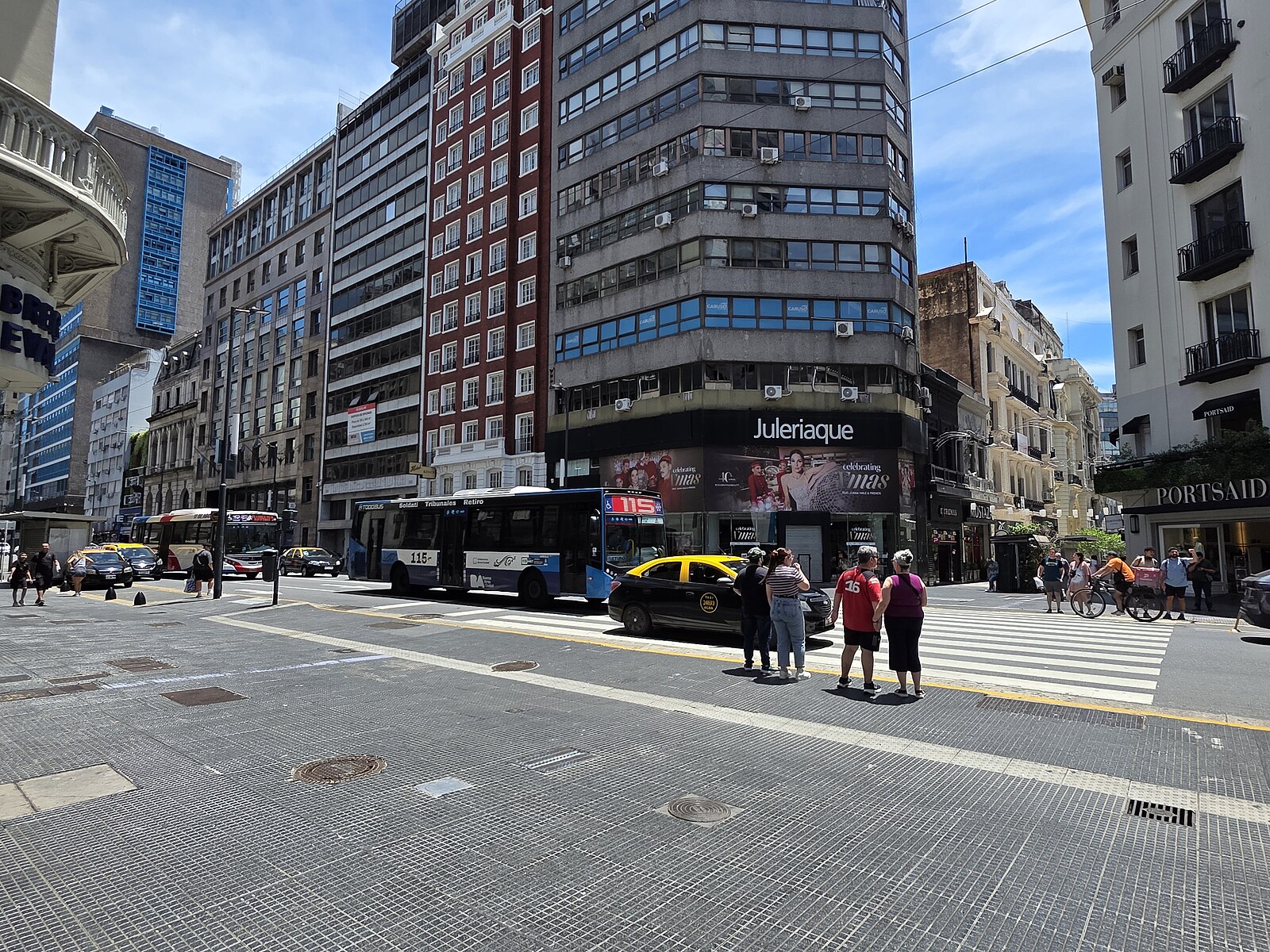
Someone in Buenos Aires who wants dollars has long had two options. Queue at a bank under whatever rules apply that month, or buy notes in the informal market at a worse rate.
Since about 2021 there is a third. They open an app and swap pesos for a stablecoin — a digital token a company promises will always be worth one US dollar.
Enough people now do this that it registers with institutions that watch currencies. In May 2026 Christine Lagarde, president of the European Central Bank, put flows in these tokens at 7.7 per cent of Latin American output.
What the 7.7 per cent figure actually counts
It matches an estimate in an IMF working paper of July 2025, by Marco Reuter, an economist in the fund’s research department. The IMF prints a line on every working paper saying the views are the author’s alone.
What it measures is flows: tokens moving on and off exchanges during 2024, counted both ways, over the region’s output. That is turnover, not holdings.
On a regional economy of roughly US$5 trillion, that is some US$375 billion a year of movement. The global stock of all stablecoins is about US$300 billion, so the same dollar is counted repeatedly.
The paper’s own tables show what sits underneath. The median transfer in the region is US$51, the smallest anywhere; the average is US$14,005.
A few very large transfers do most of the work. Blockchains also do not record countries, so the geography is estimated by a model right about 65 per cent of the time.
Why stablecoins in Latin America keep spreading
None of that makes the behaviour imaginary. Argentine prices rose 211 per cent in 2023 and 118 per cent in 2024.
Three generations there have learned that pesos are the riskier thing to hold. The habit of reaching for dollars long predates the phone.
Chainalysis, a firm that tracks blockchain transactions, reported this week that Argentine wallets holding at least US$10,000 in stablecoins were up 82 per cent. Those are estimates too, and wallets are not people.
Where the money ends up
This is the part that reaches people who have never thought about a peso. Issuers must hold something safe behind the tokens they sell, and what they mostly hold is short-dated US government debt.
Tether, the largest issuer, says it held US$114.96 billion of US Treasury bills at the end of June 2026. The figure comes from its own quarterly statement, reviewed by the accountancy firm BDO.
The Bank for International Settlements is the Basel institution that acts as a bank for central banks. A working paper there estimates issuers bought about US$33 billion of Treasury bills in 2025, after roughly US$35 billion in 2024.
It finds those purchases nudge short-term yields down by hundredths of a percentage point. Its authors call that a lower bound for what selling under pressure would do.
The case that this is overstated
Several institutions that have looked hard at this think the alarm runs ahead of the evidence. In April 2026 the general manager of the BIS, Pablo Hernández de Cos, weighed the global market against US$8 trillion in American bank deposits.
The arithmetic on usage is starker. McKinsey and the data firm Artemis put genuine payments at about US$390 billion of some US$35 trillion in annual volume.
Latin America and Africa each accounted for under US$1 billion. The projections that alarm people are forecasts, not measurements.
Standard Chartered published the best known in October 2025: emerging-market stablecoin savings rising from about US$173 billion to some US$1.2 trillion by 2028. A paper circulated this month builds on it.
Its authors are a crypto executive at Silicon Valley Bank and the head of a firm that sells the settlement infrastructure the paper recommends.
Brazil is narrowing the channel
Brazil is the awkward case. It is the region’s largest crypto market, ranked first in the world for adoption, and the one closing doors.
From 1 October 2026 its central bank bars virtual assets, stablecoins included, from settling between a Brazilian cross-border payment provider and its counterparty abroad. Since February 2026, buying and selling them counts as a foreign-exchange operation.
Licensed intermediaries now need capital of 10.8 million to 37.2 million reais — about US$2.1 million to US$7.3 million, at 5.11 reais to the dollar. Four Brazilian exchanges have closed this year.
What comes next
Two things are worth watching. Whether Brazil’s October restriction reroutes regional flows, and whether any central bank here starts asking exchanges what its residents actually hold.
The IMF has urged them to. Its first deputy managing director, Dan Katz, said in August 2026 that authorities cannot manage capital flows without knowing their size and direction.
He warned that substitution through tokens could spread faster than the dollarisation of earlier decades. He also said there is no clear evidence yet of money leaving banks.
What this is not: nothing here has happened yet. No currency has been displaced, no bank run traced to a stablecoin, no central bank here reporting a loss of monetary control.
A BIS working paper of July 2026, covering 130 economies, found dollarisation hard to reverse once established. How much is held in total, nobody knows, because nobody has counted.
Frequently Asked Questions
What is a stablecoin, in plain terms?
A digital token issued by a private company that promises it will always be worth a fixed amount, almost always one US dollar. The company holds assets behind that promise, mostly short-term US government debt. Unlike bitcoin, it is not meant to rise.
Why would someone in Argentina want dollars on a phone?
Because the alternatives are worse. Bank access to dollars has been restricted for long stretches, the informal market charges a premium, and cash has to be stored somewhere. A token can be bought in minutes, without a bank account.
Does any of this affect the US bond market?
A little, and the size is known. Researchers at the Bank for International Settlements find money flowing into stablecoins pushes short-term Treasury yields down by hundredths of a percentage point. How much traces back to savers in weak-currency countries is not known.
Sources: Marco Reuter, ‘Decrypting Crypto: How to Estimate International Stablecoin Flows’, IMF Working Paper WP/25/141, July 2025; Christine Lagarde, speech at the Banco de España LatAm Economic Forum, 8 May 2026; Rashad Ahmed and Iñaki Aldasoro, ‘Stablecoins and safe asset prices’, BIS Working Paper No 1270, May 2025, revised June 2026; Pablo Hernández de Cos, ‘Stablecoins: framing the debate’, Bank of Japan seminar, 20 April 2026; Dan Katz, ‘Stablecoins: Promise, Risks, and Policy Choices for Emerging Markets’, University of Cape Town, 7 August 2026; Hofmann, Mehrotra and Paulick, BIS Working Paper No 1370, 21 July 2026; Chainalysis, 2026 Geography of Cryptocurrency Report, 23 September 2026; McKinsey and Artemis, ‘Stablecoins in payments’, 18 February 2026; BDO assurance report on Tether International, S.A. de C.V., 30 June 2026; Banco Central de la República Argentina; Banco Central do Brasil Resolutions 519, 520, 521/2025 and 561/2026; and ‘Runaway Dollarization’, September 2026, by Anthony Vassallo of Silicon Valley Bank and Arnold Lee of Sphere Labs. Accessed 24 September 2026.
This article was produced by The Rio Times’ automated newsroom system. How we use AI · Report an error
Read More from The Rio Times