South Korea Plunges into Leadership Vacuum as Finance Minister and Acting President Resign
South Korea’s Finance Minister Choi Sang-mok submitted his resignation late Thursday, deepening the leadership crisis that began earlier when Acting President Han Duck-soo also stepped down.
Choi resigned minutes before the opposition-controlled parliament planned to vote on his impeachment. His departure complicates governance efforts as the country faces economic challenges and prepares for a presidential election on June 3.
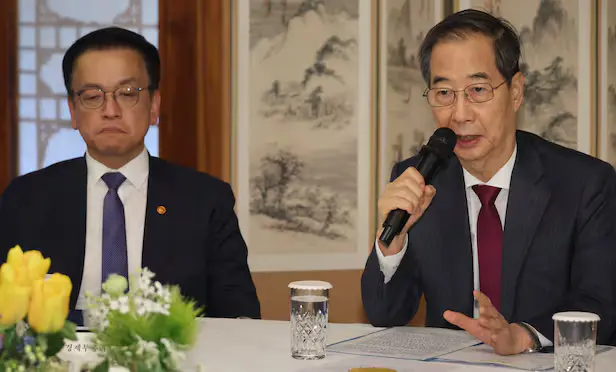
Han announced his resignation during a televised statement, saying he needed to assume “a heavier responsibility” for the nation. South Korean media reports indicate he will formally launch his presidential campaign today.
This solidifies his position as the likely conservative candidate against Democratic Party frontrunner Lee Jae-myung. Education Minister Lee Ju-ho has now assumed acting presidential duties, while First Vice Finance Minister Kim Beom-seok takes over the finance portfolio.
This succession follows constitutional procedures after both senior officials departed within hours of each other. The political upheaval traces back to December when former President Yoon Suk Yeol declared martial law, leading to his impeachment and removal from office on April 4.
His actions triggered the current political crisis and necessitated next month’s special election. South Korea’s economy faces significant headwinds amid the leadership turmoil.
South Korea’s Economy Shrinks as Growth Outlook Dims
The country’s GDP contracted by 0.2% in the first quarter of 2025, marking its first quarterly decline in nine months. Weak consumer spending, delayed investment, and export challenges all contributed to the downturn.
The National Assembly approved a supplementary budget of 13.8 trillion won ($9.7 billion) on Thursday to stimulate growth. This budget exceeds the government’s initial proposal of 12.2 trillion won and allocates funds for infrastructure, regional vouchers, fresh produce discounts, and wildfire recovery.
Morgan Stanley recently slashed South Korea’s 2025 growth outlook to just 1.5%, citing persistent weak domestic demand and rising global trade tensions. The Bank of Korea similarly reduced its forecast to between 1.6% and 1.7%, down from an earlier 1.9% projection.
Economic challenges may intensify as South Korea confronts potential U.S. tariffs and continues navigating political uncertainty until a new president takes office next month.
This article was produced by The Rio Times’ automated newsroom system. How we use AI · Report an error
Read More from The Rio Times