Uganda’s Namayingo Gold Mine Collapse Kills 6 After Ban
Uganda · MINING
Key Facts
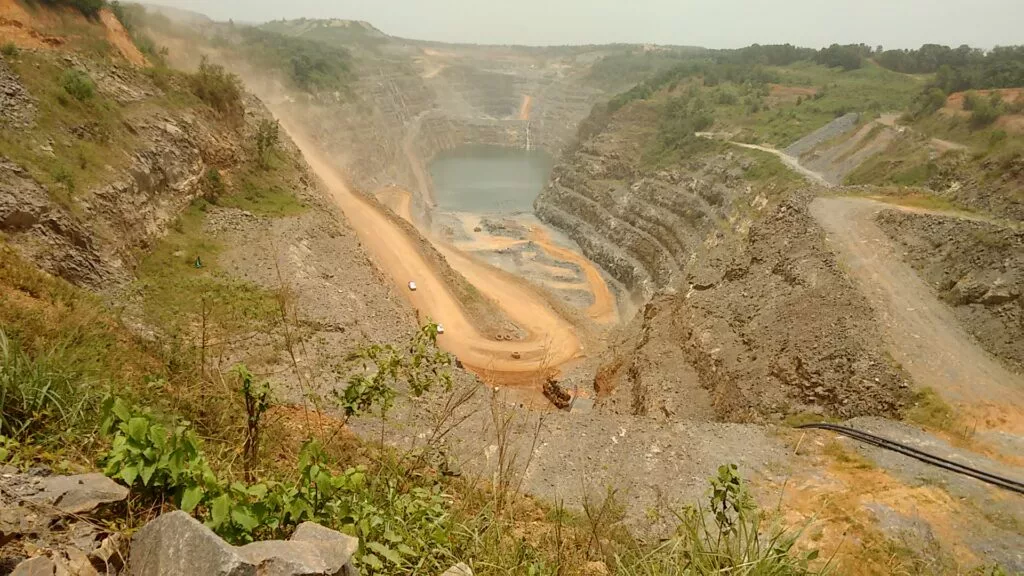
The collapse: An illegal gold mine at Mabuka Village in Namayingo District caved in on Saturday 18 July 2026, at a depth of roughly 120 feet.
Casualties: Six miners are confirmed dead. Seven survivors were rescued and taken to Masafu Hospital in Busia District for treatment.
Retrieval concluded: Busoga East Regional Police spokesperson Michael Kasadha confirmed that rescue operations were formally concluded on Tuesday.
Prior closure: The Minerals Protection Unit closed the site on 2 June 2026 over serious safety concerns, after earlier collapses in late May left one dead and two severely injured.
Illegal reopening: Local operators clandestinely reopened the shaft after the closure, bypassing licensing and safety requirements.
Suspected operator: Police are hunting three pit owners, identified as Sam, Peter and Swengere, over the illegal reopening.
Six miners are confirmed dead after an illegal Namayingo gold mine collapsed in eastern Uganda on 18 July 2026, with retrieval operations now formally concluded and police hunting the suspected operator who reopened a site that authorities had sealed weeks earlier.
What happened at the Namayingo gold mine
The underground pit at Mabuka Village, Bukana sub-county, caved in on Saturday 18 July 2026, burying miners under soil and mud at a depth of roughly 120 feet. Police said the collapse destroyed the improvised hosepipe-and-tank oxygen system in the pit.
Police estimate around 20 people were inside the mine at the time of the collapse. Roughly eight escaped immediately, while 12 were trapped underground.
Initial reports on 19 and 20 July confirmed three dead and one survivor rescued. By Monday 20 July, two additional bodies were recovered, raising the confirmed death toll to five, and local radio later reported a sixth fatality.
Seven miners were rescued alive and taken to Masafu Hospital in Busia District. Survivors were identified as Kevin Mitangi, Edwin Kiirya, Alpha Kayolo, Geoffrey Lubanga, Simon Wabwire, Aron Barigye, and another critically injured man named Geoffrey.
A mine that was already shut down
The Mabuka site was not supposed to be operating. On 2 June 2026, the Minerals Protection Unit led a closure operation at the mine “due to serious safety concerns,” forcing all miners to vacate.
That closure followed two earlier collapses in late May. On 31 May, the mine partially caved in, trapping at least six people underground, all of whom were rescued.
Separate pit collapses in late May left one person dead and two severely injured, prompting the Energy and Mineral Development Ministry and Minerals Protection Police to act. The district security committee found serious safety deficiencies, including a makeshift oxygen system built from plastic hosepipe and a temporary tank.
Despite the formal closure, local operators reopened the shaft clandestinely by mid-July. Police spokesperson Michael Kasadha confirmed the mine was unlicensed, operated without required safety standards, and employed miners without protective equipment.
Why miners returned to a deadly pit
The tragedy is rooted in a local gold rush economy around Lake Victoria. Television and print reports from Namayingo show hundreds of people abandoning farming and fishing for gold mining after discoveries of gold flakes along the lake’s shores.
Rising global gold prices, local unemployment and limited alternative livelihoods drive miners to ignore closure orders. They can earn more in a few good weeks underground than in months of fishing or subsistence agriculture.
Research into Ugandan artisanal mining finds that communities can produce hundreds of millions of Ugandan shillings worth of gold in a single year, much of it sold informally with no tax paid to government. Most mining and trade remains outside formal licensing, environmental assessment or labour regulation frameworks.
Police crackdowns on Bukana Islands have left thousands of miners and traders scrambling for safety and livelihoods, indicating that mine closures affect entire local economies, not just a few pit owners.
Kampala’s tightening grip on informal mining
The Namayingo collapse comes amid a broader tightening of Uganda’s mining governance. The government has warned Namayingo gold miners over rising accidents and unsafe practices, calling for stricter enforcement of safety measures.
In another Namayingo site at Mpano ‘A’ Village, authorities closed a new gold mine after discovering illegal operations, citing lack of registration, absence of licences, and environmental concerns near Lake Victoria. Environmentalists warn that mercury use and unregulated tunnelling pose serious risks to biodiversity, water quality and fish stocks.
Since the 2010s, Uganda has sought to revive its formal mining sector after decades of collapse linked to earlier political instability. But artisanal and small-scale mining has grown far faster than formal capacity to regulate it.
Non-governmental organisations document recurring patterns of non-compliance with licensing and occupational safety rules, child labour underground, and weak enforcement in remote rural areas where local political interests align with informal mine owners.
Gold, geopolitics and the Great Lakes connection
Although the Namayingo mine is small, it sits in a regional gold economy that has long linked Ugandan borderlands to conflict finance and global markets. Uganda lies next to northeastern Democratic Republic of Congo, one of Africa’s richest goldfields.
A major Human Rights Watch investigation found that in 2003, an estimated US$60 million worth of Congolese gold was exported via Uganda, much of it headed to Swiss refineries such as Metalor Technologies. United Nations expert panels documented how Rwandan, Ugandan and Zimbabwean army officers and local elites profited from Congolese mineral wealth.
Even small artisanal sites like Namayingo can be nodes in larger commercial and political networks. Informal gold from Uganda is easily mixed with flows from eastern Congo before refining abroad, making artisanal gold both an economic asset and a security risk.
Uganda’s tightening of regulations in Namayingo can be read as an attempt to formalise and tax gold flows, reduce international reputational risk, and position itself more firmly within legal global supply chains. This dynamic plays out across the continent, as covered in our pillar Africa: The New Scramble.
A continental pattern of artisanal mine disasters
The Namayingo collapse is part of a wider pattern of artisanal mine disasters across Africa, driven by poverty, informality and weak oversight. In DR Congo, at least 50 people were killed when three small-scale gold mines collapsed near Kamituga in South Kivu in September 2020.
A gold mine collapse in South Kordofan, Sudan, in 2026 killed six miners and injured 12, with dozens still missing under rubble, according to the Sudan Doctors Network. In Mali, dozens of miners including women were reported killed in a similar collapse.
These incidents share structural problems: unstable tunnels dug without engineering expertise, no ventilation or proper oxygen systems, lack of protective equipment, and no accurate record-keeping that makes casualty numbers uncertain.
The Namayingo disaster is emblematic of pan-African tensions between the economic importance of artisanal mining for rural communities and the social and environmental cost of unregulated extraction. Police are now hunting three suspected pit owners — Sam, Peter and Swengere — while the rescued miners recover in hospital and will give statements once discharged.
Frequently Asked Questions
How many miners died in the Namayingo gold mine collapse?
Six miners are confirmed dead after the illegal mine at Mabuka Village collapsed on 18 July 2026.
Why was the Namayingo mine operating if it had been closed?
The Minerals Protection Unit closed the site on 2 June 2026 over safety concerns, but local operators clandestinely reopened it weeks later, driven by rising gold prices and poverty.
What happens next with the investigation?
Police are hunting three suspected pit owners, identified as Sam, Peter and Swengere, while the seven rescued survivors recover in hospital and will give statements once discharged.
Connected Coverage
For deeper context on how artisanal gold mining fits into the wider contest for African resources, read Africa: The New Scramble.
Sources
This article was produced by The Rio Times’ automated newsroom system. How we use AI · Report an error · Editorial responsibility: Matthias Camenzind, Editor-in-Chief