City Life
Key Facts
—The network. Medellín’s metrocable is a web of six commercial cable-car lines, integrated directly into the city’s metro.
—The first. Line K opened in 2004, making Medellín the first city in the world to use cable cars as full-time public transport.
—The newest. Line P, opened in 2021, is the fastest and highest-capacity line, moving up to 36,800 passengers a day.
—The fare. With the Cívica card, cable-car rides connect to the metro for free within a ninety-minute window.
—The impact. The system famously helped connect once-isolated hillside barrios to the rest of the city.
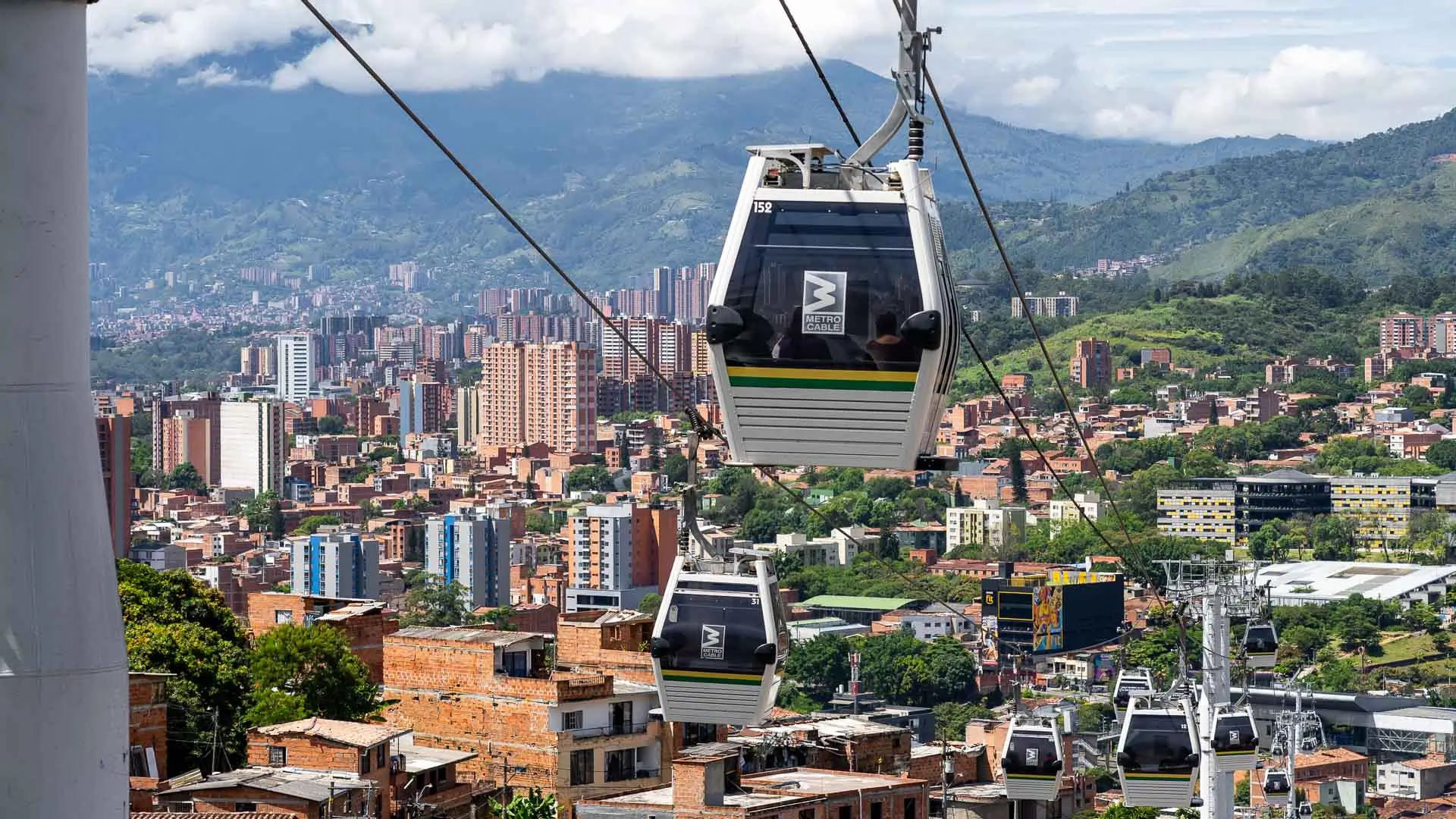
Ask any long-term resident what makes Medellín work, and the answer often floats overhead. The Medellín metrocable turned aerial gondolas into everyday transport, and it remains one of the city’s proudest achievements.
For a newcomer, this is more than a novelty ride with a view. Medellín runs the country’s only metro rail system, and its cable cars are woven directly into that system rather than sold as a tourist attraction.
The scale is genuinely large. According to the metro operator, the newest line alone carried nine million passengers in its first year.
What the Medellín metrocable actually is
It is a network of six commercial cable-car lines, not a single scenic route. Together they stretch across the city’s steep hillsides, all adapted for passengers with reduced mobility and tied into the metro.
The history is a genuine world first. When Line K opened in 2004, Medellín became the first city anywhere to run cable cars as full-time public transport, a model since copied from La Paz to Rio de Janeiro.
The newest line shows how far the idea has come. Line P, opened in 2021, is the fastest and highest-capacity of them all, with cabins seating twelve and a design that moves up to thirty-six thousand passengers a day.
It is also cleaner and quieter. Line P was the first local cable to use a direct-drive motor that cuts noise and needs less maintenance, and the system spares the city hundreds of tonnes of carbon a year.
Why the cable cars matter beyond the ride
The real story is social, not mechanical. The cables were built to reach the poorest, most isolated hillside barrios, turning journeys that once took two hours into trips of around thirty minutes on a single fare.
That access changed neighbourhoods. Residents on the network gained faster routes to jobs and services, and the stations drew libraries, parks and small businesses that reshaped once-neglected areas.
For expats, the cables are also the city’s best free tour. Riding Line K up to Santo Domingo or Line J over Comuna 13 offers a striking view and a direct sense of the transformation residents talk about.
The model has travelled far beyond Colombia. Cities from La Paz to Rio de Janeiro have built their own urban cable cars, but few have paired the hardware with the same depth of community investment that made Medellín’s version work.
The system also keeps growing on the ground. New public walkways, plazas and connecting corridors have been built around the stations, knitting the cable lines into daily life in the neighbourhoods they serve.
For anyone settling in Medellín, the lesson is practical. The metro and its cables are clean, cheap and useful, and choosing a home within reach of a station is one of the easiest ways to enjoy the city without a car.
What is the Medellín metrocable?
It is a network of six commercial cable-car lines integrated into Medellín’s metro, carrying passengers up the city’s steep hillsides. Line K, opened in 2004, made Medellín the first city in the world to use cable cars as full-time public transport.
How much does the metrocable cost?
With the reloadable Cívica card, a cable-car ride connects to the metro for free within a ninety-minute transfer window. So a single fare can carry you from a hillside barrio all the way across the metro network.
Is it worth riding as a visitor?
Yes, the cables double as the city’s best free view. Riding Line K to Santo Domingo or Line J over Comuna 13 offers dramatic scenery and a clear sense of the urban transformation the network helped drive.
More: Colombia news in English, every day from The Rio Times.
Frequently Asked Questions
Was Medellín really the first city to use cable cars as regular public transport?
Yes. When Line K opened in 2004, Medellín became the first city in the world to run cable cars as full-time public transport. The model has since been copied by other cities.
How many cable-car lines does the Medellín metrocable system have?
The network consists of six commercial cable-car lines. All of them are integrated directly into the city's metro system rather than operating as a separate tourist attraction.
How much does it cost to ride the metrocable in Medellín?
With the Cívica card, cable-car rides connect to the metro for free within a ninety-minute window. The system is designed as everyday public transport, not a novelty or tourist service.
Connected Coverage
Living in Medellín: The 2026 Expat Guide
How to Invest in Colombia From Abroad in 2026
Colombia’s Economy in 2026: Growth, Petro and the Inflation Catch
This article was produced by The Rio Times’ automated newsroom system. How we use AI · Report an error · Editorial responsibility: Matthias Camenzind, Editor-in-Chief
The Medellín Guide
What The Rio Times publishes for foreigners in Medellín, Colombia.
This month
Coming up in Medellín
- Ritvales 2026 in Medellín, Colombia: The City's Big Festival Weekend Runs October 31–November 1 31 Oct
- JetSMART Buenos Aires Medellín: Five Flights a Week From 12 November 2026, Leaving Ezeiza at 02:45 12 Nov
- Juanes in Colombia: World Tour Plays Medellín's DAVIarena November 14 and Bogotá's Movistar Arena November 20 14 Nov
- Chayanne in Medellín, Colombia: DAVIarena Show on 19 November, From US$68 19 Nov
Living in Medellín
- Medellín vs Mexico City for Expats in 2026: The Visa Gap Decides It
- Expats See Medellín Rents Surge as Digital Nomads Flood El Poblado
- Medellín's Feria de las Flores, Explained: The Flower Festival Every Expat Should See Once
- Colombia Denies Entry to Four Americans at Medellín Airport
Understand Colombia