Latin American Pulse for Monday, July 27, 2026
Executive Summary
A deep human reading of what Latin America is feeling today, grounded in the verified events of 26 July 2026.
Rio Times · Latin America
Key Facts
—Argentina A giddy, small-town pride as a village of 300 raffles 18-karat gold to winter tourists, while the nation absorbs the death of a sculptural giant.
—Brazil Reflective and heavy-hearted, weighing the final legacy of Sebastião Salgado against the relentless march of digital identity and corporate consolidation.
—Colombia Hopeful anticipation mixed with regional frustration, as Cartagena’s historic theatre launches a new cultural season while only 6 of 14 regional airport projects advance.
—Chile An anxious environmental grief, watching its unique wetlands face extinction even as the country breaks new ground with a pioneering Philippines trade deal.
—Mexico A pragmatic, restless energy, building a colossal new brewery for global brands while offering locals a futuristic escape in a hologram zoo.
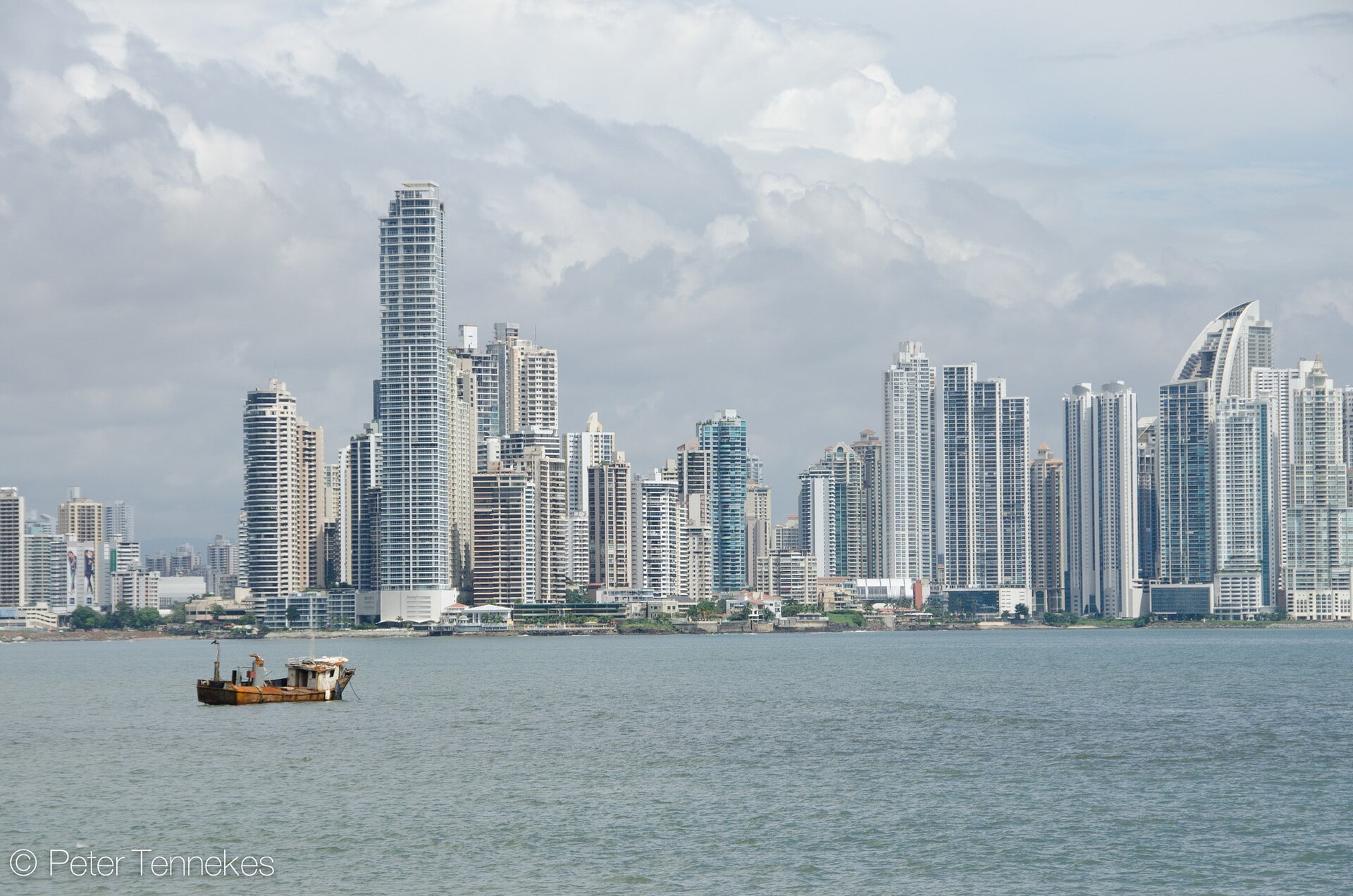
—Panama A quiet, orderly optimism, methodically opening public park space to small food businesses under new rules, designed to make daily life more liveable for residents.
Latin America today feels like a continent in a state of suspension between deep, personal legacies and impersonal systems—a village shares its gold by raffle; a continent buries an artist who photographed its soul; countries digitise identities and strike distant trade pacts, all while trying to protect the physical and cultural ground beneath their feet.
| Instrument | Level | Session |
|---|---|---|
| S&P Merval (Argentina) | 3,283,854 | -1.07% |
| COLCAP (Colombia) | 2,275 | -0.38% |
Source: market close, 24 July 2026.
The Continent’s Mood Today
The dominant emotional register this Sunday is one of poignant, often beautiful, contrasts. Across the region, the day’s stories loop together intimate human gestures and vast, unyielding forces.
The news is not dominated by a single political crisis, but by a collection of events that feel like quiet turning points. An Argentine village of 300 people is giving away half-grams of 18-karat gold to tourists through a simple parking-ticket raffle, a craft so small and human it feels almost defiant.
Simultaneously, the continent is digitally marching forward, with Kenya’s Maisha Namba digital ID system (closely watched by Latin American governments) hitting 1.7 million cards, and Brazil having already issued 17.7 million of its own new national IDs. This is a day of tender handshakes between the old and the new.
Argentina – The Gold in Goodbye
In La Carolina, a historic gold-mining town in San Luis province founded in 1792 and now home to just 300 people, a simple winter-holiday promotion has captured the national imagination. As reported by Canal 26 and La Gaceta, during the July school recess, every visitor who parks in the ‘Pueblo Peatonal’ lot receives a ticket that enters them into a daily draw for a prize of 18-karat gold, sourced from local pirquineros.
A local official told Canal 26 plainly: ‘todos los días a las 6 de la tarde sorteamos medio gramo de oro… en la oficina de informes.’ This is not a grand lottery but a daily, small-scale act of generosity from a shrinking town, covered nationally because it feels like a pure, uncynical story of sharing regional wealth.
The mood is bittersweet. This raffle runs alongside the news that Juan Carlos Distéfano, a master of Argentine sculpture, has died at 92. Distéfano’s work, often dealing with the body under duress, speaks to a national memory of trauma, making the playful gold raffle feel like a gentle, necessary counterweight.
For a foreigner living in Argentina, this is a moment to see the nation’s two core coping mechanisms on full display: creating beauty from pain, and finding collective joy in small, local rituals.
Live Market IntelligenceLatin America — Cross-Market Board
Rio Times · Live Market Intelligence
Latin America — Cross-Market Board
+0.47%
205,082.56
+0.47%
69,879.62
-0.01%
10,746.36
-0.31%
3,017,221
—
2,540.10
+0.46%
57,021.19
+0.13%
| Instrument | Last | Change | YoY | Prev. | High | Low | Volume |
|---|---|---|---|---|---|---|---|
| IBOV | 205,082.56 | +0.47% | +21.85% | 204,120.12 | 168,310 | 167,142 | — |
| IPSA | 10,746.36 | -0.31% | — | 10,780.31 | 11,210 | 10,984 | 1,513,213,483 |
| IPC MEX | 69,879.62 | -0.01% | +12.17% | 69,889.73 | 66,121 | 65,405 | 108,886,187 |
| MERVAL | 3,017,221 | — | +30.51% | 3,022,485 | 3,042,365 | 2,991,150 | — |
| COLCAP | 2,540.10 | +0.46% | — | 9.04 | 9.05 | 9.02 | 4,133 |
| BVL PERÚ | 57,021.19 | +0.13% | — | — | — | — | — |
| USD/BRL | 5.16 | +0.01% | -5.13% | 5.16 | 5.18 | 5.14 | — |
| EUR/BRL | 5.95 | +1.01% | -5.83% | 5.89 | 5.98 | 5.94 | — |
| USD/MXN | 17.06 | -0.24% | -8.58% | 17.10 | 17.08 | 17.01 | — |
| USD/CLP | 913.98 | +0.04% | -5.67% | 913.65 | 915.11 | 906.68 | — |
| USD/COP | 3,140 | +0.03% | -22.04% | 3,139 | 3,141 | 3,105 | — |
| USD/PEN | 3.36 | -0.66% | -4.82% | 3.38 | 3.38 | 3.35 | — |
| USD/ARS | 1,493 | +0.10% | +12.96% | 1,491 | 1,494 | 1,480 | — |
| USD/UYU | 40.27 | +1.24% | +1.80% | 39.77 | 40.27 | 40.23 | — |
| USD/PYG | 5,939 | +1.68% | -19.54% | 5,841 | 5,939 | 5,925 | — |
| USD/BOB | 11.64 | -0.76% | +72.04% | 11.73 | 11.72 | 11.64 | — |
| USD/DOP | 58.34 | +1.25% | -3.44% | 57.62 | 58.34 | 58.04 | — |
| USD/CRC | 445.92 | +0.89% | -9.71% | 441.97 | 448.50 | 445.92 | — |
Brazil – The Weight of a Final Image
Brazil’s psyche today is anchored by Sebastião Salgado. The legendary documentary photographer, who died on 23 May 2025 in Paris, is the subject of a Rio Times reflection titled ‘Salgado Workers: Brazil Icon’s Final Legacy at 81.’ The piece is not a fresh obituary, but a meditation that lands today, focusing on his monumental series on labour and the human condition.
His death, from leukemia at 81, closed a chapter on an artist who showed the world Brazil’s soul—and the soul of the world’s workers—in stark black and white. The feeling is one of immense national pride laced with a heavy sense of an ending. The photographs of Serra Pelada’s gold miners, a hellish human anthill, feel like a distant but direct ancestor to the small-scale pride in La Carolina.
Beneath this artistic mourning runs a current of structural transformation. The federal government’s PROCIN programme has just transferred R$44.25 million (US$7.76 million) to Bahia, Amapá, Amazonas, and Maranhão to accelerate the issuance of the new Carteira de Identidade Nacional. The individual, so profoundly humanised in Salgado’s work, is being systematised into blockchain-backed registries.
For a foreigner holding assets in Brazil, this signals a state that is both emotionally self-reflective and bureaucratically modernising at a rapid clip—the deep cultural identity and the digital identity are being forged side-by-side.
Colombia – A Tale of Two Stages
In Cartagena, the Teatro Adolfo Mejía, a historic gem in the walled city, launches its 2026 season. The Rio Times notes this as a cultural beacon, a moment of aspiration and beauty that draws the country’s gaze towards the Caribbean coast and its artistic possibilities.
But the other stage is far less glamorous. A report by the Rio Times reveals that only 6 of 14 planned regional airport projects are actually underway. This stark figure creates a mood of exasperation and uneven development, a feeling that the grandeur of Cartagena’s theatre exists in a country where basic connectivity is still an unfulfilled promise for many regions.
The emotional push-and-pull is classic Colombia: immense creativity and cultural capital wrestling with infrastructural inertia. The theatre launch says, ‘Look at what we can be,’ while the airport delays mutter, ‘Look at what we still haven’t done.’
For an expat, this is a practical reminder: the cultural life in Colombia’s main cities is world-class and deepening, but travel between secondary cities remains a patience-testing reality, anchoring opportunity in the big centres.
Chile – Green Grief and New Horizons
Chile’s mood is painted in environmental elegy and pioneering diplomacy. The Rio Times reports that Chile’s unique wetlands face extinction, listing five sites to visit before they vanish. This triggers a very specific, localized climate grief for habitats strangled by water extraction and urban sprawl, a topic constantly highlighted in Chilean environmental media.
Against this loss, the country achieves a proud first: becoming the first Latin American nation to finalise a trade deal with the Philippines. This deal represents a strategic, outward-looking optimism, a government pushing into Southeast Asia even as its own backyard ecosystems fade. The emotional contrast is jarring—saluting the future of global trade while penning a farewell note to ancient marshlands.
This duality taps into a long-standing Chilean tension between being a model for economic modernisation and a cautionary tale for unchecked resource exploitation. The wetlands story is the nightmare behind the dream of the trade deal.
For a foreigner living in Chile, the practical message today is to witness this ecological fragility personally—to visit those wetlands now—while understanding that the country’s final frontier is increasingly commercial, not geographical.
Mexico – Cold Beer and Polar Bears
Mexico today is an engine room of commerce and curiosity. Grupo Modelo, the maker of Corona, is building a new US$760 million brewery, as reported by The Rio Times. The sheer scale of the investment creates a buzz of economic confidence, a brute-force bet on the near-religious status of Mexican beer globally. It says, ‘The world still thirsts for us.’
Yet on the streets of the capital, a different thirst is being quenched. The Rio Times lists a ‘Hologram Zoo’ in Mexico City, offering glimpses of polar bears and dinosaurs for an entry price around US$15. It’s an accessible, futuristic family outing, a domestic tourism lark that feels light-years away from the industrial might of a brewery.
The pairing of these two stories—massive industrial output and a whimsical digital menagerie—suggests a society that can hold both extreme productive power and a playful, imaginative popular culture in the same breath, without contradiction.
For an expat in Mexico, this is a day that underlines why you’re here: the economy has a weighty, industrial backbone, but daily life still serves up affordable, slightly surreal delight.
Panama – Taming the Park for a Quiet Life
Panama’s emotional register is calm and procedural. The Rio Times details two small, significant stories: one is an explainer on the precise rules, vets, and costs for bringing a pet into the country, a classic concern for the foreign and returning Panamanian middle class.
The second is the opening of Urracá Park in Panama City to food businesses under a new regulatory framework. This is not a chaotic market, but an ordered, managed integration of commerce into public leisure space. The mood is one of quiet, pleasant domesticity and state competence—the government is fixing the little things.
This is a country fine-tuning the everyday experience of its residents, both the ones moving there with their dogs and the ones seeking a well-run lunch spot in a park. There’s no drama, only the deep, unsexy satisfaction of a place becoming more liveable step by step.
For a foreigner with assets or a life here, the practical takeaway is reassuring: Panama remains focused on the meticulous, low-friction management of residential life, which is the quiet foundation of its expat appeal.
Frequently Asked Questions
What is the strongest emotional thread connecting Latin America today?
The stark contrast between intimate human legacies and the rise of vast, impersonal systems. In Argentina, a tiny town raffles gold by hand, while Brazil mourns Sebastião Salgado, the poet of human labour. All the while, these same countries are rapidly digitising identities and signing far-flung trade deals.
Is the mood driven more by economics or culture on this particular day?
Culture and the environment are unusually dominant. The death of Salgado, the launch of a theatre season in Colombia, the anxiety over Chile’s dying wetlands, and a gold raffle in Argentina are setting the emotional tone. Big economic moves, like Mexico’s $760M brewery, provide a backdrop of momentum rather than a frontline of anxiety.
What does today’s news mean for someone considering moving to Latin America?
It’s a portrait of deepening contradictions. Cities like Cartagena, Panama City, and Mexico City are enhancing their cultural and residential amenities, making life richer. But stories of Colombia’s stalled regional airports and Chile’s vanishing nature show that infrastructure and environmental foundations remain fragile outside the capitals.
Sources: Canal 26 – ‘Un pueblo argentino regala oro de 18 quilates a los turistas’, La Gaceta – ‘El pueblo argentino que regalará oro a los turistas durante las vacaciones de invierno’, The Rio Times – ‘Sebastião Salgado Workers: Brazil Icon’s Final Legacy at 81’, The Rio Times – ‘Chile’s Wetlands Face Extinction—5 to Visit Before They’re Gone’
Connected Coverage
Bringing Your Pet to Panama: Rules, Vets & US Costs
Panama Opens Urraca Park to Food Businesses Under New Rules
Brazil vs Mexico for Expats: Which Wins in 2026?
São Paulo Nightlife Tonight — July 26, 2026
Rio de Janeiro Nightlife Tonight — July 26, 2026
Hologram Zoo in Mexico City: Polar Bears, Dinosaurs from US$15
Companion: today’s Latin America Power Map (PDF) — our full daily dossier on who holds power across the region.
This article was produced by The Rio Times’ automated newsroom system. How we use AI · Report an error · Editorial responsibility: Matthias Camenzind, Editor-in-Chief