LATAM Airlines Launches 5% Share Buyback Worth Up to US$671 Million, a Latin America Aviation First
Markets: Chile/Latin America
Key Facts
—Size. LATAM Airlines shareholders approved a new buyback program on August 3, 2026 for up to 5% of subscribed and paid shares, equivalent to 28,710,799,185 shares.
—Value. At Monday’s closing price of CLP $25.25, the maximum size of the program is valued at CLP $724,947 million, or roughly US$671.3 million.
—Timeline. The program runs for up to five years from the shareholder meeting, the maximum term allowed under Chilean corporate law; the board sets execution timing and pricing.
—Share price. LATAM’s NYSE-listed ADR (LTM) traded at $54.51 in pre-market action on August 4, up 3.32% from a previous close of $52.76, within a 52-week range of $41.41 to $70.42.
—Track record. LATAM spent US$585 million buying back roughly 5% of its shares across two programs in 2025, after posting 2025 net income of US$1.5 billion.
Latin America’s largest airline group is putting fresh cash behind its own stock again, just months after finishing a buyback cycle that retired roughly a twentieth of the company.
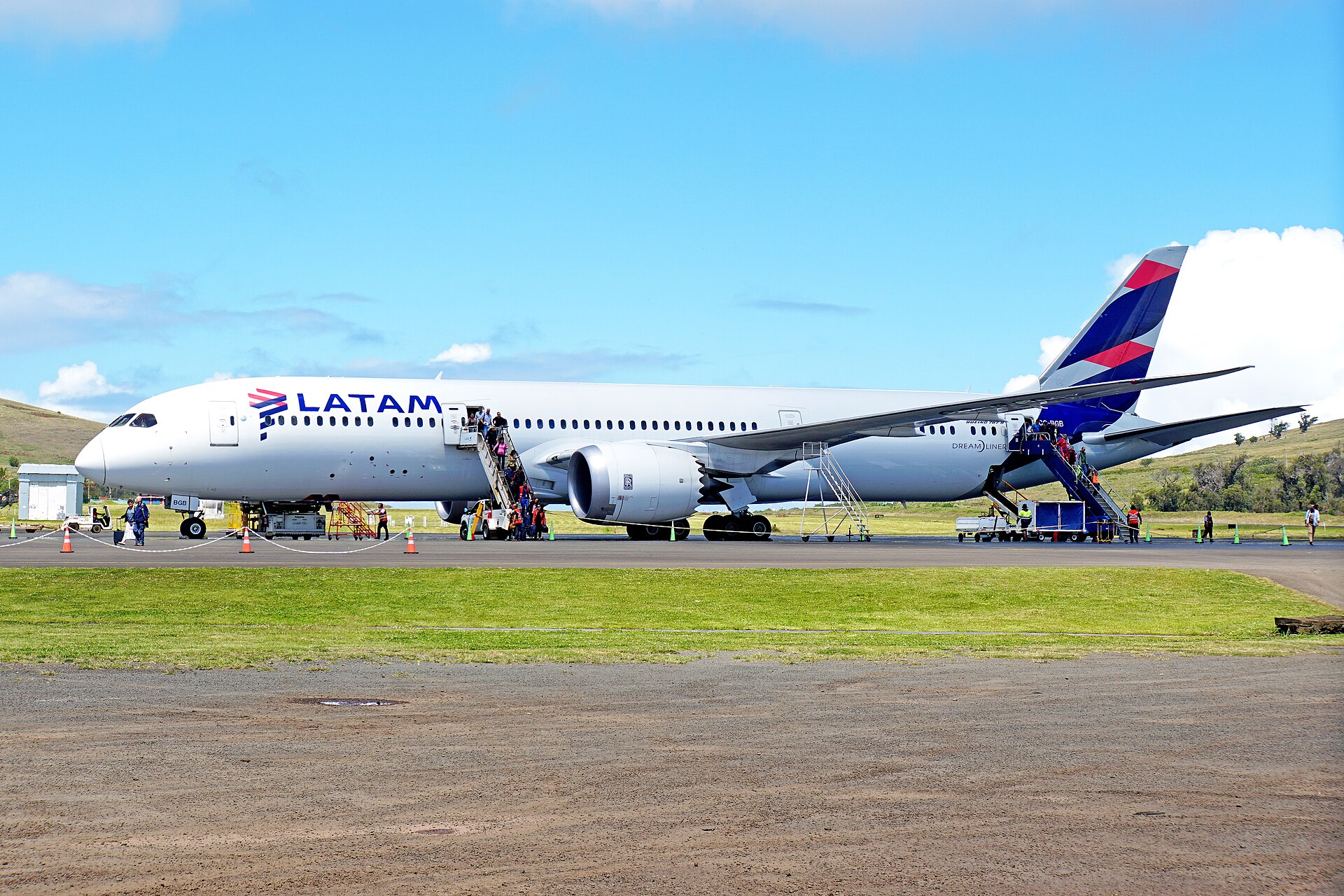
The buyback details
LATAM Airlines Group’s shareholders gathered in an Extraordinary Meeting on August 3, 2026, and approved a new share repurchase program covering up to 5% of the company’s subscribed and paid shares, equivalent to 28,710,799,185 shares, according to La Tercera. The vote followed a board proposal filed with Chile’s Comisión para el Mercado Financiero on July 8, describing a plan capped at the maximum percentage and duration Chilean corporate law allows for this kind of operation, as reported by Diario Financiero.
Based on LATAM’s Santiago-listed shares closing at CLP $25.25 on the Monday of the vote, the maximum size of the program is valued at CLP $724,947 million, or approximately US$671.3 million, per La Tercera’s reporting. That figure represents a ceiling rather than a guaranteed spend: the actual amount the company disburses will depend on how much of the authorized 5% the board ultimately executes and at what price.
Shareholders also delegated broad authority to LATAM’s board, allowing it to set and later modify minimum and maximum purchase prices at its own discretion, and to buy shares directly on the exchange floor for up to 1% of share capital within any 12-month period without a pro-rata allocation mechanism, La Tercera reported. The board was likewise authorized to resell up to 1% of capital within a 12-month period should it choose to do so later.
Latam’s financial resurgence
The new buyback is the latest marker in a financial turnaround that has defined LATAM since it emerged from U.S. Chapter 11 bankruptcy protection in November 2022. The airline group closed 2025 with net income of US$1.5 billion and transported more than 87 million passengers, according to a press release from LATAM Airlines Group Investor Relations. Strong cash generation exceeding US$1.4 billion during 2025 was what allowed the group to allocate US$585 million to share buybacks that year, the company said.
LATAM’s operating profit climbed 41% to $2.36 billion in 2025, and the airline has posted an operating profit every quarter since the second quarter of 2022 — 14 consecutive quarterly net profits — according to FlightGlobal, which recognized CEO Roberto Alvo’s leadership through the restructuring and into profitability with a 2026 Airline Strategy Award.
In the most recent quarter for which results have been published, LATAM reported total revenue of $4.08 billion for the first quarter of 2026, along with consolidated net income of $577.7 million and operating profit of $811.3 million, according to Perplexity Finance data. LATAM’s second-quarter 2026 results were scheduled for release on August 4, after market close — the same day this buyback news broke — meaning the freshest quarterly figures were not yet public when shareholders voted.
Live Company IntelligenceLATAM Airlines Launches 5% Share Buyback Worth Up to US$671 Million, a Latin America Aviation First — the full investor dossier
LATAM Airlines Group S.A., together with its subsidiaries, provides passenger and cargo air transportation services in Chile, Argentina, Peru, Colombia, Ecuador, Brazil, the United States, other Latin American countries, the Caribbean, Europe, and Oceania. As of December 31, 2024, the company provides passenger transport services to…
Net income rose to $1.5 bn in 2025, from $581.8 mn in 2023.
Strategic context
This is not LATAM’s first run at buying back its own stock since emerging from bankruptcy. In 2025 the company executed two separate programs: the first, approved March 17, covered up to 1.6% of subscribed and paid shares and was completed at a fixed price of Ch$15.02 per share, according to Diario Financiero and confirmed by Reuters.
A second program, approved June 26, 2025, targeted up to 3.4% of shares; the board later raised the executed percentage from an initial 2.4% to the full 3.4% before the offer closed on July 30, 2025, according to La Tercera. Combined, the two 2025 programs retired roughly 5% of LATAM’s share capital for a total of US$585 million.
LATAM had not executed any buyback during 2026 before this new authorization, La Tercera reported on July 8, when the board first called the August 3 vote. When former CEO-era shareholders approved the company’s initial 2025 buyback, Alvo said at the time that “la compañía ha venido analizando alternativas para establecer un mecanismo adicional de retorno de dinero a los accionistas” (“the company has been analyzing alternatives to establish an additional mechanism for returning cash to shareholders”), and that the program would give shareholders “beneficios ineludibles” (“unavoidable benefits”) through cash distribution, according to Diario Financiero — remarks made about the earlier 2025 program rather than the new one approved this week.
Investor reaction
LATAM’s New York-listed American Depositary Receipts, which trade under the ticker LTM, were quoted at $54.51 in pre-market activity on August 4, up 3.32% (a gain of $1.75) from a previous close of $52.76, according to Perplexity Finance data. The stock’s 52-week range spans $41.41 to $70.42, and the company’s market capitalization stood at roughly $15.72 billion.
The buyback approval extends a rally that has already made LATAM one of the best-performing airline stocks in the world. Shares climbed 76% over the trailing year through late February 2026, the strongest performance among industry peers, while the company’s dollar-denominated bonds maturing in 2030 and 2031 reached record highs and returned 3.36% over three months, according to Bloomberg.
A repurchase program of this scale typically signals management’s confidence that shares are undervalued relative to underlying earnings power, since retiring stock concentrates future profits among fewer remaining shares. LATAM’s board and shareholders framed the new program as “an efficient allocation of the company’s resources to generate value for the company and the generality of its shareholders,” according to the material fact cited by La Tercera.
Regional airline sector view
LATAM’s capital-return moves come as the group’s stature within global aviation continues to grow. CEO Roberto Alvo, who has served on the board of the International Air Transport Association since 2020, took up duties as Chair of the IATA Board of Directors on June 7, 2026, succeeding International Airlines Group chief Luis Gallego, according to IATA.
The broader Latin American airline sector has faced fresh fuel-cost pressure in 2026. LATAM’s Brazilian unit trimmed its planned July capacity by about 3% versus original plans, repeating a reduction already seen in June, with the adjustment likely to extend into the third quarter, LATAM Brasil chief executive Jerome Cadier told Reuters in June.
Alvo separately told Reuters the wider airline industry may need to cut capacity further if elevated fuel prices persist into 2027, warning that airlines in weaker financial positions could face mounting strain. That backdrop of sector-wide cost pressure makes LATAM’s decision to move ahead with a fresh, five-year buyback authorization notable: rather than holding cash in reserve against fuel-driven uncertainty, the board and shareholders chose to signal confidence in the balance sheet built up since the airline’s 2022 bankruptcy exit.
Frequently Asked Questions
How big is LATAM’s new share buyback program?
Shareholders approved a program covering up to 5% of LATAM’s subscribed and paid shares, equivalent to 28,710,799,185 shares, at an Extraordinary Shareholders’ Meeting on August 3, 2026. Based on the closing share price that day, the maximum value of the program is roughly US$671.3 million, though the actual amount spent will depend on execution price and how much of the authorized amount the board buys back.
How long does the buyback program last?
The program runs for up to five years from the date of the shareholders’ meeting, the maximum duration permitted for this kind of program under Chilean corporate law. LATAM’s board has broad discretion to set the timing, pricing, and mechanism of any purchases within that window.
Has LATAM done a share buyback before?
Yes. LATAM executed two buyback programs in 2025 — one covering 1.6% of shares approved in March, and a second covering 3.4% approved in June — that together retired roughly 5% of the company’s share capital for a combined US$585 million. The company had not executed any buyback in 2026 before the new program was approved.
Sources
La Tercera, Diario Financiero, Reuters, Bloomberg, and LATAM Airlines Group Investor Relations.
Additional reporting: Reuters and FlightGlobal.
Connected Coverage
More Latin America coverage from The Rio Times.
Sources: La Tercera (latercera.com), Diario Financiero (df.cl), Reuters (via tradingview.com), Bloomberg (bloomberg.com), LATAM Airlines Group Investor Relations (ir.latam.com), FlightGlobal (flightglobal.com), Perplexity Finance data.
This article was produced by The Rio Times’ automated newsroom system. How we use AI · Report an error
In depth
LatAm Markets: Live Signals → — real-time movers, turnover leaders and FX across Latin America.
Read More from The Rio Times