The Other Açai – A Rare Palm That Pays Brazilians to Save the Forest
Brazil · Sustainability
Key Facts
—The plant. The juçara palm, known as the Atlantic Forest açai, yields a fruit much like the famous Amazonian berry.
—The threat. Decades of logging for its heart of palm pushed the species onto Brazil’s endangered list.
—The fix. Harvesting the fruit instead of felling the tree turns a standing forest into a source of income.
—The scale. More than 500 families across seven states, from Bahia to Santa Catarina, now harvest the fruit.
—The wildlife. The palm feeds around eighty animal species, which spread its seeds through the forest.
—The state’s role. A São Paulo program buys seeds from local growers and scatters them by helicopter to replant reserves.
The Atlantic Forest açai, a fruit most of the world has never tasted, is quietly turning one of Brazil’s most ravaged ecosystems into something worth protecting.
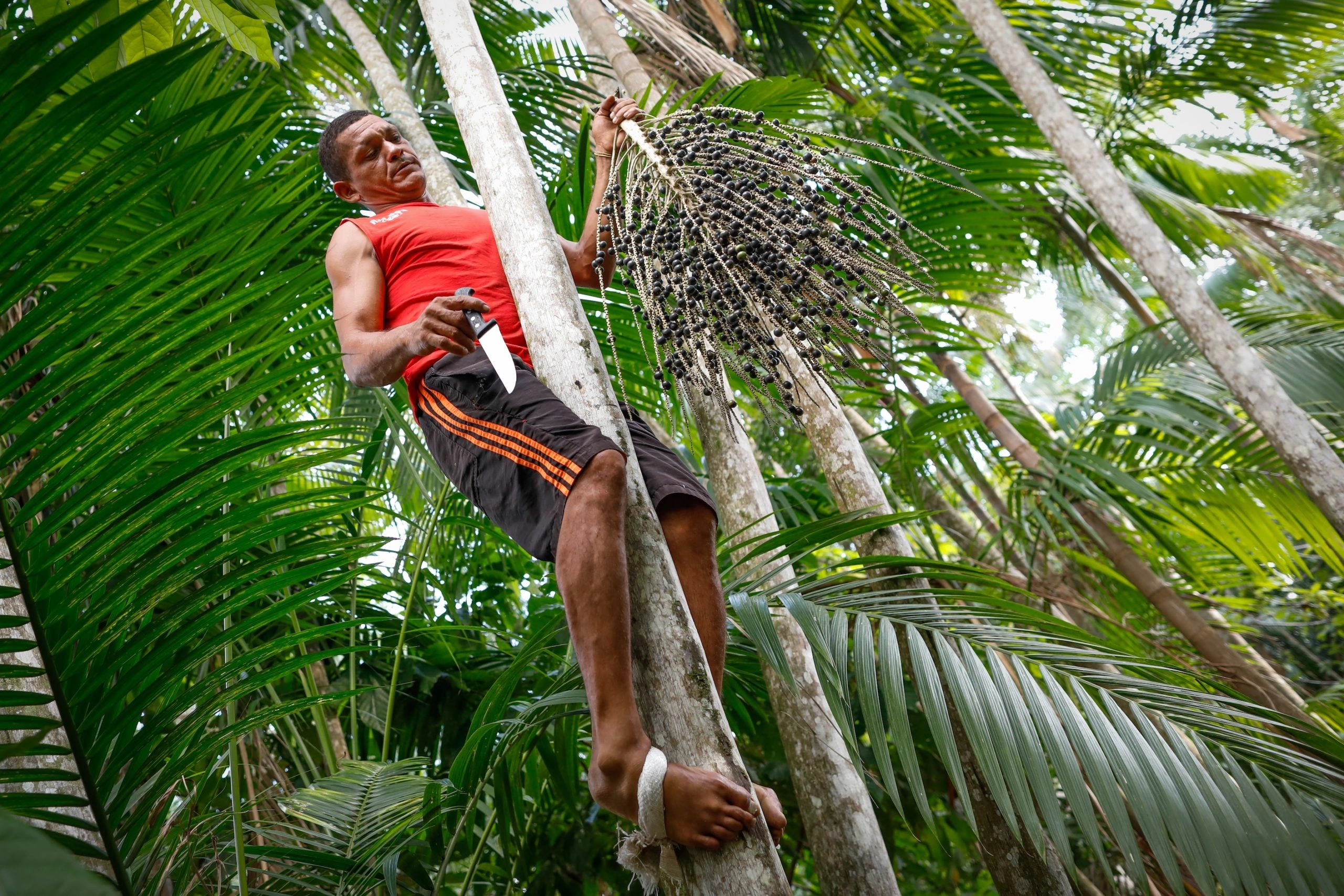
Most people who order an acai bowl picture the Amazon. Yet Brazil has a second açai, born of a different forest, and its story is one of near-disappearance and slow revival.
It comes from the juçara palm, a slender tree of the Atlantic Forest, the band of rainforest that once ran down Brazil’s eastern coast. For a reader abroad, the short version is that this fruit is now helping to save the very forest it grows in.
The juçara produces a dark purple berry almost indistinguishable from Amazonian açai. Brazilians often call it the açai of the Atlantic Forest, and use it the same way, in juices, bowls and desserts.
The fruit is not a recent discovery. Indigenous communities of the region drank a beverage made from juçara berries long before the palm became known mainly for its heart of palm.
The palm was once abundant along the whole coast. Then came a long assault that nearly wiped it out.
Why the Atlantic Forest acai almost vanished
The problem was the part of the tree people wanted. To harvest heart of palm, a prized ingredient, you have to cut the palm down and kill it.
For decades that is exactly what happened, on a vast scale and often illegally. The relentless felling pushed the juçara onto Brazil’s list of species threatened with extinction.
The loss rippled far beyond the tree itself. The juçara is a vital food source for some eighty species of forest animals, which in turn scatter its seeds and keep the forest regenerating.
Strip out the palm and that web frays. Brazilians sometimes call the juçara the mother of the forest, a measure of how much else depends on it.
How harvesting the fruit keeps the tree alive
The turnaround rests on a simple switch. Instead of cutting the palm for its heart, growers leave it standing and harvest its fruit year after year.
A living tree that earns money is a tree worth protecting. The fruit is processed into an antioxidant-rich pulp sold for juices and dishes, and in some coastal towns it has even reached school meals.
The model has spread along the coast. More than five hundred families across seven states, from Bahia in the northeast to Santa Catarina in the south, now make part of their living this way.
Much of it is grown in agroforestry plots, where the palm shares the land with other crops. That mix mimics a natural forest and keeps the soil and biodiversity healthy.
The state, the chefs and the market
Government has lent a hand. A conservation program in São Paulo buys seeds from growers near its parks and scatters them by helicopter and drone to replant the native palm across protected reserves.
For the farmer, that creates two income streams at once, one from selling the pulp and another from selling seeds to the state. The arrangement makes conservation pay rather than cost.
Chefs have taken notice too. Restaurants along the coast between São Paulo and Santa Catarina have begun featuring the fruit, drawn by both its flavour and its conservation story.
A handful of companies are now trying to scale it up, with one Rio firm even eyeing export markets. The ambition is to turn a once-doomed palm into a global product.
For a foreign reader, the appeal is the neat logic of it. Here is a case where eating something, rather than abstaining, is what keeps a threatened forest standing.
It is a small but hopeful model in a country long defined by the tension between farming and forest. The challenge now is simply to grow it without losing what makes it work.
More: Brazil news in English, every day from The Rio Times.
Frequently Asked Questions
What is the Atlantic Forest açai?
It is the fruit of the juçara palm, a tree native to Brazil’s Atlantic Forest. The berry closely resembles Amazonian açai and is used the same way in juices, bowls and desserts.
Why was the juçara palm endangered?
For decades the palm was cut down to harvest heart of palm, which kills the tree. The relentless logging pushed the species onto Brazil’s list of plants threatened with extinction.
How does harvesting the fruit help the forest?
Picking the fruit leaves the tree standing and earning money for years, so growers protect it rather than fell it. More than five hundred families now harvest the fruit across seven Brazilian states.
Connected Coverage
How Europe’s deforestation rule is reshaping Latin American farming
This article was drafted with automated assistance and reviewed before publication. How we use AI · Report an error
Read More from The Rio Times