Jamaica’s Economy Shrinks 5.9% as Hurricane Melissa’s Bill Comes Due
Macro · Caribbean
—The headline. Jamaica’s economy shrank by 5.9% in the first quarter of 2026, the lingering toll of Hurricane Melissa.
—The total bill. Damage, losses and added costs reached about 12.2 billion dollars, equal to roughly 56.7% of the island’s 2024 output.
—Hardest hit. Mining fell 26.6% and agriculture 20.3%, while tourism lodging and food services dropped 20.4%.
—The cushion. A 150 million dollar catastrophe bond paid out within weeks, part of about 650 million dollars in pre-arranged disaster funds.
—The path back. Officials expect a further drop of three to four percent this quarter, then a return to growth in the next fiscal year.
—Why it travels. The storm cost more than four times Hurricane Gilbert, long the costliest in the island’s history.
The Jamaica economy has just posted its sharpest decline outside the pandemic, as the full cost of the strongest storm in the island’s recorded history finally lands on the books.
A Jamaica economy still reeling from one storm
Jamaica’s output fell by close to six percent in the first three months of 2026 compared with a year earlier. The decline was the steepest the island has seen since the worst of the pandemic in 2020.
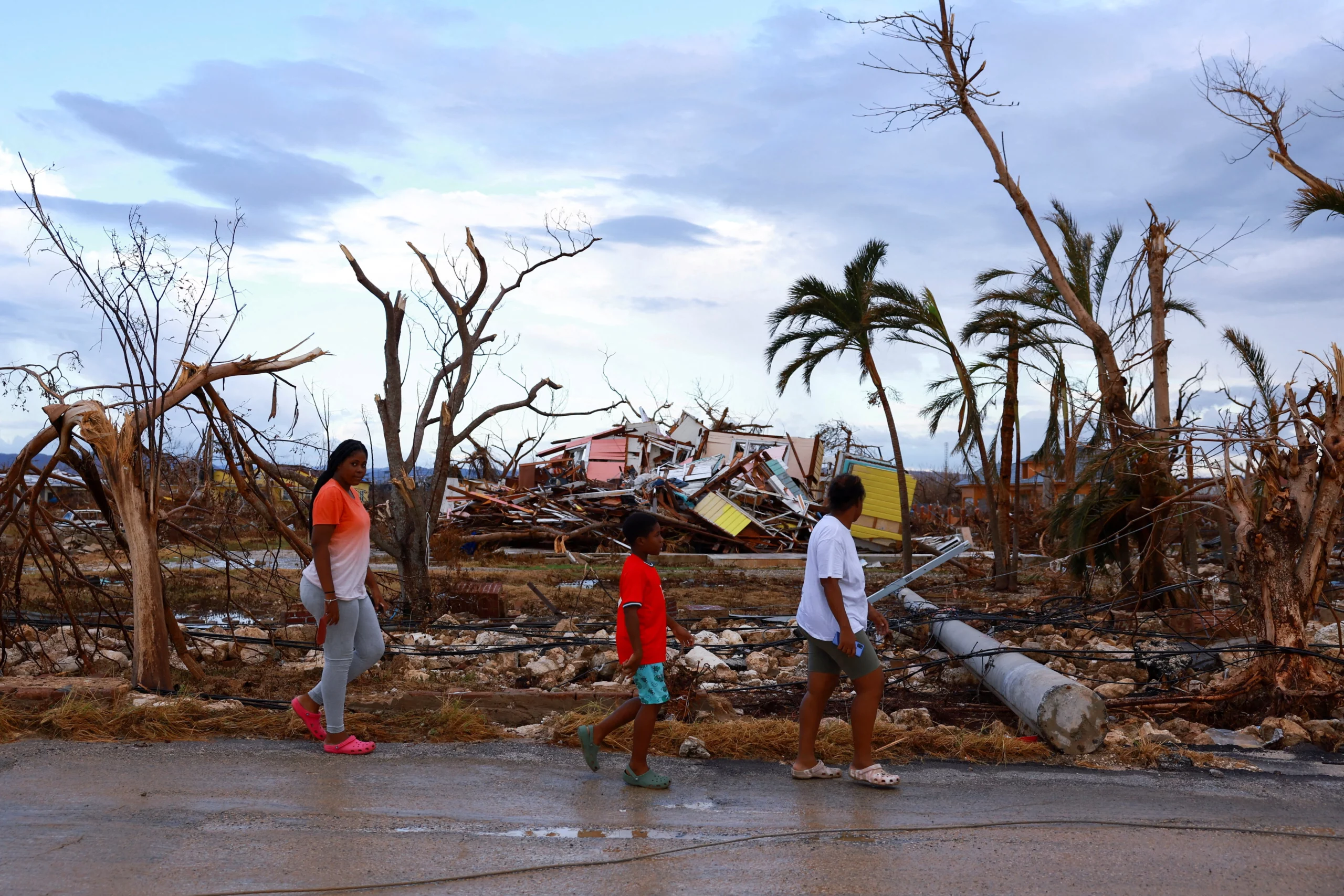
The cause was Hurricane Melissa, the Category Five storm that struck in October last year. Its effects have rippled through nearly every sector for months after the winds died down.
The state planning agency laid out the damage in a recent briefing. Goods-producing industries shrank by more than eleven percent, while services, the larger part of the economy, fell by about four percent.
Mining took the worst blow, down by more than a quarter. Agriculture fell by a fifth, and the tourism trade of hotels and restaurants dropped by a similar margin.
The slump began even earlier, in the final quarter of last year. Output then fell by about seven and a half percent, the steepest quarterly drop since the depths of the pandemic.
A bill worth more than half a year of output
The full price tag is staggering for an economy this size. Officials put the total of damage, losses and added costs at about twelve billion dollars.
That sum equals roughly fifty-seven percent of everything Jamaica produced in 2024. The physical damage alone, by a separate World Bank estimate, came to about nine billion dollars, or close to forty percent of yearly output.
To put that in perspective, Melissa cost more than four times Hurricane Gilbert. That 1988 storm had stood for decades as the most expensive in the island’s history.
Tourism, the country’s lifeblood, shows the strain plainly. Visitor spending in the quarter fell by about a fifth, and airport arrivals in April were down by nearly a quarter from a year before.
A safety net that softened the blow
Here the story turns more hopeful, and more instructive. Unlike many countries facing disaster, Jamaica had arranged financial protection in advance.
A catastrophe bond, a financial instrument that pays out when a storm of a defined strength hits, delivered one hundred fifty million dollars within weeks. It formed part of around six hundred fifty million dollars in pre-arranged disaster funds.
Added to emergency lending from the International Monetary Fund, the government began rebuilding with roughly one and a quarter billion dollars on hand. Crucially, it did not have to borrow that money first.
That distinction matters. Jamaica spent a decade cutting its debt from crushing levels, and this layered insurance is what kept the storm from undoing that work.
The government has already moved to renew that protection. It placed a fresh one hundred fifty million dollar catastrophe bond in the spring, with cover running through the end of the decade.
The debt path still bends, but it does not break. The ratio of debt to output is expected to rise this year before resuming its long decline toward the government’s target.
Why it matters for investors
For anyone watching small, climate-exposed economies, Jamaica is a live test case. It shows both the scale of the threat and a credible way to manage it.
The near-term picture stays rough. Officials expect output to fall by a further three to four percent this quarter before a recovery takes hold.
The medium-term signal is steadier. The planning agency projects a return to growth of one to three percent in the next fiscal year, led by reconstruction and a tourism rebound.
Higher global energy prices remain the chief risk to that timeline. The island imports nearly all its fuel, so the conflict in the Middle East feeds straight into its costs.
More: Latin America news in English, every day from The Rio Times.
Frequently Asked Questions
How badly did Hurricane Melissa hit the Jamaica economy?
The economy shrank by close to six percent in the first quarter of 2026, its worst showing outside the pandemic. Total damage, losses and costs reached about twelve billion dollars, equal to more than half of a full year of output.
How is Jamaica paying for the recovery?
A catastrophe bond paid out one hundred fifty million dollars within weeks, part of about six hundred fifty million in pre-arranged disaster funds. With emergency lending added, the government started rebuilding with roughly one and a quarter billion dollars and no new borrowing.
When will the economy recover?
Officials expect a further drop of three to four percent this quarter. They then project a return to growth of one to three percent in the next fiscal year, led by reconstruction and tourism.
Connected Coverage
Jamaica Hit by Islandwide Blackout, Grid Restored by Morning
How the Caribbean Is Turning Its Music Into a Tourism Engine
This article was produced by The Rio Times’ automated newsroom system. How we use AI · Report an error · Editorial responsibility: Matthias Camenzind, Editor-in-Chief