Hidroituango Mega-Dam Hits Key Milestone and First Profits
Colombia · Energy
Key Facts
—Almenara completion The main Almenara concrete structure was finished about 18 days ahead of schedule, enabling the next phase of electromechanical assembly.
—First-half 2026 income Hidroituango reported income of about COP 1.69 trillion (~US$428 million) and a pre-tax profit of about COP 1.68 trillion (~US$425 million) for the first half of 2026.
—First-ever profits The project turned a profit for the first time since its creation in 1997, with operational income above COP 442 billion (~US$112 million) in 2025.
—Leadership change General manager Alejandro Arbelaez left his post on July 15, 2026, after guiding the company to profitability and resolving years of legal uncertainty.
—Ownership and taxes Hidroituango is owned by EPM, the Medellín municipal utility, and is a leading contributor to Colombia’s Obras por Impuestos (works-for-taxes) mechanism.
Colombia’s Hidroituango mega-dam has completed its main Almenara concrete structure roughly 18 days ahead of schedule, clearing the path for the final electromechanical assembly and start-up phases. The milestone coincided with the project posting its first-ever profits and the departure of its long-serving general manager, Alejandro Arbelaez, on July 15, 2026.
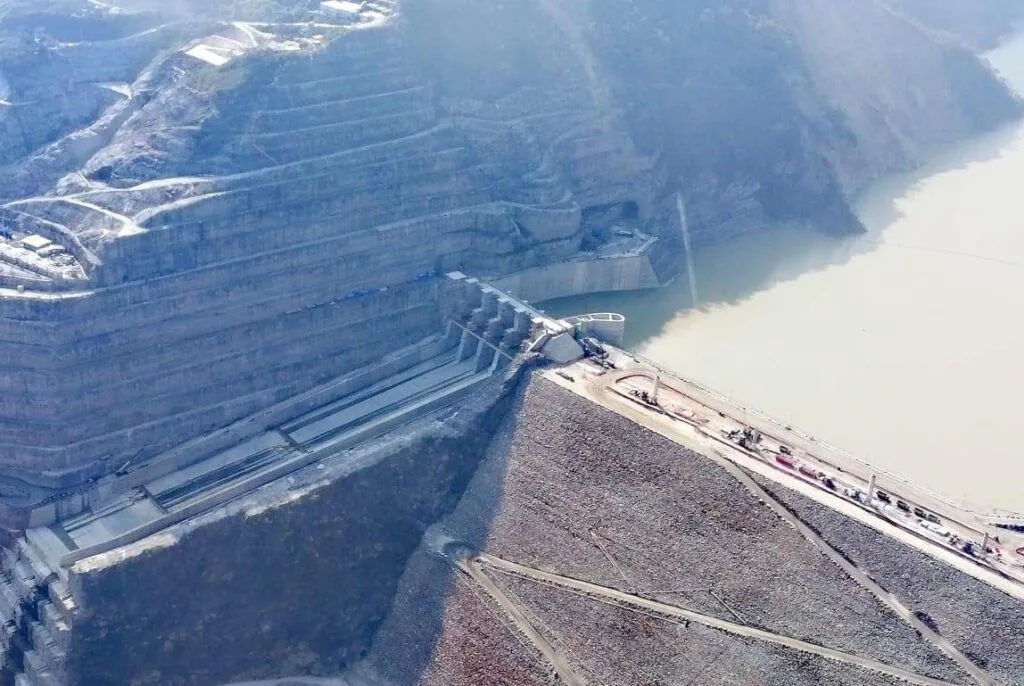
A Construction Milestone Ahead of Schedule
The Almenara structure is a critical concrete component of the Hidroituango hydroelectric complex, located on the Cauca River in Colombia’s Antioquia department. Its early completion removes a major bottleneck for the installation of turbines and other electromechanical equipment.
Finishing the structure about 18 days early allows contractors to move forward with delivery and commissioning phases without delay. For a project that faced severe setbacks, including a 2018 emergency that nearly collapsed the dam, meeting deadlines ahead of time signals improved operational control.
First Profits in the Project’s History
Hidroituango closed the first half of 2026 with income of approximately COP 1.69 trillion (~US$428 million). Pre-tax profit reached about COP 1.68 trillion (~US$425 million), funds that will be available to shareholders at the September assembly.
The project first turned a profit in 2025, recording operational income above COP 442 billion (~US$112 million). This marked the first time the company had been in the black since its creation, a turning point after years of cost overruns and legal battles.
The financial results are significant for EPM, the Medellín municipal utility that owns the project. EPM, short for Empresas Públicas de Medellín, is a publicly owned company and one of Colombia’s largest utilities.
Its financial health directly impacts the city of Medellín and its ability to fund public services.

Leadership Transition at a key Moment
General manager Alejandro Arbelaez departed on July 15, 2026, after steering Hidroituango through its most turbulent period. Under his watch, the company resolved years of legal and financial uncertainty stemming from the 2018 crisis and subsequent contractor disputes.
His exit comes with the project on stable footing: the main civil works are advancing ahead of schedule, and the balance sheet shows strong profits. The departure was announced as a planned transition, not a sudden resignation, according to local media reports.
For foreign investors, a smooth leadership handover at a profitable state-linked entity is a key governance indicator. It suggests institutional maturity and reduces the perception of political risk.
The Works-for-Taxes Mechanism and Future Expansion
Hidroituango is a leading contributor to Colombia’s Obras por Impuestos (works-for-taxes) program. This national mechanism allows companies to pay a portion of their income tax directly into public infrastructure projects in regions affected by conflict or poverty.
By channeling profits into local development, the dam strengthens its social license to operate in a region where large hydro projects often face community opposition. The program also provides a direct, auditable link between corporate taxes and visible public works.
Plans are in place to install four more turbines at the facility. Once fully operational, the dam will significantly boost Colombia’s installed hydroelectric capacity, adding reliable baseload power to the national grid.
What This Means for Foreign Investors
The early completion of the Almenara structure and the project’s first profits reduce two key risks for international stakeholders: construction delays and financial viability. A project that once threatened EPM’s credit rating is now generating substantial cash flow.
Colombia’s energy sector relies heavily on hydropower, making Hidroituango a strategic national asset. Its improved performance can help stabilize electricity prices and reduce the risk of rationing during dry seasons linked to El Niño weather patterns.
Investors in Colombian sovereign bonds or EPM’s corporate debt should note the turnaround. A profitable Hidroituango strengthens EPM’s balance sheet and, by extension, the fiscal position of Medellín, Colombia’s second-largest city.
More: Colombia news in English, every day from The Rio Times.
Frequently Asked Questions
What is the Hidroituango project?
Hidroituango is a large hydroelectric dam on the Cauca River in Antioquia, Colombia. It is owned by EPM, the public utility company of Medellín, and is designed to be one of the country’s largest power generators.
Why did the general manager leave now?
Alejandro Arbelaez departed on July 15, 2026, after the project posted its first-ever profits and resolved major legal and financial uncertainties. His exit was described as a planned transition following the project’s stabilization.
How does Hidroituango contribute to local development?
The project is a leading participant in Colombia’s Obras por Impuestos (works-for-taxes) program. This allows it to invest a portion of its income tax directly into public infrastructure projects in local communities.
Connected Coverage
Botero Dove of Peace Removed from Colombia’s Presidential Palace
Sources: Hidroituango.
This article was produced by The Rio Times’ automated newsroom system. How we use AI · Report an error
Read More from The Rio Times