Gol Fitch Upgrade to B- Signals Turnaround for Brazil Airline
Brazil · Business
Key Facts
—Gol Fitch Upgrade Fitch Ratings raised GOL to ‘B-‘ from ‘CCC+’ with a Stable Outlook on July 28, 2026.
—Liquidity GOL reported solid liquidity of approximately US$945 million as of Q1 2026
—Restructuring The upgrade follows GOL’s successful exit from Chapter 11 bankruptcy protection
—Abra Group The Abra Group agreement supported GOL’s deleveraging and corporate restructuring
—Tickers GOL trades on Brazil’s B3 exchange as GOLL4; its former NYSE ADSs were delisted during the restructuring
Gol Fitch upgrade news broke on July 28, 2026, when Fitch Ratings lifted Brazilian airline GOL Linhas Aéreas Inteligentes to ‘B-‘ from ‘CCC+’ with a Stable Outlook. The upgrade reflects a dramatic turnaround for the carrier, which completed a Chapter 11 restructuring and now holds approximately US$945 million in liquidity.
What the B- Rating Means for Foreign Investors
Fitch’s ‘B-‘ rating remains in highly speculative territory, but it signals a material improvement from the ‘CCC+’ level, which implies substantial default risk. The upgrade moves GOL further from the immediate danger zone that plagued it during restructuring.
For foreign investors, a ‘B-‘ with a Stable Outlook suggests the company can meet its financial commitments over the near term. The rating indicates that GOL’s capital structure is no longer under acute stress, though vulnerabilities to business and economic conditions persist.
The upgrade also matters for GOL’s access to capital. A higher rating typically lowers borrowing costs and widens the pool of institutional investors willing to hold the company’s debt or equity.
This is critical for an airline that needs to refinance aircraft leases and fund operations in a volatile emerging market.
Fitch cited three key drivers: strong operating performance, successful deleveraging after the Chapter 11 exit, and the stabilizing effect of the Abra Group agreement. The US$945 million liquidity position as of Q1 2026 provides a cushion against demand shocks or currency swings.
GOL’s Turnaround: From Chapter 11 to Stable Outlook
GOL filed for Chapter 11 bankruptcy protection in the United States in early 2024, burdened by heavy debt and lease obligations accumulated before and during the pandemic. The restructuring allowed the airline to reject unfavorable aircraft leases and slash its debt load.
The carrier exited Chapter 11 in mid-2025, and Fitch initially assigned a ‘CCC+’ rating with a Positive Outlook in July 2025. That rating acknowledged the restructuring’s completion but kept GOL in a fragile category until it could prove its operational and financial stability.
Over the following twelve months, GOL delivered. The airline improved load factors, maintained disciplined capacity growth, and benefited from strong domestic demand in Brazil.
The Abra Group, which also controls Colombia’s Avianca, provided strategic backing that helped streamline GOL’s corporate structure.
By mid-2026, the combination of leaner costs, a stronger balance sheet, and steady cash generation convinced Fitch that GOL had earned a higher rating. The Stable Outlook indicates Fitch does not expect a reversal in the next 12 to 18 months.
GOL’s Position in Brazil’s Consolidated Aviation Market
Brazil’s commercial aviation market is a consolidated three-carrier oligopoly, with LATAM Airlines Brasil, GOL, and Azul Linhas Aéreas Brasileiras competing intensely. LATAM Airlines Brasil, part of the Chile-based LATAM Airlines Group, holds the largest domestic market share, while GOL and Azul battle for the number two spot.
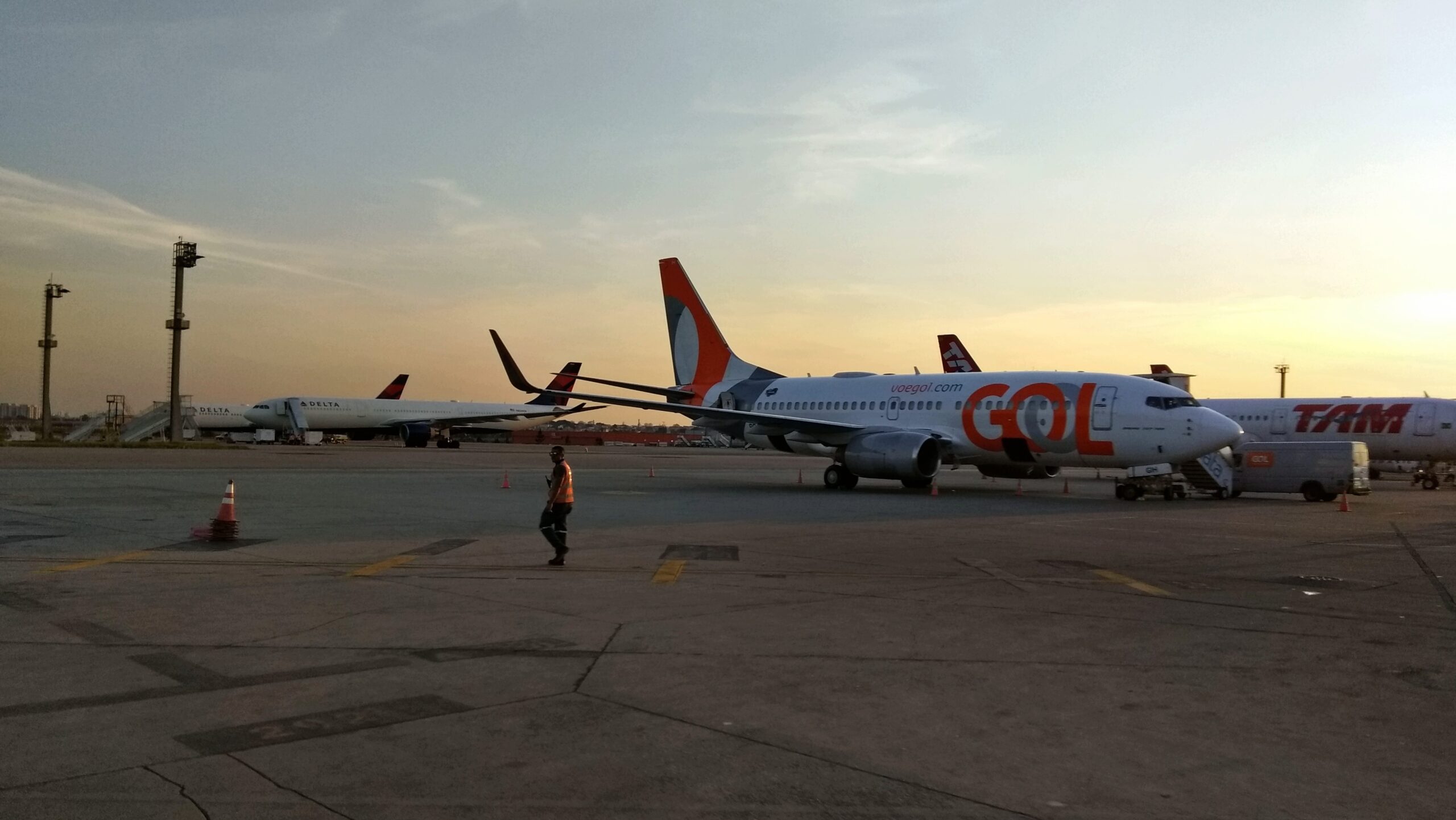
GOL operates a single-type fleet of Boeing 737 aircraft, which simplifies maintenance and crew training. This low-cost model has historically allowed GOL to compete on price while maintaining operational efficiency.
The strategy proved resilient during the post-restructuring recovery.
Azul differentiates itself with a hub-and-spoke network connecting smaller Brazilian cities, using a mixed fleet of Embraer and Airbus aircraft. LATAM leverages its international network and full-service model to capture higher-yield business traffic.
For foreign investors, the consolidated market structure means GOL operates with relatively rational competition. Unlike fragmented markets where price wars destroy margins, Brazil’s three major carriers have generally maintained pricing discipline, supporting GOL’s return to profitability.
Financial Health and Liquidity Cushion
The US$945 million liquidity figure reported for Q1 2026 represents a strong buffer. For context, this covers several quarters of operating expenses and provides ample room to navigate seasonal demand fluctuations or unexpected disruptions.
GOL’s deleveraging process reduced its lease and debt obligations significantly. The Chapter 11 restructuring allowed the airline to convert debt into equity and renegotiate terms with lessors, cutting fixed costs and improving cash flow generation.
Brazil’s interest rate environment remains challenging, with the Selic benchmark rate elevated. However, a stronger balance sheet means GOL is less exposed to refinancing risk than it was during the downgrade cycle of 2023-2024, when Fitch and S&P both cut the airline to ‘CCC’ territory.
Foreign investors should monitor the Brazilian real’s performance against the US dollar. A significant portion of GOL’s costs, including aircraft leases and fuel, are dollar-denominated.
The USD/BRL rate of approximately 5.1 provides a manageable backdrop, but sharp depreciation could pressure margins.
Stock Market Implications for GOLL4
GOL’s shares trade on Brazil’s B3 exchange under the ticker GOLL4 as preferred shares. The company’s American Depositary Shares (ADSs) were formerly listed on the New York Stock Exchange under the ticker GOL but were delisted during the 2024-2025 Chapter 11 restructuring process.
Credit rating upgrades often serve as catalysts for equity re-ratings, especially for companies emerging from distress. A move from ‘CCC+’ to ‘B-‘ signals that the market’s worst fears about default have not materialized, which can attract value-oriented and turnaround investors.
The GOLL4 preferred shares on B3 are now the primary equity instrument for both local and international investors seeking exposure to GOL. Institutional investors typically prefer the local listing for larger positions given deeper liquidity on the Brazilian exchange.
While the Fitch upgrade is positive, equity investors should weigh it against broader risks: fuel price volatility, Brazil’s economic growth trajectory, and potential competitive responses from LATAM and Azul. The Stable Outlook reduces downside credit risk but does not eliminate equity volatility.
What to Watch Next
The next milestones for GOL include potential upgrades from Moody’s and S&P, which could further validate the turnaround. A convergence of ratings at the ‘B’ level would mark a full rehabilitation from the restructuring era.
Operational metrics to track include domestic market share, load factors, and unit revenue trends. Any signs of aggressive capacity additions by LATAM or Azul could test GOL’s pricing power and profitability.
The Abra Group’s long-term strategy also matters. If Abra pursues deeper integration between GOL and Avianca, it could unlock synergies but also introduce execution risk.
For now, the Fitch upgrade confirms that GOL’s standalone story is on solid footing.
Frequently Asked Questions
What does a B- credit rating from Fitch mean?
A B- rating is highly speculative but indicates the company has adequate capacity to meet financial commitments. It is above the CCC category, which implies substantial default risk, but remains vulnerable to adverse business or economic conditions.
Why did Fitch upgrade GOL from CCC+ to B-?
Fitch cited strong operating performance, successful deleveraging after GOL’s Chapter 11 restructuring, support from the Abra Group agreement, and solid liquidity of approximately US$945 million as of Q1 2026.
How does GOL compare to LATAM and Azul in Brazil?
GOL is one of three major carriers in Brazil’s consolidated aviation market. LATAM Airlines Brasil holds the largest domestic share, while GOL and Azul compete for the second position.
GOL operates a single-type Boeing 737 fleet with a low-cost model.
Connected Coverage
Sources: Fitch Ratings.
This article was produced by The Rio Times’ automated newsroom system. How we use AI · Report an error · Editorial responsibility: Matthias Camenzind, Editor-in-Chief
Brazil runoff, Sunday, October 25: Brazil runoff date. Latest: Brazil runoff polls, Flávio 51%, Lula 49%.