Europe’s Nuclear Pivot: Securing A.I. Futures and Energy Sovereignty Through Atomic Power
European governments are scrambling to revive nuclear energy to stabilize electricity grids, power AI-driven industries, and reduce reliance on volatile fossil fuel markets.
France’s 57 reactors already supply 54.6% of the EU’s nuclear-generated electricity, while Germany reversed its 2023 phase-out to prevent energy shortages.
Spain abandoned its 2035 shutdown after a grid collapse exposed renewable instability, and Belgium extended reactor lifespans to 2035. These shifts reflect a continent-wide recalibration driven by hard economic realities.
AI data centers now consume 3% of Europe’s electricity, but demand is projected to triple by 2030, requiring 287 terawatt-hours annually—equivalent to Spain’s total 2022 usage. Fossil fuels would spike emissions eightfold, jeopardizing climate goals.
Nuclear offers a rare dual solution: 24/7 baseload power and near-zero emissions. The EU needs €350 billion by 2050 to modernize aging plants and build 14 new reactors, yet Russia alone has 14 reactors under construction, outpacing European efforts.
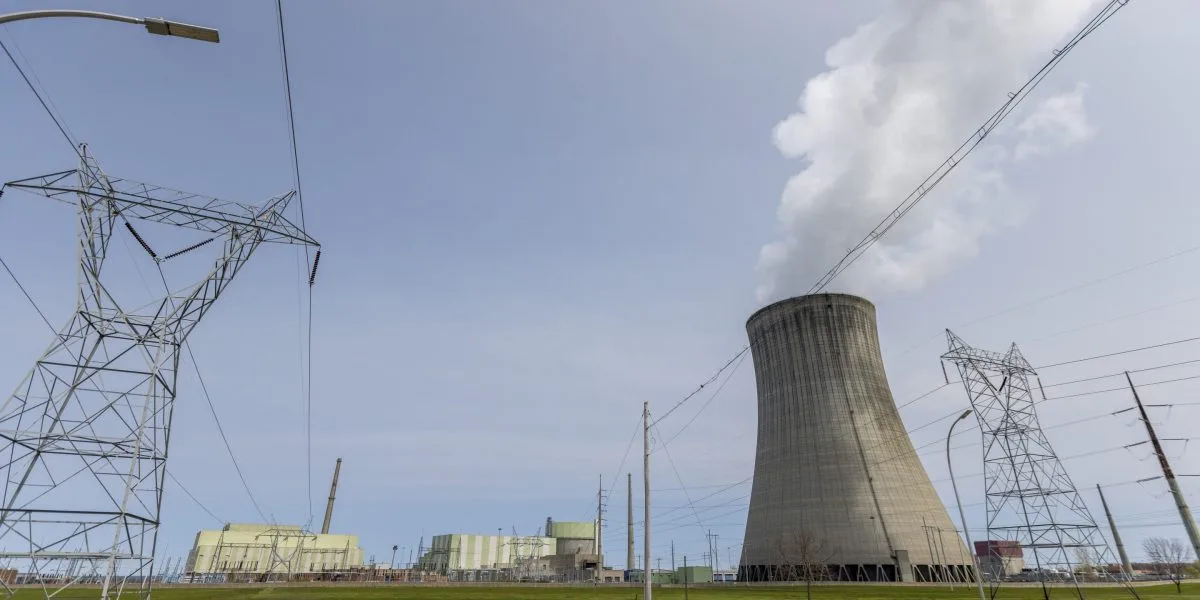
Public opinion has shifted decisively. Danish support for nuclear surged to 75% in 2024, while German opposition cratered from 65% to 20% since 2016. The European Nuclear Alliance, led by France, pushes standardized reactor designs to cut costs and delays.
Europe’s Nuclear Pivot
Hungary’s energy secretary calls nuclear “inevitable” for energy independence, leveraging its EU presidency to align member states. Small modular reactors (SMRs) are gaining traction, with Poland planning 26 units to replace coal plants and power data hubs.
The EU’s REPowerEU plan slashed Russian gas imports from 45% to 19%, but 2024 saw a rebound, forcing stricter bans on spot contracts by 2025. France’s Macron aims to build 14 new reactors, positioning nuclear as Europe’s energy backbone.
Meanwhile, the European Investment Bank’s €500 million loan to Orano for uranium enrichment signals growing financial commitments. Critics warn excluding nuclear from EU funds like InvestEU risks ceding AI dominance to the U.S. and China, where energy costs are lower.
Aging infrastructure remains a liability: the average EU reactor is 35 years old, with output declining 25% since 2006. Slovakia’s new Mochovce-3 reactor and Finland’s Olkiluoto-3 highlight progress, but delays plague projects like France’s Flamanville.
The EU’s updated Nuclear Illustrative Programme (PINC) targets 150 GW of nuclear capacity by 2050, requiring unprecedented coordination.
Europe’s energy crossroads is stark: accelerate nuclear or risk AI ambitions derailed by blackouts and emissions. As data centers proliferate, the bloc’s industrial future hinges on atomic agility.
This article was produced by The Rio Times’ automated newsroom system. How we use AI · Report an error
Read More from The Rio Times