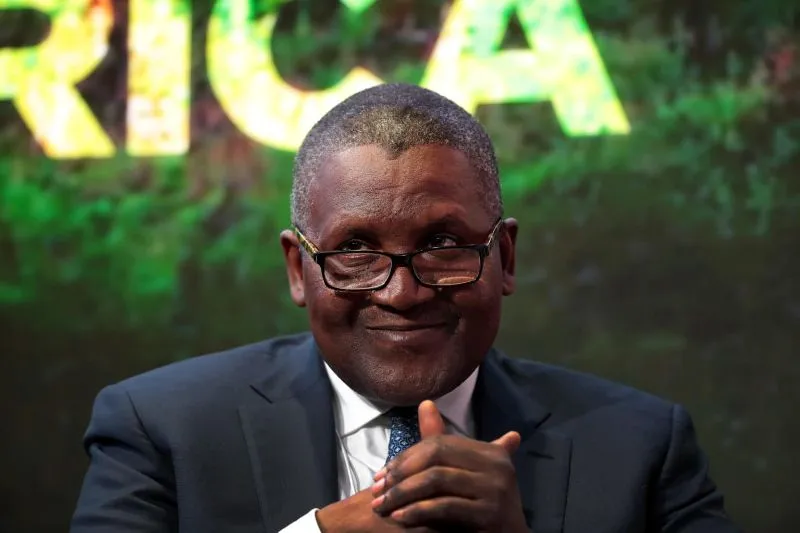
The Nigerian Dangote Group, spearheaded by Africa’s richest man, Aliko Dangote, aims to hit $30 billion in revenue by 2025.
This target represents a 455% increase from its 2022 earnings of $5.4 billion. Dangote plans to supply foreign currency independently, aiming to reduce reliance on Nigeria’s Central Bank.
The group’s strategy includes diversifying revenue sources, reducing the cement sector’s share from 75% to 15%, and boosting foreign-based EBITDA to 50%.
In a bold move to reshape its import strategy, Dangote intends to invest $900 million to stop raw sugar imports within four years.
This initiative stems from broader efforts to enhance self-sufficiency across its sectors, including agriculture, consumer goods, and energy.
Last year marked significant advancements, with the Dangote refinery commencing operations.
This refinery, Africa’s largest and the world’s biggest single-train facility, began diesel production. It is set to start gasoline production by year’s end.
It boasts a storage capacity of 4.5 billion liters, ensuring Nigeria’s fuel needs for up to 20 days.
Navigating Expansion Risks and Economic Impact
The refinery’s capabilities extend to producing 53 million liters of gasoline daily and 1.1 million metric tons of petroleum products annually.
It also houses a polypropylene plant with a capacity of 900 kilotons per year.
2025 will see Dangote list its oil refining and fertilizer companies on the Nigerian Exchange Group, opening up its shareholding to the Nigerian public.
This move underscores Dangote’s commitment to local economic development and capital market engagement. However, such rapid expansion does not come without risks.
Volatile commodity prices, unpredictable global oil markets, and potential regulatory shifts could challenge Dangote’s ambitious goals.
Moreover, the concentration of economic power in a single conglomerate could stifle competition and economic diversity in Nigeria.
Since 1978, Dangote has evolved his business from trading in commodities like cement, sugar, and cereals into a multifaceted conglomerate.
His influence now extends to key economic sectors not just in Nigeria but across Africa.
His journey from a local merchant to a global business magnate reflects his strategic vision and relentless pursuit of growth. He has become a beacon for African entrepreneurship and development.
More: Nigeria news in English, every day from The Rio Times.
This article was produced by The Rio Times’ automated newsroom system. How we use AI · Report an error
Part of our ongoing coverage
Africa: The New Scramble — the great-power contest over the continent.
Read More from The Rio Times