Drone Attack Near Ocaña Kills Three Colombian Soldiers
Colombia · SECURITY
Key Facts
- —What happened A drone attack near Ocaña killed three soldiers on September 4.
- —Who confirmed Colombia’s Army and Ocaña’s mayor, Emiro Cañizares, confirmed the deaths.
- —Who is blamed The president and army blame the ELN rebel group’s local unit.
- —The catch A military commander says dissident leader Iván Mordisco “will not survive” this government.
- —Wider context A conflict monitor counted 30 drone attacks in the new government’s first three weeks.
- —Weapons shortfall The armed forces lack 120,000 rifles, the defense minister says.
A drone attack near the Colombian city of Ocaña killed three soldiers. The government has blamed leftist rebels and announced a new push against a dissident commander’s finances.
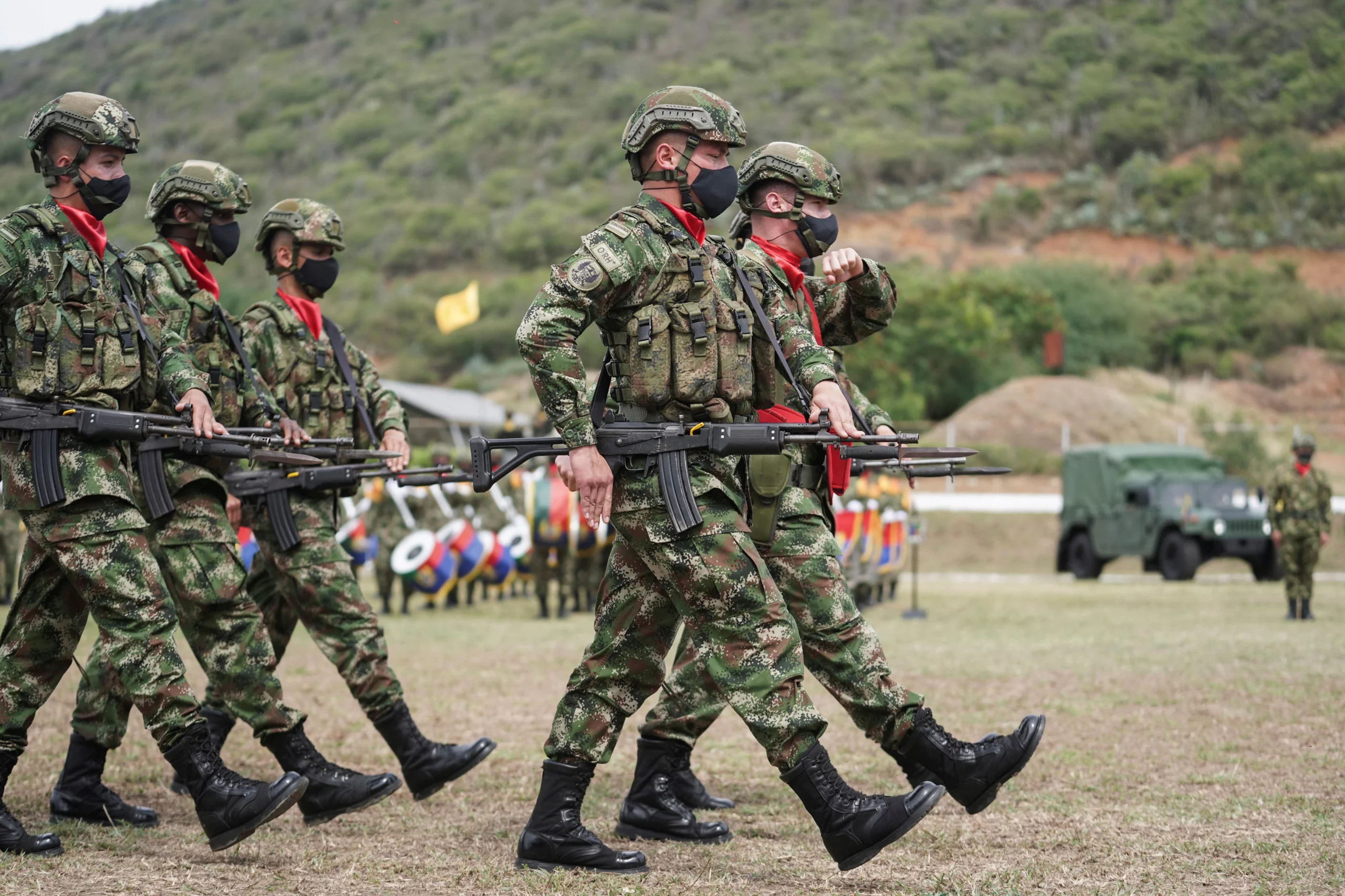
A drone attack near Ocaña, in northeastern Colombia, has killed three soldiers. The government has answered by targeting a dissident commander’s finances and network.
The Attack Near Ocaña
On the evening of 4 September 2026, explosive drones struck an army base called Cantón Militar El Trapiche, on Ocaña’s edge. The base houses an army rapid-reaction unit and an infantry battalion.
Colombia’s Army confirmed a captain and two professional soldiers died; one of the two died in hospital the next day. Four more soldiers were wounded and listed in stable condition, and a passing Air Force helicopter was hit.
Mayor Emiro Cañizares confirmed the toll and said the attack “originates fear and uncertainty” in the city.
Curfew and a Reward
After the attack, Cañizares ordered a curfew from 10 p.m. on September 4 to 4 a.m. the next day. The measure aimed to let security forces search the area safely.
Norte de Santander’s state governor separately offered 100 million pesos (US$31,700) for information leading to the attackers’ capture. Ocaña sits in Norte de Santander, a department on Colombia’s border with Venezuela.
Who Is Blamed
Colombia’s Army said the attack came from “combat with presumed members” of the ELN. The ELN, or National Liberation Army, is a leftist rebel group that has fought the state for decades.
President Abelardo De la Espriella went further, naming the ELN’s local “Frente Camilo Torres Restrepo” unit. Neither he nor the army published proof beyond that attribution, and the ELN has not commented.
An Earlier Attack in Ábrego
On 15 August 2026, explosive drones and gunfire hit an army patrol near Ábrego, a town on the road toward Ocaña. One soldier was killed and five were wounded, the Army confirmed.
The Army again blamed “presumed” ELN members for that attack. It shows the group had used drones in the same corridor three weeks before the Ocaña attack.
Rising Drone Attacks
ACLED, a group that tracks armed conflicts worldwide, recorded 30 drone attacks on Colombia’s security forces in the government’s first three weeks. President De la Espriella took office on 7 August 2026.
That count was more than four times the total from the three weeks before he took office. The attacks were concentrated in the Cauca and Norte de Santander departments.
Drones have become a common weapon for armed groups fighting the Colombian state. Both rebel groups mentioned in this article, the ELN and the FARC dissidents, now use them.
Government Offensive Against Mordisco
Iván Mordisco leads a faction of the FARC, a former guerrilla army that mostly disarmed under a 2016 peace deal. His fighters, who refused to demobilize, remain active in Catatumbo, a drug-trafficking region in Norte de Santander near Venezuela.
On 31 August 2026, President De la Espriella announced a new offensive against Mordisco’s finances and networks. He said, “We are closing the net on Mordisco and his networks.”
He also warned that “any criminal who doesn’t surrender will end up in a body bag.”
A Dissident Leader Killed
That same weekend, in the southwestern region of Valle del Cauca, soldiers killed a dissident fighter known as “Felipe” or “Arcadio.” He belonged to a different Mordisco-aligned faction, far from Ocaña and Catatumbo.
President De la Espriella called the killing a “crushing blow” to that faction, according to the South China Morning Post. It is a separate event from the Ocaña and Ábrego drone attacks, though both are part of the same wider offensive.

Commander’s Warning on Mordisco
Colombia’s top military commander, General Erik Rodríguez, gave a joint interview to the magazine Semana on 5 September 2026. He said Mordisco remains inside Colombia, and Colombian forces are working to find him.
He added, “Mordisco no va a sobrevivir a este Gobierno” — Mordisco will not survive this government. Defense Minister Jorge Eduardo Mora López, a retired major general, joined the same interview but did not make that statement himself.
The Rifle Shortfall
In that interview, Minister Mora revealed the armed forces face a shortfall of 120,000 rifles. He said that without replacements within six months, 120,000 soldiers would lack their basic weapon.
Mora also confirmed the government has scrapped the Fusil Jaguar, a Colombian-made rifle project, calling it “completely discarded” and “crazy.” He said the ministry would file complaints against those responsible with the Fiscalía, Colombia’s prosecutor’s office.
What Is the Fusil Jaguar?
The Fusil Jaguar was developed by Indumil, Colombia’s state-owned weapons manufacturer, under former president Gustavo Petro. It was billed as a fully Colombian-made rifle, 15% lighter than the imported Galil rifles it aimed to replace.
Petro defended the project, saying it should have continued through testing. Dropping it, he said, would mean “mounting the Galil again with profits in Israel and Miami,” Semana reported.
Former Senator Cabal’s Criticism
María Fernanda Cabal is a prominent right-wing former senator who left Congress in June 2026, after twelve years in office. In comments made on 5-6 September 2026, she criticized both the rifle shortfall and the Fusil Jaguar programme.
She wrote that soldiers face a 120,000-rifle deficit “while discovering that Petro’s Jaguar turned out to be a dud.”
She added that four years were spent “playing at peace” while the state was disarmed. Those responsible, she said, should answer to the Fiscalía, Colombia’s prosecutor’s office.
The government has not formally replied to her comments.
What Comes Next
The government has set no public timeline for the financial offensive against Mordisco. Its curfew in Ocaña ended after one night, while investigations into the attack continue.
Colombia’s military says it is adapting to drone warfare, which has spread quickly since De la Espriella took office in August. The rifle shortfall adds pressure to that adjustment, at a time when the armed forces are already stretched thin.
Frequently Asked Questions
What happened in the drone attack near Ocaña?
On September 5, a drone attack killed three Colombian soldiers near Ocaña. The mayor confirmed the deaths of one captain and two soldiers.
Who is responsible for the drone attack?
No group has been officially blamed for the Ocaña attack yet. The ELN was responsible for a similar attack in August in a nearby area.
What is the government’s response?
The government has announced an offensive against dissident FARC commander Iván Mordisco’s finances. Defense Minister Jorge Mora said Mordisco will not survive this government.
What is the Fusil Jaguar programme?
It is a Colombian-made rifle project that has been scrapped. The armed forces have a deficit of 120,000 rifles, according to the defense minister.
Connected Coverage
Sources: YouTube; Caracol Radio; Semana; South China Morning Post; ACLED; Noticias RCN.
This article was produced by The Rio Times’ automated newsroom system. How we use AI · Report an error
Read More from The Rio Times