Colombia Mining Reform Bans Mercury, Tightens Rules
Colombia · Business
Key Facts
—The bill. 255 articles, filed with Congress by the Ministry of Mines and Energy on July 28.
—The name. Mining Law for a Just Energy Transition, National Reindustrialisation and Mining for Life.
—Mercury. Prohibited outright.
—Closure. A mine-closure plan becomes a condition from the start of a project, not the end.
—The consultation. Built with more than 13,000 representatives of 115 indigenous peoples and 400 Afro-Colombian organisations.
Colombia’s mining rules were written in 2001 for a country trying to attract investors. The replacement is written for a government that no longer trusts them.
Colombia’s Ministry of Mines and Energy filed a bill to replace the 2001 Mining Code, a 255-article text that reorders how the state grants, supervises and ends mining rights. Minister Edwin Palma called it a matter of protecting the rights of mining communities and their territories.
It is the first attempt at wholesale reform of the code in a quarter of a century.
What actually changes
The bill organises around socio-environmental mining planning, the designation of zones suitable for mining, and a new contracting model. In plain terms, the state decides where mining may happen before anyone applies.
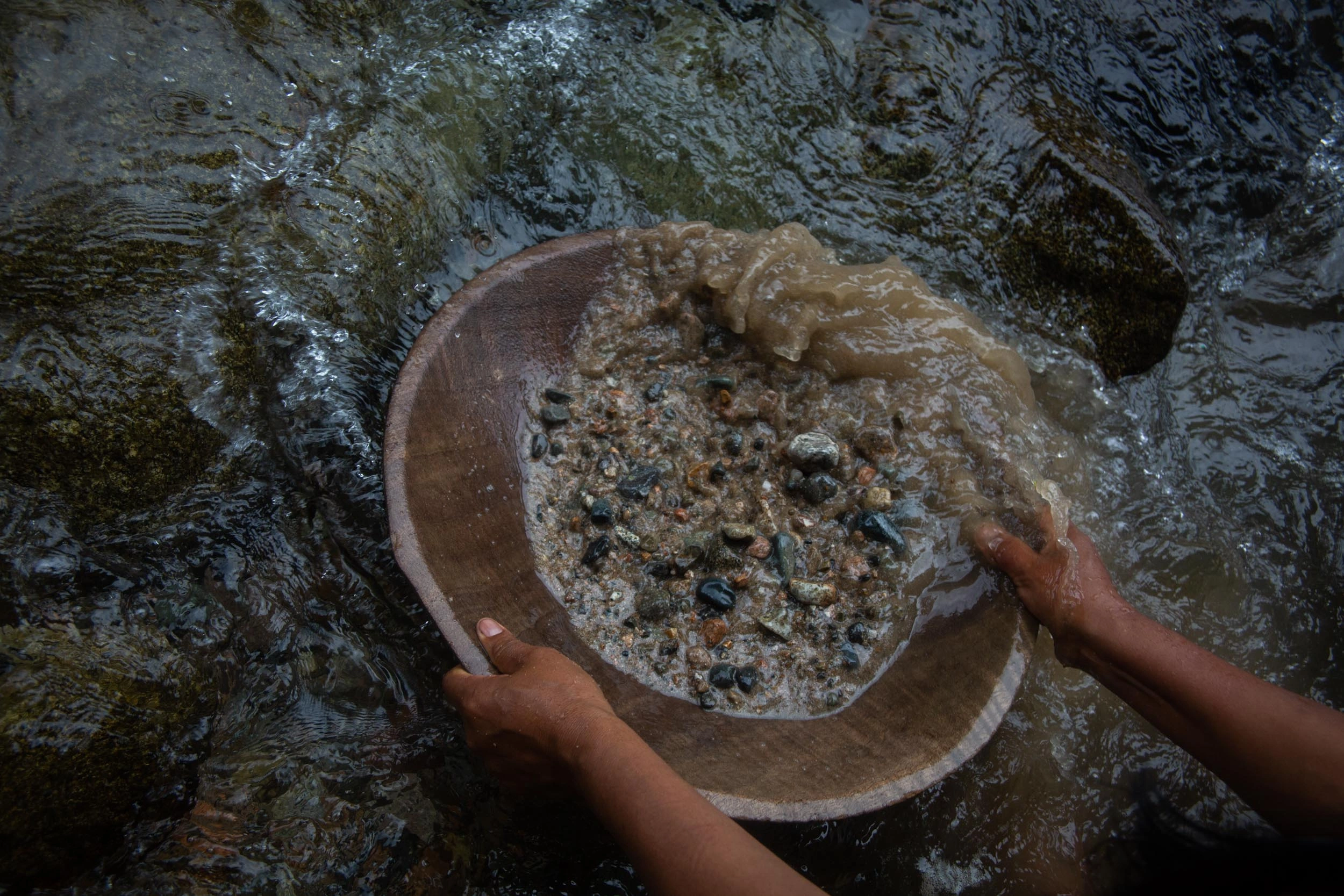
Mercury is banned. That matters most in the alluvial gold fields of Chocó and Antioquia, where informal operations have poisoned river systems for decades.
Closure plans become a condition from the beginning of a project. Colombia’s mountains are dotted with abandoned workings nobody was ever obliged to remediate.
The new socio-environmental mining plans will be regional, not project-by-project, aiming to align extraction with water and biodiversity limits. That marks a departure from a system that prioritised mineral rights over all other land uses.
Colombia ratified the Minamata Convention in 2019, committing to reduce and eliminate mercury use, yet enforcement in remote mining districts has lagged. The outright ban brings the law in line with that international obligation and signals stricter enforcement.
Under the 2001 code, closure obligations were often tacked on at the end of a mine’s life, leaving the state to shoulder the clean-up when companies disappeared. The bill requires financial guarantees and a detailed closure strategy before the first drill breaks ground.
The small-miner question
The reform creates a differentiated regime for small-scale, traditional and ancestral mining, with formalisation routes, technical assistance and access to credit.
This is the part with the widest reach. Hundreds of thousands of Colombians mine without title, which leaves them outside the law, outside the tax base and frequently under the protection of armed groups.
Formalisation has been attempted before and has largely failed, because the paperwork and capital demanded of a subsistence miner were designed for a company.
The scale is staggering: hundreds of thousands of miners earn a living from small excavations, mostly in gold-rich departments. Bringing them into a legal framework offers state benefits but also demands a lighter regulatory touch than the old code allowed.
Where state presence is thin, illegal armed groups often control mining areas and profit from the unregulated trade. By offering a legal path, the government hopes to weaken the illicit economies that sustain violence in mining regions.
Why investors are uneasy
President Gustavo Petro has been open about wanting to move Colombia away from extraction, and has restricted new oil and gas licensing. Industry reads any mining bill from this government through that lens.
The concern is not the mercury ban, which few defend. It is the expansion of state discretion over where mining may occur and on what terms, in a country where that discretion changes with each administration.
Colombia is a significant coal exporter and a growing gold producer. Rules that are stricter but stable can be worked with; rules that may be rewritten again in two years are harder to finance.
Companies holding exploration titles worry that the new zoning may block them from advancing to extraction, even if they have already invested millions. The bill’s language on existing rights remains a critical point of contention for the industry.
Colombia’s coal exports, mainly from the Cerrejón and Drummond operations, generated over US$5 billion in revenue in 2023, and gold production has been rising. A regulatory overhaul that complicates new projects risks those revenue streams, especially as coal demand faces long-term decline.
What happens next
Filing a bill is not passing one. Petro’s government has seen major reforms stall, dilute or die in Congress, and it is governing in its final stretch.
The consultation process, more than 13,000 representatives across 115 indigenous peoples and 400 Afro-Colombian organisations, gives the text a legitimacy that is politically hard to dismiss. It also gives opponents a long record to litigate over.
The bill must pass through four debates in Congress, where conservative coalitions and mining lobbies are expected to resist provisions that strengthen state intervention. Petro’s declining approval ratings and the approaching 2026 presidential election add urgency to the legislative push.
More: Colombia news in English, every day from The Rio Times.
Frequently Asked Questions
What is Colombia’s new mining bill?
A 255-article reform of the 2001 Mining Code, filed with Congress by the Ministry of Mines and Energy in July 2026.
Does it ban mercury?
Yes. The bill prohibits the use of mercury in mining outright.
What does it do for informal miners?
It creates a special regime for small-scale, traditional and ancestral mining with formalisation routes, technical assistance and access to credit.
Who is behind the reform?
The Ministry of Mines and Energy under Minister Edwin Palma, following consultation with more than 13,000 community representatives.
Sources: El Universal · Ministerio de Minas y Energía
This article was produced by The Rio Times’ automated newsroom system. How we use AI · Report an error
Read More from The Rio Times