Since Myanmar’s military coup in 2021, the nation has faced a fuel crisis that touches every aspect of life.
Senior Gen. Min Aung Hlaing’s government is now trapped in a struggle for power, heavily reliant on imported fuel for military and civilian use.
Fuel powers everything from Russian bombers to state-run factories, yet sanctions have made this lifeline increasingly tenuous.
Amnesty International has flagged the potential war crimes associated with using aviation fuel in military assaults.
These concerns have led to patchy international sanctions, which, while aimed at stifling military operations, also disrupt civilian life.
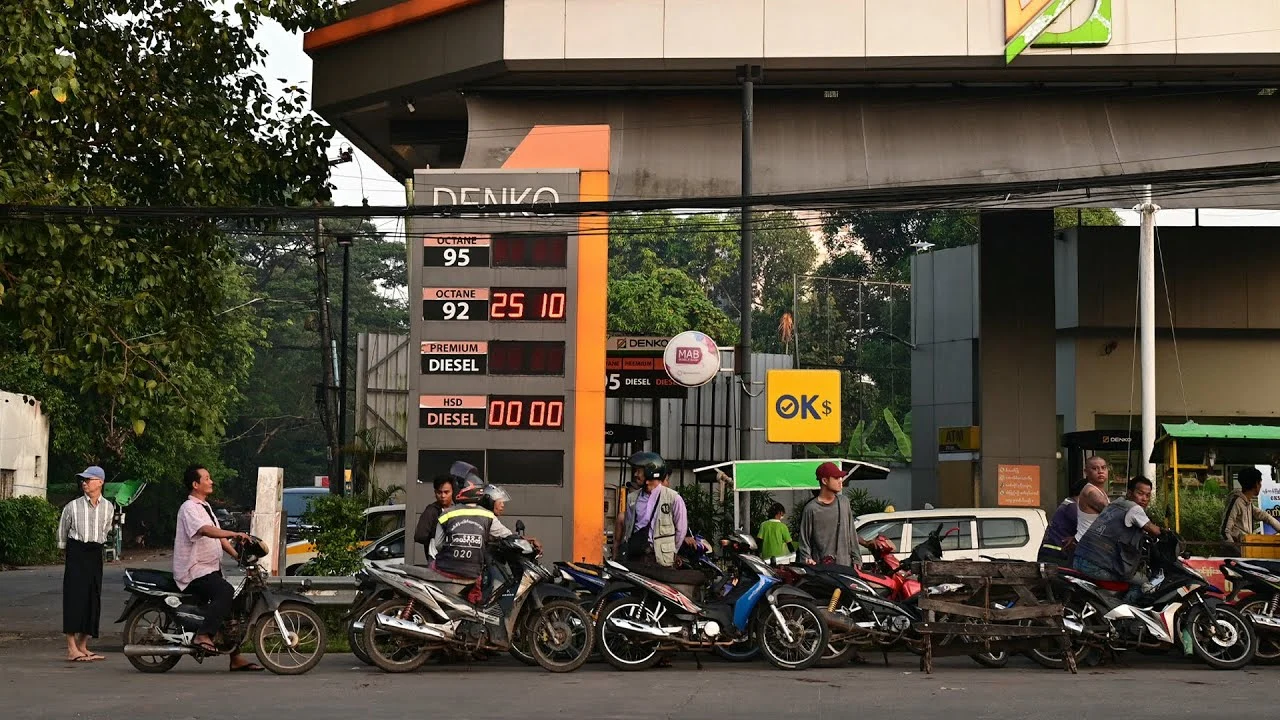
In 2023, Myanmar spent around $5.5 billion on energy imports, illustrating the economic strain of these dependencies.
The depreciation of Myanmar’s currency exacerbates the situation, with exports dwindling and the price of essential goods like fuel skyrocketing.
Civilians endure severe shortages, with the cost of diesel jumping four times since the coup. These economic shocks stall agricultural and transportation activities, deepening the humanitarian crisis.
Singapore, the primary source of Myanmar’s imports, remains a pivotal yet complex partner in this scenario.
Despite sanctions, the intricate trade relationships make it challenging to cut off fuel supplies without harming broader economic and humanitarian interests.
This fuel dependency narrative underscores not just a local crisis but a global dilemma where politics, economics, and human rights intersect.
The situation in Myanmar exemplifies how geopolitical strategies and domestic policies can ripple through nations, affecting the most vulnerable populations.
As the world watches, the unfolding events in Myanmar remind us of the intricate balance between enforcing justice and ensuring stability.
This article was produced by The Rio Times’ automated newsroom system. How we use AI · Report an error
Read More from The Rio Times