Argentina vs Uruguay for Foreign Residents in 2026: Visas, Taxes and Costs
SOUTHERN CONE · EXPAT GUIDE
Key Facts
- —The permits Argentina grants 180 days, renewable once. Uruguay grants under 180 days, renewable once, for a maximum year.
- —The income bar Neither remote-work permit sets one. Any figure you read online for these two permits is invented.
- —The fees Argentina charges 32,000 pesos, about US$21, for the permit. Uruguay charges around US$9.
- —The tax line Argentina vs Uruguay turns on this: Argentina taxes worldwide income up to 35 percent, Uruguay only defined foreign income.
- —The Uruguayan holiday New residents can pay the non-resident rate on foreign investment income for up to eleven years.
- —The catch A permit is not tax residency. In Argentina twelve months on temporary permits triggers it.
The immigration rules are similar and cheap in both. The tax rules are not, and Uruguay changed its in January.

Argentina vs Uruguay is the standing question for anyone choosing a base in the Southern Cone. The immigration answer is close to a tie.
Both countries will let a remote worker in on a simple permit. Neither publishes a minimum income for it.
The tax answer is not a tie at all. On Argentina vs Uruguay, that is where the decision actually gets made.
The Two Permits
Argentina grants a transitory residence for digital nomads under article 24 of its migration law. It runs 180 days and can be extended once for the same period.
It is open only to nationals of countries that do not need a tourist visa. There are two procedures: an electronic one before you travel, and an in-person one once you are in the country.
Uruguay issues a provisional identity sheet for remote workers. It covers stays of under 180 days and can be extended by another 180, for a maximum of one year.
Neither requires a stated income figure. Argentina asks for contracts or an employer letter plus a professional reference; Uruguay asks for a sworn statement of sufficient means.
What They Cost
The state fees are trivial in both. Argentina charges 32 units of 1,000 pesos for the transitory residence, so 32,000 pesos, about US$21, for non-Mercosur nationals.
A renewal costs 40,000 pesos, roughly US$26. Full temporary or permanent residence costs 100,000 pesos, some US$65.
Uruguay charges 55.71 indexed units for the nomad sheet, around 370 Uruguayan pesos or about US$9. It cannot be paid from outside the country.
Full legal residence in Uruguay costs 557.30 indexed units, roughly US$92. The migration certificate you need for an identity card costs about US$9 more.
The real expense in both is not the fee. It is apostilles, certified translations and the time they take.
The Tax Trap
A residence permit is not tax residency. The two systems run on different clocks and the confusion is the single most common mistake.
In Argentina you become tax resident on obtaining permanent residence, or after twelve months on temporary authorisations. Temporary absences do not reset that clock.
A nomad permit counts as a temporary authorisation. Two consecutive 180-day periods therefore reach the threshold.
Residency takes effect from the start of the month after the trigger. From then Argentina taxes worldwide income, on a scale rising to 35 percent.
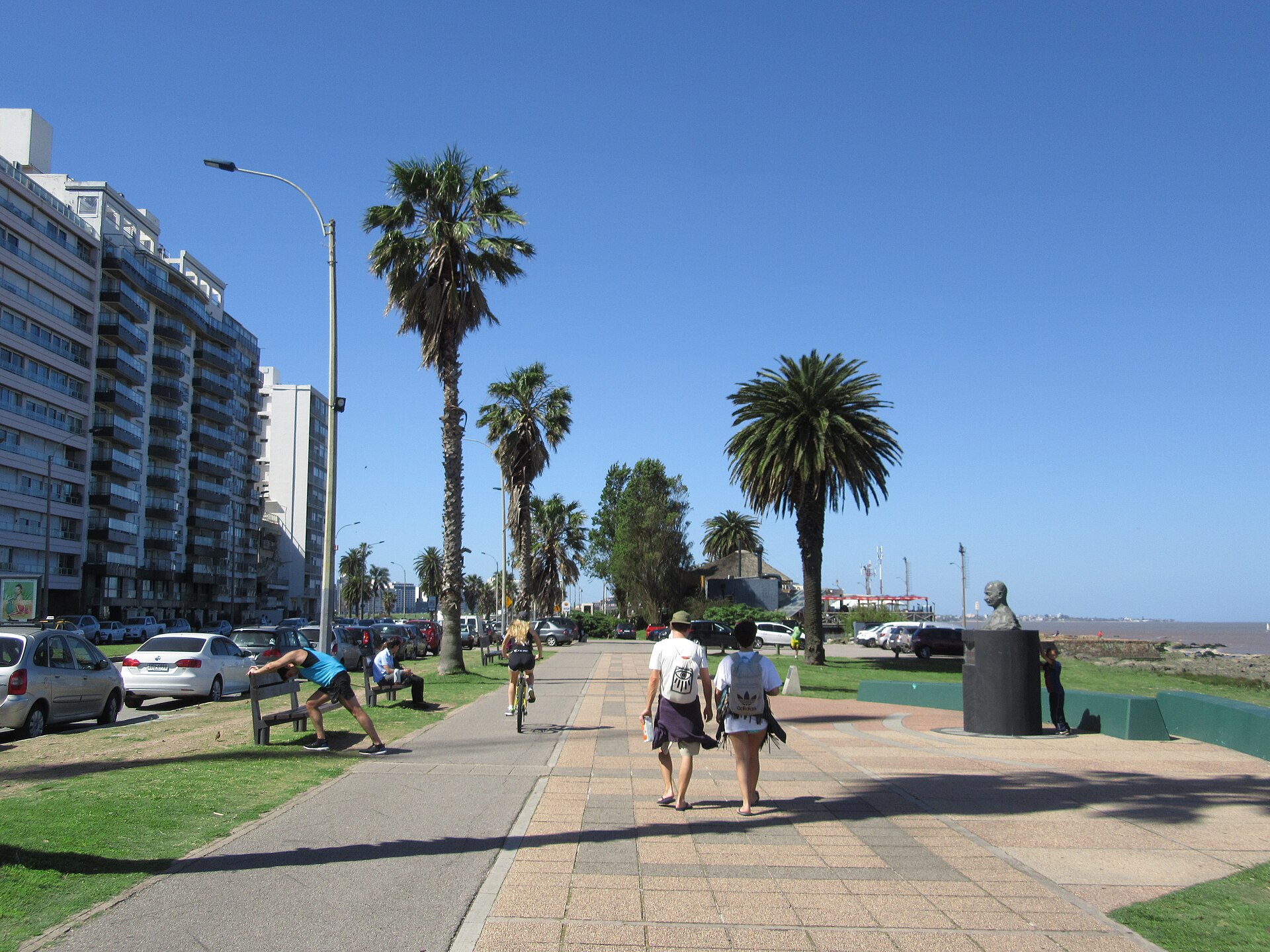
What Uruguay Changed in January
Uruguay taxes on a territorial basis, with exceptions. Those exceptions grew on 1 January 2026.
Foreign interest and dividends were already taxed at 12 percent. Income from property abroad and capital gains from abroad are now caught as well.
Royalties, patents, trademarks and derivatives remain outside the tax. The rules implementing the change are incomplete and collection on some items has been suspended.
The new-resident holiday was rewritten in the same law. It applies to people who become tax resident from 2026 and were not resident in the two preceding years.
They can pay the non-resident rate instead of income tax on foreign investment income. That runs for the year of the change plus ten more.
There are three routes in. The first is buying property above 12.5 million indexed units, roughly US$2.06 million.
The second is putting at least 625,000 units a year, some US$103,000, into approved funds. The third is simply spending more than 183 days a year in the country.
The third route costs nothing. It is also the one most guides omit.
One limit matters. The holiday covers foreign investment income only, not foreign salary or business income.
Money, Rent and Paperwork
Argentina’s official reference rate was 1,509.91 pesos to the dollar on Friday 11 September. The exchange-rate band is still in force and its ceiling was near 1,889 pesos to the dollar in early September.
Uruguay’s last confirmed official interbank print was 40.2440 pesos to the dollar at the end of August. The rate has hovered near 40.26 since.
On rent the two are closer than reputation suggests. Crowd-sourced figures for September put a central one-bedroom at about US$724 in Buenos Aires and US$755 in Montevideo.
Those numbers are indicative, not official, and the Buenos Aires figure moves with whichever exchange rate is used. Neither country publishes an official expat rent series.
Both want a criminal record certificate, apostilled and translated. Argentina issues a national identity document to temporary and permanent residents but not to transitory ones.
Uruguay issues an identity card once residence is approved. Brazilian documents are exempt from translation there.
One Argentine Change to Know
A 2025 decree rewrote Argentina’s migration law. Permanent residence now requires proof of economic means and a clean record, which it did not before.
Non-permanent residents are also charged for non-emergency public healthcare and for public university. That is a real cost change for long-stay foreigners.
Two courts struck down part of the decree in June 2026. What fell was the transfer of citizenship applications away from the courts, not the residency rules.
If you want cheap and flexible, Argentina still wins on daily costs. If you want rules that will read the same next year, Uruguay is the safer base.
More: Latin America news in English, every day from The Rio Times.
Frequently Asked Questions
Argentina vs Uruguay: which is easier for a remote worker?
Both are straightforward. Argentina grants 180 days renewable once to visa-exempt nationals; Uruguay grants under 180 days renewable once, to a maximum of one year.
Is there a minimum income?
Not for either remote-work permit. Argentina does set one for its rentista route, at five times the minimum wage, about US$1,253 a month in September 2026.
When do I become tax resident?
In Argentina, on permanent residence or after twelve months on temporary permits. In Uruguay, mainly by spending more than 183 days in the country.
What is Uruguay’s 2026 tax holiday?
New residents can pay the non-resident rate on foreign investment income for the year they arrive plus ten more, via a property purchase, a fund investment or a 183-day presence test.
Which is cheaper to live in?
Argentina is generally cheaper day to day, though central rents are now close: about US$724 a month in Buenos Aires against US$755 in Montevideo on crowd-sourced September figures.
Sources: Direccion Nacional de Migraciones, ARCA, BCRA, gub.uy, DGI Uruguay, IMPO, Numbeo.
This article was produced by The Rio Times’ automated newsroom system. How we use AI · Report an error
Read More from The Rio Times