Argentina Markets: Merval & the Peso — September 26, 2026
Key Facts
- The Merval fell 1.57% to 2,893,751 as investors cut exposure to Argentine financial shares amid a tenth straight rise in country risk
- The peso weakened 0.30% to 1,524 per US dollar, the weakest edge of its 52-week closing range between 1,329.50 and 1,524.50
- Banks led the retreat with Banco Macro down 2.9%, Grupo Supervielle down 2.3% and BYMA down 2.9%
- YPF slipped 2.3% on US$9m traded despite a 1% fuel price rise, with Brent crude still above US$100 a barrel
- Global equities had a quiet day with the S&P 500 edging up 0.51%, but Argentina’s risk premium topped 600 basis points
Today’s Focus
Argentina’s main stock index, the Merval, fell 1.57% on Friday to close at 2,893,751 points. Financial shares were the clear weak link as JP Morgan’s country-risk gauge rose for a tenth straight session.
The country-risk index — which tracks how much extra yield investors demand to hold Argentine dollar debt — climbed to 609 basis points, above 600 for the first time since April. Banks are especially sensitive to that measure because their valuations hinge on sovereign credit conditions.
The peso also weakened, closing at 1,524 per US dollar in the wholesale market, a 0.30% decline on the day and the lowest level of its 52-week range. The central bank absorbed the government’s roughly US$800 million payment to the IMF without buying reserves.
Energy names did not offer much protection either, with YPF falling 2.3% despite a 1% average petrol and diesel price rise. The market’s message: the reform trade needs country risk to turn before it can run again.
What matters today. The Milei reform trade is stalling because rising sovereign risk is now hitting the banks harder than energy optimism can offset.
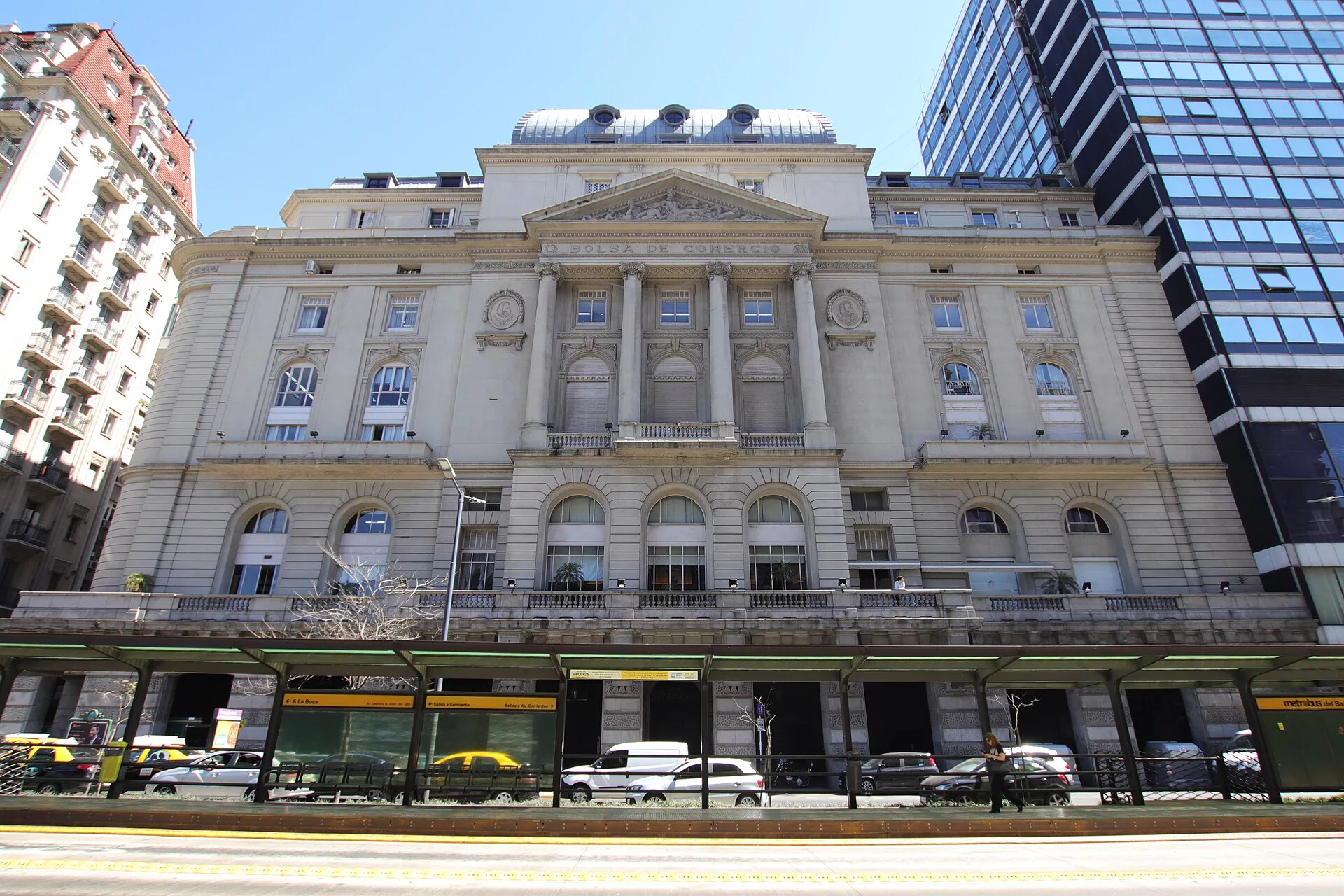
01 The session in one read
Argentina’s main stock index, the Merval, sagged 1.57% on Friday to settle at 2,893,751 points. The pullback was concentrated in banks and financial services, the shares most exposed to Argentina’s sovereign credit story.
The peso also moved lower, easing 0.30% to 1,524 per US dollar in the wholesale market. That takes the currency to the weakest edge of its 52-week closing range, which spans from 1,329.50 to 1,524.50 per US dollar.
The trigger was a familiar one: JP Morgan’s country-risk index, which measures the extra yield investors demand to hold Argentine dollar debt versus US Treasuries, rose about 30 points to 609 basis points. That was its tenth straight daily advance and its highest level since early April.
For a market still trading on the Milei reform story, the math has turned finicky. Deregulation and fiscal discipline still matter, but right now neither is doing enough to offset the tightening grip of sovereign risk.
The evidence is consistent: a tenth consecutive rise in country risk, a new 52-week low for the peso and the steepest losses in financial shares. That is a textbook risk-off pattern for Argentine assets, even as global markets stayed calm. The variable to watch is whether country risk can stabilise early next week before it feeds into a broader index correction.
02 The day’s numbers
| Measure | Level | Change | Read |
|---|---|---|---|
| Merval | 2,893,751 | -1.57% | Main stock index slips as banks drag |
| USD/ARS | 1,524 | +0.30% | Peso at weakest edge of 52-week range |
| Country risk | 609 bps | +30 bps | Tenth straight advance for risk gauge |
| S&P 500 | 7,743 | +0.51% | Global equities muted but positive |
| US 10Y yield | 5.165% | -4 bp | Benchmark Treasury rate eases |
The Merval’s 1.57% decline was its steepest one-day drop since 16 September, though the index remains well above its year-ago level. The peso’s 0.30% weakening kept the pressure on hard-currency earners, but the real damage was in domestic financial names.
The 609-basis-point country-risk reading is the figure to hold in view. It does not move a chart like a stock price, but it sets the borrowing costs for Argentina and therefore the discount investors apply to every Argentine share.


Live Market IntelligenceArgentina — Live Market Board
Rio Times · Live Market Intelligence
Argentina — Live Market Board
| Instrument | Last | Change | YoY | Prev. | High | Low | Volume |
|---|---|---|---|---|---|---|---|
| MERVAL | 2,893,751 | -1.57% | +30.51% | 3,022,485 | 3,042,365 | 2,991,150 | — |
| USD/ARS | 1,493 | +0.10% | +12.96% | 1,491 | 1,494 | 1,480 | — |
| YPF | 7,810 | +0.26% | +72.84% | 7,790 | 7,850 | 7,600 | 1,763,858 |
| GGAL | 6,980 | -0.78% | +1.82% | 7,035 | 7,115 | 6,920 | 1,564,062 |
| PAMPA | 5,115 | +0.69% | +26.70% | 5,080 | 5,140 | 5,000 | 721,190 |
| TXAR | 747.50 | -2.35% | +18.67% | 765.50 | 770.00 | 742.50 | 771,892 |
| ALUAR | 938.00 | -1.21% | +29.83% | 949.50 | 951.00 | 932.50 | 135,426 |
| TGS | 8,870 | -0.17% | +15.05% | 8,885 | 9,075 | 8,720 | 143,546 |
| CEPU | 2,156 | +1.84% | +28.36% | 2,117 | 2,165 | 2,086 | 404,146 |
| MIRGOR | 1,650 | -1.20% | -92.90% | 1,670 | 1,670 | 1,635 | 20,877 |
| COME | 40.93 | -0.73% | -30.47% | 41.23 | 41.60 | 40.50 | 4,258,884 |
| LOMA NEGRA | 3,130 | +0.08% | +5.80% | 3,128 | 3,205 | 3,090 | 182,992 |
| BYMA | 275.00 | -1.70% | +35.14% | 279.75 | 282.50 | 272.00 | 1,409,575 |
| TELECOM ARG | 4,233 | -0.70% | +55.19% | 4,263 | 4,335 | 4,160 | 31,896 |
| GLOBANT | 38.10 | -2.26% | -49.65% | 38.98 | 38.70 | 36.77 | 793,552 |
| MERCADOLIBRE | 1,870 | -3.59% | -20.71% | 1,940 | 1,927 | 1,870 | 329,640 |
03 Why it moved — sovereign risk tightens its grip
The session was a tug-of-war between Argentina’s improving micro story and a deteriorating macro one. On the ground, YPF confirmed an average 1% increase in fuel prices, and Brent crude holding above US$100 a barrel should normally support energy shares.
Against that, the government paid almost US$800 million to the IMF, and the central bank finished the day without buying reserves. That means the dollar supply cushion is thinner than bulls would like.
The banks are the market’s stethoscope for that tension. Banco Macro fell 2.9%, Grupo Supervielle dropped 2.3%, and BYMA, the company that runs Argentina’s stock exchange, lost 2.9%. Each is a direct bet on Argentine credit and local financial activity.
Put simply, investors are not selling Argentina because the reform agenda has failed. They are selling because the price of Argentine risk is rising faster than the reform story can compensate.
04 The day’s movers
| Driver | Level / Move | Change | Note |
|---|---|---|---|
| EDN | -3.2% | -3.2% | Edenor led the decline on under US$1m traded |
| BMA | -2.9% | -2.9% | Banco Macro hit by rising country risk |
| BYMA | -2.9% | -2.9% | Bourse operator falls on under US$1m traded |
| SUPV | -2.3% | -2.3% | Grupo Supervielle tracks bank selloff |
| YPFD | -2.3% | -2.3% | YPF slips despite fuel price increase |
| GGAL | -1.6% | -1.6% | Grupo Galicia off on US$8m turnover |
| PAMP | -0.5% | -0.5% | Pampa Energía cools on US$4m traded |
Edenor, the Buenos Aires electricity distributor, was the biggest drag, sliding 3.2% on thin turnover of under US$1 million. Utility names that rely on local tariffs and subsidies tend to wobble when sovereign risk rises.
Among the larger blue chips, Grupo Galicia slipped 1.6% with US$8 million in volume, the heaviest traded local name after YPF. YPF’s 2.3% fall came on US$9 million — the day’s most-traded local stock. The energy heavyweight is still the most liquid way for foreign funds to express a view on Argentina’s oil and gas story.
Cross-listed CEDEARs also offered no shelter. Foreign shares traded in Buenos Aires, like META at -3.2% and VIST at -1.1%, mainly reflected the US tape and currency moves rather than Argentine fundamentals.
05 The regional scoreboard
| Index | Country | Change |
|---|---|---|
| Merval | Argentina | -1.57% |
| Ibovespa | Brazil | -0.27% |
| IPC | Mexico | +0.60% |
| IPSA | Chile | -0.39% |
| COLCAP | Colombia | -0.95% |
Argentina was the regional laggard, with the Merval’s 1.57% drop standing out against a mixed Latin American session. Mexico gained 0.6%, while Colombia fell nearly 1%.
The regional spread underlines how Argentina-specific risk, not a global equity storm, drove the session. Mexico logged a gain and Brazil only a slight loss, so the selling was a home-grown story.
06 The technical picture
The Merval’s close at 2,893,751 leaves the index below the psychologically important 3-million-point threshold and at its lowest close since 20 August. That level was originally crossed during the post-election rally, but this week’s five-session, 4.2% slide suggests the 3-million mark is now resistance rather than support.
The peso is trading at the weakest edge of its 52-week range, with Friday’s 1,524.50 close marking the outer boundary on a closing basis. A decisive break above that level could accelerate the move, but the currency has spent most of the past year trading well inside that band.
For the banks, the technical damage is now a market signal. The next test is whether energy and utility names can hold their ranges if country risk keeps climbing.
07 What to watch
- Sovereign risk: Whether country risk extends its streak or stabilises back below 600 basis points — it sets the tone for banks
- Central bank reserves: The next reserve-buying session will show whether the peso can stabilise near 1,524 per US dollar
- YPF fuel prices: The 1% increase may support energy shares if Brent holds above US$100, but the market has not rewarded it yet
- Global risk appetite: US equities were quiet, but a rise in Treasury yields or a stronger dollar could hit Argentine risk again
Background: Merval Falls 1.29% as Argentine ADRs Slide Across Latin America.
Frequently Asked Questions
What is the Merval?
The Merval is Argentina’s main stock index, tracking the biggest and most-traded companies on the Buenos Aires exchange.
Why did the peso weaken?
The central bank bought no dollars after a payment of almost US$800 million to the IMF, leaving the peso at 1,524 per US dollar, the weakest point of its 52-week range.
What is country risk?
Country risk is the extra yield investors demand to hold a country’s dollar debt instead of US Treasuries. It rose to 609 basis points on Friday, its tenth straight rise, meaning Argentina’s risk premium is climbing.
Why did banks fall most?
Banks are a direct play on Argentina’s sovereign credit. When country risk rises, their funding costs and loan losses climb, so investors sell them first.
Market data: RT live market data; exchange figures from BYMA
This article was produced by The Rio Times’ automated newsroom system. How we use AI · Report an error
LatAm Markets: Live Signals → — real-time movers, turnover leaders and FX across Latin America.
Read More from The Rio Times