Argentina’s Dividend Payments Abroad Top US$1 Billion in June
Economy: Argentina
Key Facts
—Figure. In June 2026, companies transferred about US$1.023 billion abroad in profits and dividends, according to the central bank’s foreign-exchange balance — the largest monthly outflow since 2010.
—Sectors. Energy (US$165 million), food, beverages and tobacco (US$135 million), mining (US$125 million) and financial firms (US$112 million) together made up more than half the total.
—Rule change. The transfers follow Communication “A” 8226, in force since April 2025, which lets firms remit profits earned in fiscal years starting on or after 1 January 2025.
—Dollar demand. The outflow was a leading source of dollar demand in June and helped narrow the current-account surplus from about US$1.877 billion to US$857 million.
—Reserves. Gross central-bank reserves fell roughly US$3.323 billion in June, though they still rose about US$3.775 billion across the first half of 2026.
Argentine companies’ dividend payments abroad topped US$1 billion in June 2026 — the most in any single month since 2010 — as firms accelerated profit transfers after the government eased currency controls.
A Record Month for Profit Transfers Abroad
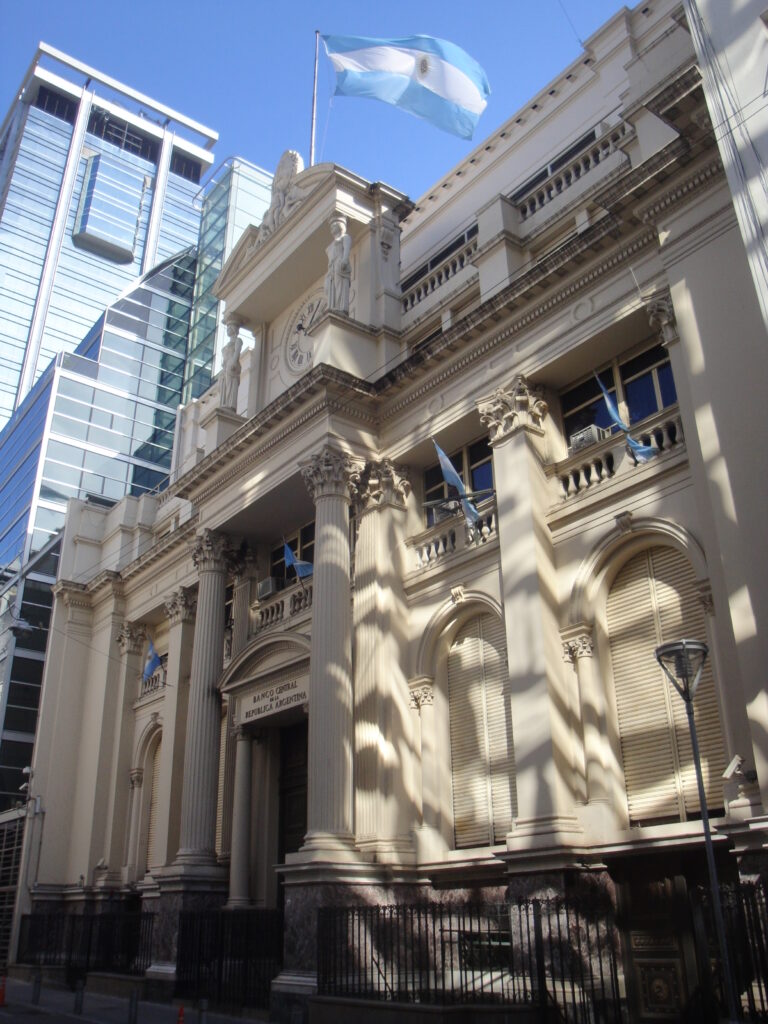
Argentina’s central bank (BCRA) reported that firms sent about US$1.023 billion abroad in profits and dividends in June 2026, the highest monthly figure in its foreign-exchange records since 2010. The bank has tracked the series since January 2003, and only May 2010 showed a larger number.
The June total marked a sharp jump. Over the previous six months, payments averaged roughly US$347 million a month, and in May the balance had actually shown a net inflow, according to figures cited by financial analyst Salvador Vitelli.
For foreign readers, the headline matters because it signals how quickly companies are moving to repatriate earnings now that they legally can — a shift that shows up directly in the country’s external accounts.
Which Sectors Led the June Outflow
More than half the June total came from four sectors, according to Vitelli’s reading of the central-bank data: energy (about US$165 million), food, beverages and tobacco (US$135 million), mining (US$125 million) and financial institutions (US$112 million).
That mix reflects where large, dollar-generating and foreign-owned companies are concentrated in Argentina. Energy and mining have drawn heavy foreign investment, while multinational consumer-goods firms and banks have long maintained a presence in the country.
The concentration also helps explain the timing. Many of these firms report on calendar-year cycles and approved dividend distributions during the first half of 2026, clustering payments into the middle of the year.
How the Currency Easing Opened the Door
The surge traces back to a regulatory change. Communication “A” 8226, which took effect in April 2025, allowed companies to send abroad profits generated in fiscal years beginning on or after 1 January 2025. Earnings accumulated during the years of strict currency controls, known locally as the “cepo,” remain subject to restrictions.
Under President Javier Milei, the government has gradually dismantled parts of that control regime. Letting firms remit fresh profits was pitched as a way to make Argentina more attractive to investors who had long complained they could not take dividends out.
The June figure is, in effect, an early read on how that promise is playing out in practice as the easing beds in.
The Hit to Reserves and the Current Account
The dividend outflow was one of the main reasons the current-account surplus narrowed in June, sliding from about US$1.877 billion to US$857 million, the central bank reported. A smaller goods-trade surplus, which fell from roughly US$4.322 billion to US$3.018 billion on higher import payments, was the other big factor.
The financial account showed a negative result of about US$3.181 billion for the month. Combined with heavier public-debt payments and softer private borrowing, that left gross international reserves down some US$3.323 billion in June.
Even so, reserves rose about US$3.775 billion over the first half of 2026, helped by the trade surplus and private financing earlier in the year.
Why It Matters for the Peso and the Months Ahead
Analysts frame the dividend flows as a structural pressure on the currency. The consultancy LCG wrote that the ability to remit profits, together with a services deficit driven mainly by tourism, will keep limiting improvement in the central bank’s external position.
Household demand for dollars has stayed high as well. Individuals bought a net US$2.445 billion for savings in June, about 10.5% more than in May and above US$2 billion for a seventh straight month, the central bank estimated.
With export seasonality turning less favorable later in the year and hedging likely to build ahead of the 2027 elections, economists expect dividend transfers to remain one of the most closely watched factors on Argentina’s external accounts. None of this points to an immediate crisis, but it does mark a new phase in how money moves in and out of the country.
Background: our pix boletos and how payments actually work in brazil a guide for expats guide.
More: Argentina news in English, every day from The Rio Times.
Frequently Asked Questions
How much did Argentina’s companies send abroad in dividends in June 2026?
Firms transferred about US$1.023 billion abroad in profits and dividends in June 2026, according to the central bank’s foreign-exchange balance — the largest monthly figure since 2010.
Why did the dividend payments rise so sharply?
A 2025 rule change (Communication “A” 8226) let companies remit profits earned in fiscal years starting on or after 1 January 2025, so firms accelerated transfers that had been restricted under Argentina’s earlier currency controls.
What does the outflow mean for Argentina’s reserves?
The transfers were a leading source of dollar demand in June and helped push gross central-bank reserves down about US$3.323 billion that month, though reserves still rose roughly US$3.775 billion over the first half of 2026.
Sources
Ámbito · Valor Local · BCRA foreign-exchange balance
Connected Coverage
LatAm markets and capital-flows coverage
Sources: Ámbito; Valor Local; BCRA foreign-exchange balance.
This article was produced by The Rio Times’ automated newsroom system. How we use AI · Report an error
In depth
Read More from The Rio Times