Brazil’s STJ Moves Against Justice Marco Buzzi Over Harassment Claims
Brazil’s Superior Court of Justice judged Justice Marco Buzzi on 6 August 2026 in a disciplinary case built on sexual-harassment accusations from two women, applying a penalty reshaped months earlier by a Supreme Court ruling on judicial discipline.
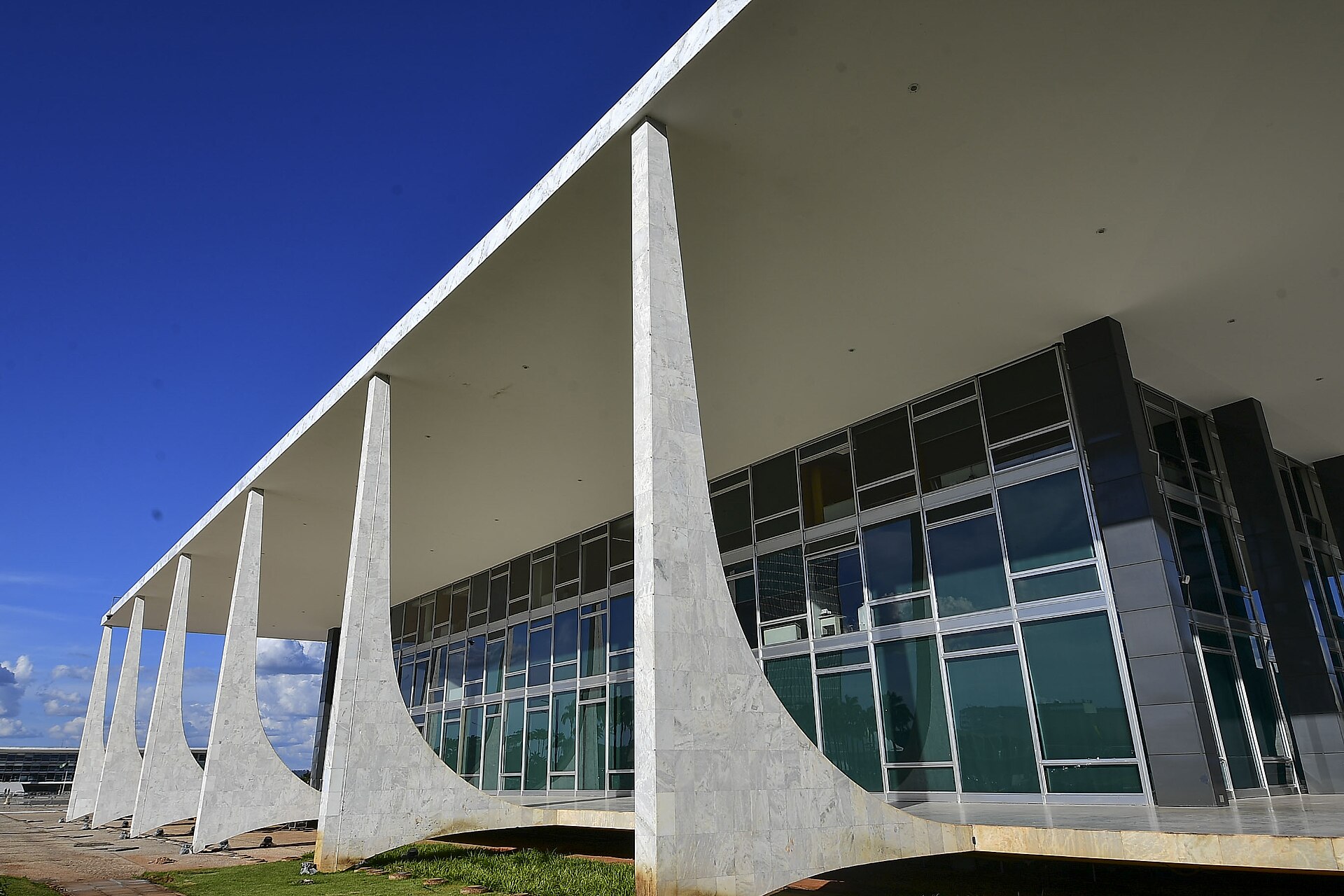
The STJ Judges One of Its Own Members
Brazil’s Superior Court of Justice, known as the STJ, judged Justice Marco Buzzi in a disciplinary proceeding on 6 August 2026. The case was built on sexual-harassment accusations brought by two women, one of them a former employee of his office at the court. Administrative proceedings of this kind are decided by the court’s own plenary, which means the justices sat in judgment of a colleague from the same bench.
According to reports of the session carried by Estadão Conteúdo, the sanction applied was ‘perda do cargo com remuneração proporcional ao tempo de contribuição’ — loss of office with remuneration proportional to time of contribution. The formula removes the post itself while preserving a payment calculated on the period the magistrate contributed. Those same reports described the outcome as the first occasion on which the STJ plenary punished one of its own members with loss of office rather than with retirement. That characterisation comes from coverage of the session rather than from a formal statement of the court, and is set out here as reported.
The Two Complaints Before the Court
The first complaint came from a young woman and concerned conduct at the justice’s home in Balneário Camboriú, on the coast of Santa Catarina, in January 2026. The episode became public months before the judgment and set the disciplinary process in motion inside the court. The account was examined in an administrative proceeding rather than in a criminal trial, which follows different rules and a different standard of proof.
The second complaint came from a former employee of the justice’s office at the STJ in Brasília and described episodes said to have taken place between 2023 and 2025. Allegations arising inside a justice’s own cabinet carry particular weight in disciplinary terms, because the relationship involved is one of direct professional subordination. Taken together, the two complaints span different settings and different years, which is one reason the case drew sustained attention.
Buzzi Denies the Accusations and Weighs an Appeal
Buzzi denies all of the accusations against him, and his defence asked the court for acquittal. He has maintained that position throughout the proceeding, and no admission of any kind has been reported. The denial covers both complaints rather than only one of them. According to reports of the session, the defence has said it is evaluating an appeal against the decision.
The distinction between administrative and criminal liability matters here. A disciplinary proceeding decides whether a magistrate may remain in office; it does not convict anyone of a crime, and its conclusions do not by themselves produce a criminal record. Any criminal consequence would require a separate process, with its own investigation, charges and standard of proof. Nothing in the disciplinary judgment resolves that separate question.
A Unanimous Conviction and a Divided Bench on the Penalty
The two halves of the decision did not run together. According to reports of the session, the finding against Buzzi was unanimous, with no minister voting to acquit him, while the choice of sanction split the plenary. Four of the 28 ministers — João Otávio de Noronha, Moura Ribeiro, Regina Helena Costa and Gurgel de Faria — voted for compulsory retirement rather than for loss of office. The majority applied the newer and stricter penalty.
The disagreement turned on timing rather than on the facts. Because the proceeding was opened before the rule changed in March 2026, some ministers took the view that the sanction available when the case began should govern it, invoking the principle that the law in force at the time of the act applies. The competing reading is that the Supreme Federal Court was interpreting the constitution rather than creating a new rule, so its decision reaches every case still pending. That second position carried the plenary.
Why a Case Like This Is So Rare
The STJ is Brazil’s highest court for questions of federal law that are not constitutional, sitting below the Supreme Federal Court in the judicial hierarchy. It is based in Brasília and is composed of at least 33 justices under the constitution, drawn from the appellate courts, the bar and the public prosecution service. Its rulings shape everyday civil, commercial and criminal law across the country, which is why the conduct of its members carries weight well beyond the institution itself.
Discipline of superior court justices has historically been infrequent and, when it did occur, mild in practical effect. For decades the harshest available sanction was compulsory retirement, which removed a magistrate from the bench while leaving intact a proportional entitlement attached to the post, an outcome long criticised as amounting to a subsidised exit. That criticism is precisely what the constitutional change of March 2026 was intended to address.
The March 2026 Rule That Changed the Stakes
In March 2026 the Supreme Federal Court, the STF, barred compulsory retirement as the maximum penalty for judges and replaced it with loss of office. The National Council of Justice, the CNJ, formalised the new rule in the same week, giving it effect across the judiciary. The change removed the single feature of judicial discipline that critics had attacked most consistently over the years.
The difference between the two sanctions is narrower than it is sometimes described, but it is real. Under compulsory retirement a sanctioned magistrate was retired from the bench with proventos proporcionais ao tempo de serviço — a proportional entitlement that effectively kept pay tied to the post he was leaving. Under loss of office the post itself is taken away, with remuneration proportional to time of contribution. The new penalty is therefore a dismissal rather than a state-funded exit, but it is not the withdrawal of all payment.
The Prosecutor-General’s Office Switches Its Request
The Prosecutor-General’s Office, the PGR, had initially sought compulsory retirement, the penalty available when the proceeding began. After the STF decision it switched its request to dismissal, aligning itself with the new standard rather than with the rule in force at the time the case was opened. The change mattered because the PGR’s position frames the range of outcomes the court is asked to consider.
The PGR acts in disciplinary proceedings involving members of the superior courts, and its submissions carry institutional weight even though the court is not bound by them. By adopting the stricter penalty, the office signalled that it regarded the new rule as applicable to cases already under way. That reading was ultimately shared by the majority of the bench, though not by all of it.
What the Case Means for Judicial Accountability
For critics of the Brazilian judiciary, the significance of the case lies less in one justice than in the precedent it sets. Complaints of harassment inside courts have historically been resolved discreetly, through transfers, resignations or retirements that avoided any public judgment. A plenary session ending in loss of office, as reported, establishes a different reference point for the proceedings that follow it.
The limits are real, however. A single decision does not by itself change the culture of an institution, and the defence is evaluating an appeal, so the matter may not be legally concluded. Much will depend on whether complaints in the lower courts, where the great majority of Brazilian judges work, are handled with comparable visibility. That is the test the March rule was written to impose, and it has only just begun.
Background: our buying property in brazil as a foreigner complete guide.
Background: our brazil renewable energy guide.
Frequently Asked Questions
What is the STJ and how does it differ from the Supreme Court?
The Superior Court of Justice is Brazil’s highest court for questions of federal law that do not involve the constitution. Constitutional questions go to the Supreme Federal Court, the STF, which sits above it in the hierarchy. The STJ is based in Brasília and is composed of at least 33 justices under the constitution. Its decisions standardise the interpretation of federal legislation for courts across the country.
What exactly changed in March 2026?
The STF barred compulsory retirement as the maximum penalty available against judges and replaced it with loss of office. The National Council of Justice formalised the rule in the same week, applying it across the judiciary. Under the old regime a sanctioned magistrate was retired with proventos proporcionais ao tempo de serviço, a proportional entitlement that kept pay tied to the post, which critics had long attacked. Under the new one the office is removed, with remuneration proportional to time of contribution.
What penalty did the STJ apply to Justice Buzzi?
According to reports of the session, the plenary applied loss of office with remuneration proportional to time of contribution. The finding against him was unanimous, but the choice of sanction divided the court. Four of the 28 ministers — João Otávio de Noronha, Moura Ribeiro, Regina Helena Costa and Gurgel de Faria — voted for compulsory retirement instead, on the reasoning that the case had been opened before the rule changed. Buzzi denies the accusations and his defence has said it is evaluating an appeal.
What are the accusations against Justice Buzzi?
Two women brought sexual-harassment accusations. One complaint came from a young woman and concerned conduct at the justice’s home in Balneário Camboriú, in Santa Catarina, in January 2026. The second came from a former employee of his office at the STJ and described episodes between 2023 and 2025. Buzzi denies all of the accusations and his defence asked the court for acquittal.
Sources: STJ, CNJ, Estadão.
This article was drafted with automated assistance and reviewed before publication. How we use AI · Report an error
Read More from The Rio Times