Bradesco Q2 Profit Hits US$1.4 Billion as Bad Loans Rise
Earnings · Brazil
Key Facts
—A tenth straight rise. Bradesco Q2 profit reached R$7.05 billion (US$1.38 billion), up 16.2% on the year and the tenth consecutive quarterly increase.
—Returns back in the teens. Return on equity came in near 16.2%, some 1.6 percentage points higher than a year earlier and 0.4 points above the first quarter.
—The loan book keeps growing. Credit reached R$1.14 trillion (US$222 billion) at the end of June, up 11.6% on the year and 4.3% in three months.
—But bad debt costs more. The expanded cost of credit rose 22.6% to R$10.0 billion (US$1.95 billion) — faster than profit grew.
—Arrears edged up. Loans more than 90 days late reached 4.3% of the book, up 0.1 point on the quarter and 0.2 on the year.
—Leaner than before. The 12-month efficiency ratio improved to 48.4%, down 2.8 points on the year, as cost cuts fed through.
Brazil’s second-largest private bank is finally earning like its old self again — but it is paying steadily more to keep the loans it is making from going bad.
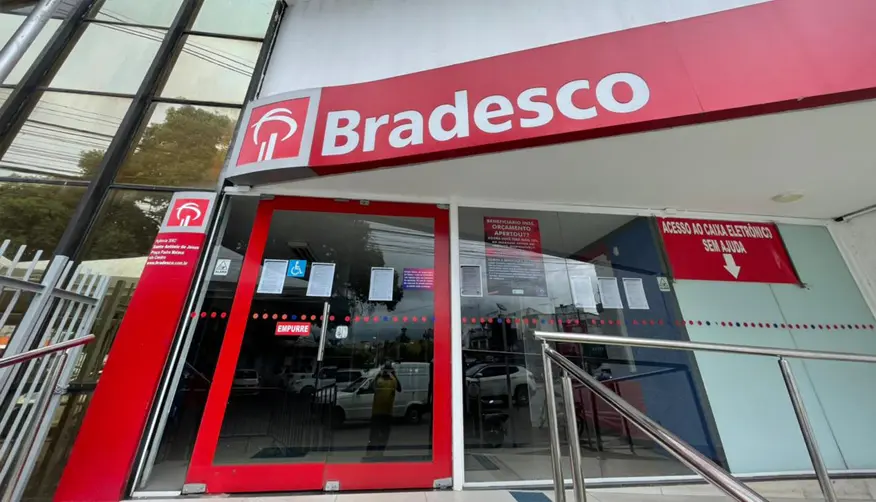
A recovery that is now ten quarters old
Banco Bradesco (B3: BBDC4; NYSE: BBD) reported recurring net income of R$7.05 billion for the second quarter, or US$1.38 billion at 5.12 reais to the dollar. That is 16.2% more than a year earlier, and the tenth quarter in a row that profit has risen.
Return on equity, the number that matters most to bank investors, came in near 16.2%. A year ago it was 1.6 percentage points lower.
Total revenues reached R$37.6 billion (US$7.34 billion), up 10.3%. Net interest income — the gap between what the bank pays for deposits and charges for loans — rose 15.7% to R$20.9 billion (US$4.08 billion).
After setting money aside against loans that may sour, the net financial margin was R$10.9 billion (US$2.13 billion), up 9.9%. The distance between those two numbers is the story of this quarter.
The loan book is growing again
Bradesco ended June with R$1.14 trillion (US$222 billion) of credit outstanding, 11.6% more than a year earlier and 4.3% more than in March. In a country where borrowing had stalled, that is a meaningful turn.
It matters beyond the bank. Bradesco lends to millions of salaried households and to small firms that have no other route to formal credit, so its lending decisions ripple through the real economy quickly.
The bank has also been lending into a friendlier rate environment. Brazil’s central bank has just cut the Selic rate to 14%, the fourth straight reduction.
Live Company IntelligenceBanco Bradesco S.A. — the full investor dossier
Valuation & profitability
Price & risk
$12.2052-wk high
$18.51
Revenue trend · 6y
Ownership
Dividend
The cost of that growth
Here is the tension in these results. The expanded cost of credit — what the bank sets aside against loans that may sour — climbed 22.6% to R$10.0 billion (US$1.95 billion). Profit grew 16.2%. Provisions grew faster.
Loans more than 90 days overdue reached 4.3% of the portfolio, up 0.1 percentage point on the quarter and 0.2 on the year. The deterioration is slight, but it is a rise rather than a fall.
Read together, the picture is of a bank growing deliberately and insuring itself as it goes. That is prudent. It also means the profit recovery is being bought, not simply harvested.
Cheaper to run, and raising fresh capital
Some of the improvement is self-made. The 12-month efficiency ratio fell to 48.4%, an improvement of 2.8 points over the year, after the bank cut more than 3,000 jobs and closed branches in a long operational clean-up.
Separately, Bradesco is in the middle of a capital increase of up to R$10 billion (US$1.95 billion) through a private share subscription. Controlling shareholders have committed up to R$8 billion (US$1.56 billion) of it.
Existing holders can subscribe from 6 August to 4 September, at R$15.43 (US$3.01) for ordinary shares and R$17.64 (US$3.45) for preferred — about 6% below the price before the deal was announced. The shares began trading without the right on 5 August.
Measured against its rivals
Bradesco grew faster than both Itaú Unibanco and Santander Brasil in several segments this quarter — a sentence that would have read oddly two years ago, when Bradesco was the problem child of Brazilian banking.
It is still the smaller earner. Itaú Unibanco posted a record US$2.4 billion quarter in the same period. But the gap in growth rates, rather than in absolute profit, is what has changed.
What it says about Brazil
Brazilian banking is an oligopoly, and its quarterly results double as a reading of the national mood. Right now that mood is cautious optimism with a hand on the wallet.
Households and firms are borrowing again, but the banks are pricing in the memory of the last cycle, when defaults climbed and corporate borrowers such as Cosan came under strain. Nobody is behaving as though the good times are guaranteed.
For a foreign investor, that is arguably the appeal. A 16.2% return on equity, funded internally and provisioned heavily, is a less thrilling story than rapid growth — and a more durable one.
Frequently Asked Questions
How much profit did Bradesco make in the second quarter of 2026?
Bradesco reported recurring net income of R$7.05 billion, or about US$1.38 billion at 5.12 reais to the dollar. That was 16.2% higher than the same quarter a year earlier, and the tenth consecutive quarter in which profit has increased.
Is Bradesco’s loan quality getting worse?
Slightly. Loans more than 90 days overdue rose to 4.3% of the portfolio, up 0.1 percentage point on the quarter. More tellingly, the expanded cost of credit rose 22.6% to R$10.0 billion (US$1.95 billion) — faster than profit grew, which means provisioning is outpacing the recovery.
Why is Bradesco raising capital if it is profitable?
The bank is raising up to R$10 billion (US$1.95 billion) through a private subscription open to existing shareholders. The money supports further lending growth and strengthens regulatory buffers. Controlling shareholders have committed up to R$8 billion (US$1.56 billion), and the shares were priced about 6% below the pre-announcement price.
How does Bradesco compare with Itaú and Santander now?
Bradesco grew faster than both in several segments this quarter, reversing years of underperformance. It remains the smaller earner — Itaú Unibanco reported a record US$2.4 billion for the same period — but the growth gap has narrowed sharply.
Sources: Bradesco second-quarter 2026 results (Banco Bradesco Investor Relations), Bradesco BBDC4: lucro recorrente sobe 16,2% no 2T26 (InfoMoney), Lucro do Bradesco sobe para R$7,1 bilhões no 2º tri (Folha de S.Paulo)
This article was produced by The Rio Times’ automated newsroom system. How we use AI · Report an error
LatAm Markets: Live Signals → — real-time movers, turnover leaders and FX across Latin America.
Read More from The Rio Times