Tumaco Port Fuel Volumes in Eight Months Already Beat All of 2025
COLOMBIA · ENERGY
Key Facts
—The milestone: The port of Tumaco moved more than 762,000 net barrels of fuel in the first eight months of 2026, surpassing the roughly 483,000 barrels received in all of 2025.
—The growth rate: Volumes are up 57.8 percent against the 2025 full-year total, according to Colombia’s maritime authority, Dimar.
—The driver: Strict execution of the Ministry of Mines and Energy’s fuel supply plan for the department of Nariño, coordinated with Dimar, the infrastructure agency ANI and the customs authority DIAN.
—New callers: The Singapore-flagged tanker Mockingbird discharged fuel in Tumaco for the first time, delivering 60,000 barrels from Buenaventura.
—Next up: The Willard J., flagged in the Marshall Islands, is due in the second week of September with 70,000 barrels from Cartagena via Buenaventura — its 26th Tumaco operation since 2025.
Tumaco port fuel volumes have outgrown all of last year in just eight months, as a government supply plan turns the small Pacific terminal into a strategic energy gateway for southwestern Colombia.
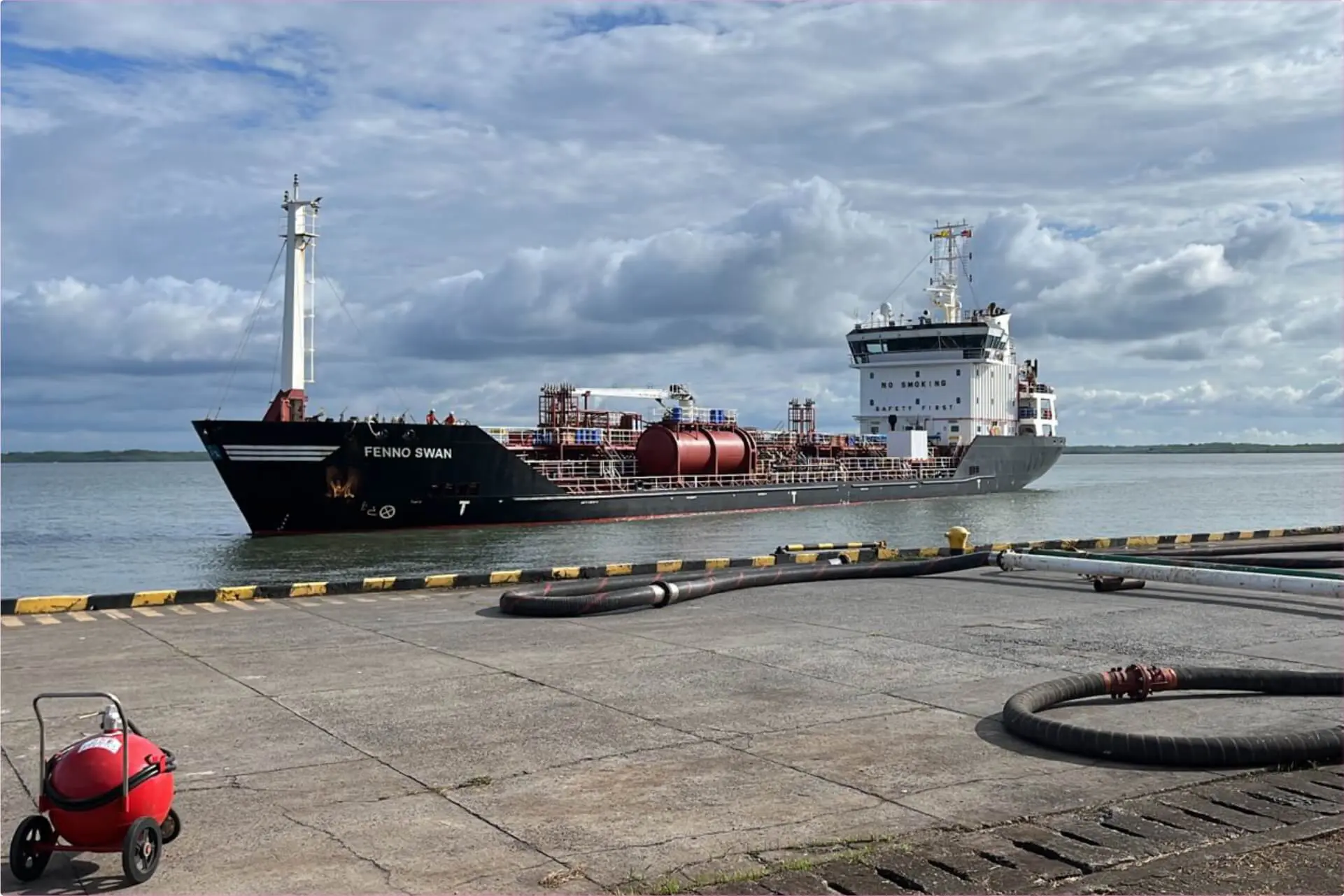
Eight months beat twelve
The numbers, confirmed by the Dirección General Marítima (Dimar), are stark. In 2025, the Sociedad Portuaria Regional Tumaco Pacific Port received approximately 483,000 net barrels of fuel across the entire year. By the end of August 2026, the terminal had already handled more than 762,000 barrels — about 279,000 barrels above the full previous year, a 57.8 percent increase with four months still to run.
For a port better known for fishing and its proximity to the Ecuadorian border, the shift is significant. Tumaco is consolidating its role as the fuel gateway for Nariño, a mountainous department whose capital, Pasto, sits more than 300 kilometres inland and whose supply lines have historically depended on long, vulnerable overland routes.
Guillermo Londoño, manager of the port company, tied the result directly to policy. “We are optimistic about the strict fulfilment of the Ministry of Mines’ supply plan, because that is how the energy security of the department of Nariño can be guaranteed,” he said, pointing to coordination with Dimar, the National Infrastructure Agency and the DIAN customs authority.
New ships on the Tumaco run
The growth is not only about volume but about a widening roster of vessels willing to call at the port. The latest was the Mockingbird, a Singapore-flagged tanker that arrived from Buenaventura on a cabotage run — the first time the ship had ever discharged fuel at the Nariño terminal. It delivered 60,000 barrels: 25,000 of gasoline and 35,000 of diesel.
A bigger regular is already scheduled behind it. The Willard J., flagged in the Marshall Islands, is expected in the second week of September with 70,000 barrels — 25,000 of gasoline and 45,000 of diesel — on a combined import and cabotage operation that began in Cartagena with a stop in Buenaventura. With that call, the vessel will complete 26 fuel operations in Tumaco since 2025.
The pattern of combining long-haul imports with coastal cabotage has become the port’s operating model. In June, another tanker brought 103,000 barrels from Cartagena to keep the supply plan on track, one of the largest single deliveries on record for the terminal.
Supervision and safety at the terminal
Every operation runs under the watch of the Colombian Maritime Authority. Frigate Captain Julián Alejandro Salgado Mesa, Tumaco’s port captain, said the port’s strengthening is “backed by permanent monitoring of maritime traffic, support for vessel manoeuvres, verification of safety conditions and actions to protect the marine environment.”
That oversight matters in a sensitive ecosystem. Tumaco’s bay and its surrounding mangroves are among the most fragile on Colombia’s Pacific coast, and any fuel spill would hit fisheries that thousands of local families depend on. Dimar says all fuel movements follow strict maritime safety and environmental protection protocols.
Why the supply plan matters
Nariño sits at the far end of Colombia’s fuel logistics. The department has no refinery and limited pipeline access, so gasoline and diesel must arrive either by tanker truck over the Andes or by sea. The Ministry of Mines and Energy’s supply plan leans on the maritime route, and 2026 is the first year it has run at full scale.
The results suggest the bet is working. Shipping lines “trust Tumaco more every day as one of Colombia’s strategic ports,” Dimar noted in its statement — a striking endorsement for a terminal that two years ago handled a fraction of today’s volumes.
If the current pace holds, Tumaco will close 2026 with well over one million barrels handled — more than double last year’s total — and the Pacific supply corridor will be difficult for any future administration to dismantle.
Frequently Asked Questions
How much fuel has the port of Tumaco handled in 2026?
More than 762,000 net barrels through the end of August — already about 279,000 barrels above the roughly 483,000 barrels received in all of 2025, a 57.8 percent increase.
Why is Tumaco receiving more fuel?
The growth follows strict execution of the Ministry of Mines and Energy’s supply plan for Nariño, which relies on maritime deliveries coordinated with the maritime authority Dimar, the infrastructure agency ANI and customs agency DIAN.
Which ships are supplying Tumaco?
Recent callers include the Singapore-flagged Mockingbird, which made its first fuel discharge at the port with 60,000 barrels from Buenaventura, and the Marshall Islands-flagged Willard J., due in September with 70,000 barrels from Cartagena — its 26th Tumaco operation since 2025.
Where does the fuel go?
The gasoline and diesel supply the department of Nariño in southwestern Colombia, including the inland capital Pasto, which has no refinery and limited pipeline access.
Sources: Dirección General Marítima (Dimar), 1 September 2026; Portafolio, 31 August 2026; Caracol Radio, 20 June 2026.
Connected Coverage
Colombia’s energy map is shifting on multiple fronts — from the leadership sweep at Ecopetrol to new supply corridors on the Pacific. Follow the sector on our Colombia hub.
This article was produced by The Rio Times’ automated newsroom system. How we use AI · Report an error
Read More from The Rio Times