Latin American Steel Wrap: SLX, Gerdau, CSN, Ternium
Key Facts
- Latin American steel equities diverged from the global proxy as the SLX steel-producers ETF in New York inched up to 104.41 $ with a modest +0.30% d/d gain, signalling steady but unspectacular risk appetite for the sector overall.
- Brazil’s Gerdau outperformed regional peers on the day with its US-listed shares closing at 4.95 $ after a +2.48% d/d move, helped by investor bets on resilient long-steel demand from Brazilian infrastructure and housing projects.
- Brazilian integrated producer CSN lagged the move higher in steel as its share price slipped to 1.1 $ with a -1.79% d/d decline, reflecting market worries about balance-sheet leverage, power and logistics costs and exposure to more volatile flat-steel and mining earnings.
- Mexico-focused Ternium led the main Latin steel names in price performance closing at 49.33 $ after a +3.33% d/d rise, with traders pointing to its footprint in Mexico and the US as a near-shoring winner tied to North American auto and appliance supply chains.
- Cheap Chinese steel exports remain the central macro headwind as Chinese mills continue to ship surplus output into global markets at low prices, compressing margins for Latin American producers and prompting a patchwork of anti-dumping and safeguard tariffs in Brazil and Mexico.
- Domestic demand from construction and autos is the main offset to import pressure with investors watching Brazilian public works and mortgage programmes and Mexico’s auto production and US-bound exports as key determinants of local steel pricing power and mill utilisation.
Today’s Focus
Latin American steel shares traded on mixed signals, with the global SLX steel ETF barely higher while local champions moved more sharply as investors parsed company-specific stories against a noisy macro backdrop.
In Brazil, long-steel specialist Gerdau rose, while diversified CSN slipped, underscoring how balance-sheet structure and product mix are shaping market views at a time of weak global prices and still-fragile domestic construction sentiment.
In Mexico, Ternium advanced as investors leaned into the near-shoring narrative that is slowly re-wiring North American manufacturing and supporting demand for higher-quality sheet steel for autos and appliances.
Behind the tape, the big forces remain unchanged: cheap Chinese exports, evolving tariff shields and the stop-start recovery in construction and car output across Brazil and Mexico will continue to dictate how much of any price upturn Latin American mills can keep for themselves.
What matters today. The key variable for foreign investors is how far domestic construction and auto demand in Brazil and Mexico can offset cheap Chinese imports and shifting tariff regimes to sustain margins at Gerdau, CSN and Ternium.
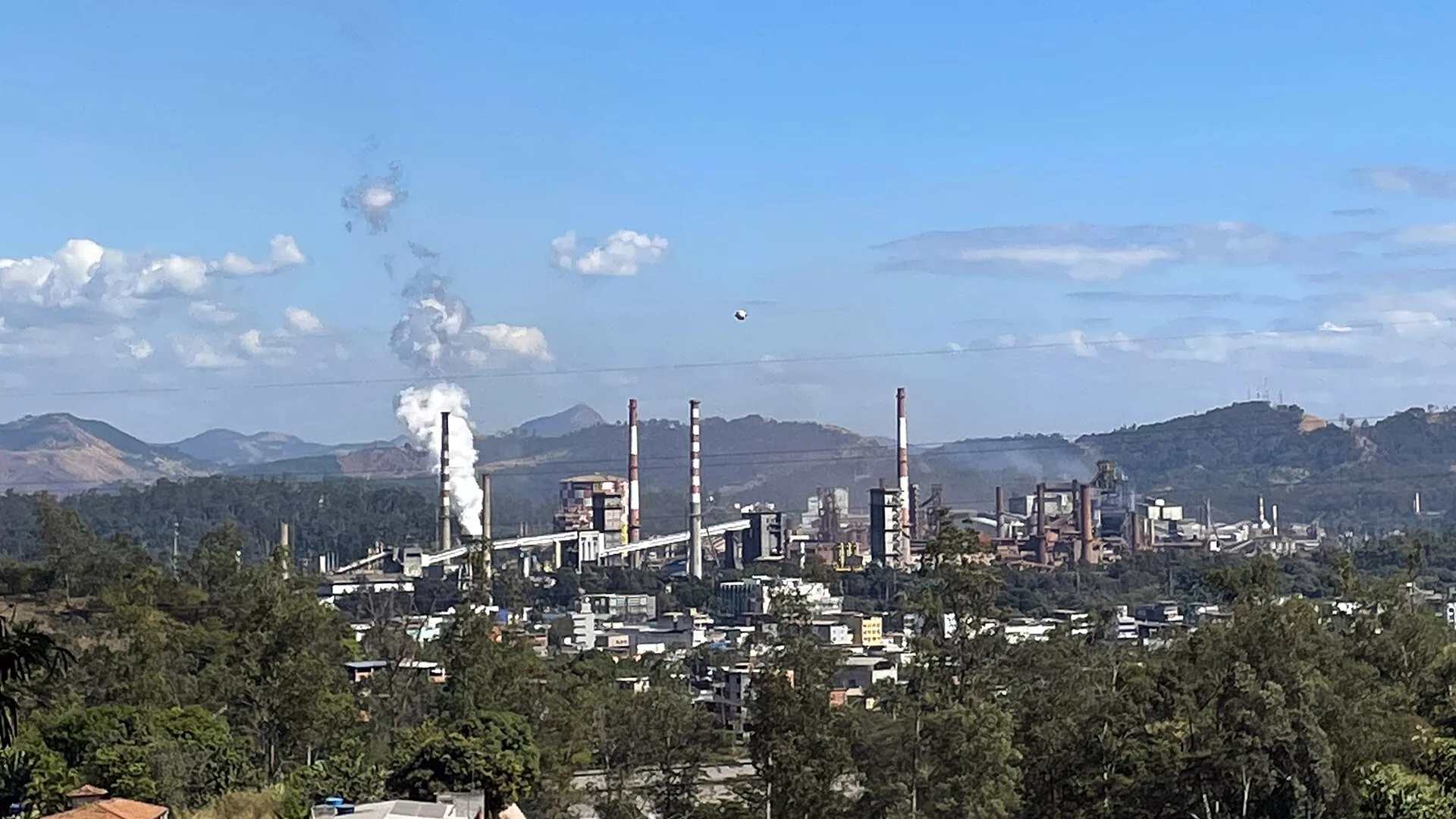
01 The session in one read
Latin American steel traded against a slightly constructive global backdrop, with the SLX ETF edging up to 104.41 $ for a +0.30% d/d gain that signalled no broad change in sentiment toward the sector.
Within that calm surface, name-by-name moves were more pronounced as investors rewarded business models seen as better insulated from global price dumping and punished those more exposed to cyclical swings and leverage.
Taken together, the latest moves in SLX, Gerdau, CSN and Ternium suggest investors are cautiously re-rating the better-positioned Latin American steel names while remaining sceptical of more leveraged, commodity-heavy balance sheets; the fundamental question is whether domestic construction pipelines in Brazil and auto-linked near-shoring in Mexico can outrun the drag from cheap Chinese imports and any new tariff frictions, making local demand the variable to watch.
02 The board
Gerdau’s US-listed shares closed at 4.95 $ after a +2.48% d/d rise, a move that traders typically associate with optimism around Brazil’s long-steel demand, which is tied to rebar and structural steel used in housing and infrastructure rather than to the more volatile export market.
CSN, by contrast, ended at 1.1 $ with a -1.79% d/d decline, consistent with a market narrative that focuses on its integrated steel-and-mining profile, higher sensitivity to flat-steel prices and financing costs, and concerns that it may capture less benefit if steel prices stabilise only slowly.
In Mexico-linked exposure, Ternium closed at 49.33 $ with a +3.33% d/d gain, a strong outperformance that aligns with the idea that its mills serving Mexico and the southern United States stand to benefit disproportionately from manufacturers relocating closer to the US consumer.
For global context, the SLX ETF’s modest move highlights that these Latin American stories are still mostly playing out within a cautious global steel allocation, rather than in a full-fledged sector rotation.
| Asset | Level | Change |
|---|---|---|
| Steel (SLX ETF) | 104.41 $ | +0.30% |
| Gerdau | 4.95 $ | +2.48% |
| CSN | 1.1 $ | -1.79% |
| Ternium | 49.33 $ | +3.33% |
Source: EODHD close, 2026-07-28. Where a commodity has no spot feed, an exchange-traded tracker or leading producer is shown as a labelled proxy.
Live Market IntelligenceThe live market board
Rio Times · Live Market Intelligence
Latin America — Cross-Market Board
| Instrument | Last | Change | YoY | Prev. | High | Low | Volume |
|---|---|---|---|---|---|---|---|
| IBOV | 176,564.75 | +0.70% | +33.63% | 175,334.46 | — | — | — |
| IPSA | 10,879.65 | -0.77% | — | 10,964.11 | 10,973 | 10,830 | 1,513,213,483 |
| IPC MEX | 67,304.62 | +0.18% | +17.91% | 67,183.26 | — | — | — |
| MERVAL | 3,256,362 | -1.48% | +47.11% | 3,305,316 | — | — | — |
| COLCAP | 2,301.24 | +0.80% | — | 9.04 | 9.05 | 9.02 | 4,133 |
| BVL PERÚ | 57,237.60 | — | — | — | — | — | — |
| USD/BRL | 5.13 | +0.15% | -8.20% | 5.12 | 5.13 | 5.12 | — |
| EUR/BRL | 5.84 | +0.29% | -9.76% | 5.82 | 5.84 | 5.83 | — |
| USD/MXN | 17.44 | +0.05% | -6.99% | 17.43 | 17.46 | 17.41 | — |
| USD/CLP | 932.73 | -0.76% | -2.69% | 939.85 | 932.73 | 931.26 | — |
| USD/COP | 3,202 | -0.08% | -23.28% | 3,204 | 3,202 | 3,196 | — |
| USD/PEN | 3.39 | -0.32% | -6.86% | 3.40 | 3.40 | 3.39 | — |
| USD/ARS | 1,499 | +0.15% | +15.88% | 1,497 | 1,499 | 1,499 | — |
| USD/UYU | 40.20 | +1.42% | +1.56% | 39.64 | 40.20 | 40.20 | — |
| USD/PYG | 6,020 | +1.46% | -18.45% | 5,933 | 6,020 | 6,020 | — |
| USD/BOB | 11.30 | +3.36% | +67.00% | 10.93 | 11.30 | 11.30 | — |
| USD/DOP | 57.82 | -0.31% | -4.43% | 58.00 | 57.92 | 57.77 | — |
| USD/CRC | 449.99 | +1.60% | -8.79% | 442.90 | 449.99 | 449.99 | — |
Live Company IntelligenceLatin American Steel Wrap: SLX, Gerdau, CSN, Ternium — the full investor dossier
03 What moved it
Behind the day’s trading lies a tug-of-war between heavy Chinese export supply and tentative signs of life in Latin America’s domestic demand, with investors trying to decide whether local pricing power can improve even if international benchmarks remain under pressure.
Chinese mills have for years exported surplus steel at low prices, often below what Latin producers say is sustainable, prompting Brazilian and Mexican authorities to deploy anti-dumping duties and safeguard tariffs on specific products from China and other Asian exporters, though these measures have not fully neutralised pricing pressure.
As a result, companies like Gerdau that focus more on domestic long-steel, often used in smaller construction works and infrastructure, are seen as relatively better placed when governments support housing and public works, while more export- and flat-steel-oriented players like CSN can feel the squeeze more quickly when import competition intensifies.
Ternium’s story is more tied to North American manufacturing than to Chinese prices alone, since its Mexican and US facilities supply higher-grade sheet steel for cars and appliances, sectors that benefit directly from the near-shoring trend and from trade rules under the USMCA agreement that encourage regional sourcing.
04 The Latin American read
For Brazil, steel remains a bellwether for a broader industrial recovery that has repeatedly started and stalled, with investors treating Gerdau as a relatively pure play on local construction and CSN as a more complex mix of steel, mining and logistics whose earnings can swing more widely when commodity and freight markets move.
Infrastructure spending plans, low-income housing programmes and the cost of credit for developers are the key domestic drivers for Brazilian steel demand, and foreign investors typically watch these indicators as closely as they watch the companies’ own guidance.
In Mexico, steel demand is increasingly shaped by global companies moving production from Asia to the Mexican side of the US border to cut shipping times and reduce geopolitical risk, a process that benefits flat-steel suppliers that can meet automakers’ and appliance manufacturers’ quality requirements.
At the same time, both Brazil and Mexico have to balance the interests of local steelmakers with those of steel-consuming industries such as construction firms and car manufacturers, which prefer cheaper imports, making tariff policy and trade disputes a constant background risk for equity investors.
05 The names to watch
Gerdau remains the investor favourite for a pure-play bet on Brazilian construction, with its long-steel focus and relatively lower exposure to export markets offering some buffer against global price swings, though it is not immune to a domestic economic slowdown or policy gridlock.
CSN trades more like a leveraged commodity call, blending steel, iron-ore mining and logistics into a single equity that can rally hard when global prices rise but tends to underperform when markets worry about debt levels and cost inflation, making it the more volatile name in the group.
Ternium has carved out a distinct identity as the near-shoring proxy, and its share-price strength reflects confidence that its Mexican and US assets can continue to convert regional manufacturing investment into higher mill utilisation and more stable margins than globally exposed peers.
06 The outlook
The path ahead for Latin American steel depends less on whether global steel prices find a floor and more on whether Brazil’s infrastructure and housing plans translate into actual spending on the ground, and whether Mexico’s auto and appliance factories sustain their current production run.
Foreign investors should watch for any acceleration in Chinese export growth or a softening of tariff defences in Brasília or Mexico City, as either could quickly change the calculus for domestic steel margins; for now, the market is betting that local demand will do just enough to keep the better-positioned names afloat.
07 What to watch
- Chinese export volumes and prices: A renewed surge in cheap Chinese steel exports would test Latin American tariff shields and could quickly compress margins, especially for flat-steel producers.
- Brazilian infrastructure and housing spending: Faster-than-expected project execution would directly benefit long-steel demand and is the clearest domestic catalyst for Gerdau and, to a lesser extent, CSN.
- Mexican auto production and USMCA trade rules: Strong auto output and continued near-shoring investment support Ternium’s volumes; any weakening in US consumer demand or trade-rule tightening would reverse that tailwind.
- Anti-dumping and safeguard tariff decisions: New investigations or tariff changes in Brazil and Mexico can shift the competitive landscape quickly, making trade policy a binary risk for the sector.
Frequently Asked Questions
What is the SLX ETF and why does it matter for Latin American steel?
SLX is an exchange-traded fund that tracks a basket of global steel producers; it serves as a broad proxy for investor sentiment toward the sector and helps gauge whether Latin American names are outperforming or lagging their global peers.
Why do Chinese steel exports affect Latin American producers?
Chinese mills often export surplus steel at prices below what local producers need to cover costs, which can depress domestic steel prices in Brazil and Mexico and squeeze mill margins, even when tariff defences are in place.
What is the difference between long-steel and flat-steel?
Long-steel includes products like rebar and structural beams used mainly in construction, while flat-steel refers to sheet and plate used in cars, appliances and industrial equipment; the demand drivers and exposure to imports differ significantly between the two.
How does near-shoring help Ternium?
Near-shoring means global manufacturers are moving more production to Mexico to be closer to the US market, which increases demand for locally produced flat-steel and supports mill utilisation and pricing for Ternium’s Mexican and US facilities.
LatAm Markets: Live Signals → — real-time movers, turnover leaders and FX across Latin America.
Read More from The Rio Times