Power Without Victory: Austria’s Centrist Bloc Governs While Sidelining Election-Winning FPÖ
(Analysis) Austria’s political elite has rewritten the rules of power, forming a coalition that excludes the hard-right Freedom Party (FPÖ), despite its victory in last September’s elections.
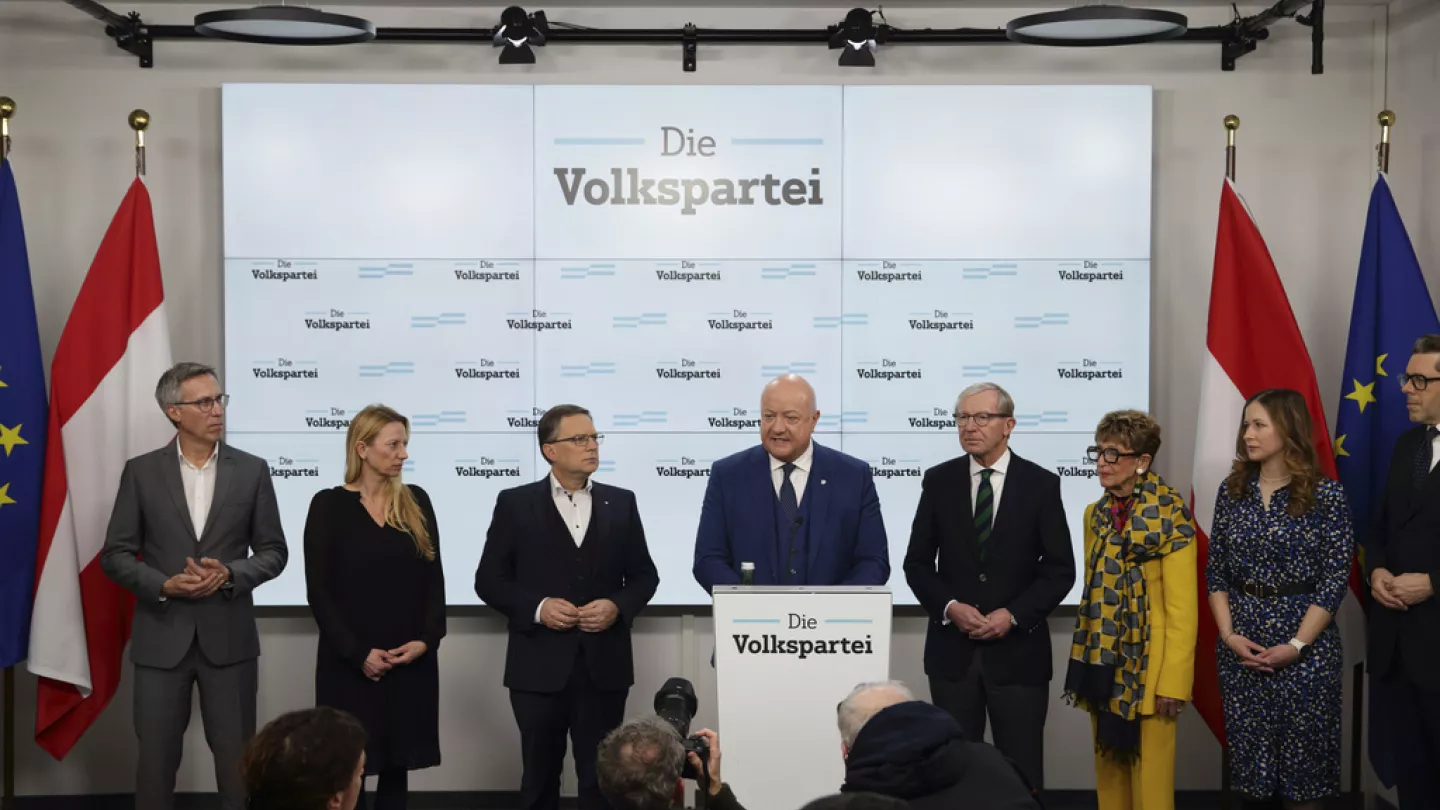
The center-right Austrian People’s Party (ÖVP), the center-left Social Democrats (SPÖ), and the liberal Neos have joined forces in a historic three-party coalition.
This alliance, finalized after 151 days of negotiations, marks Austria’s first such government since the 1940s. It reflects a deliberate effort to block the FPÖ from power.
The FPÖ, led by Herbert Kickl, won 28.8% of the vote—the largest share of any party—and secured 57 of 183 parliamentary seats. However, its anti-immigration platform and Kickl’s leadership alienated potential partners.
After failed coalition talks with the ÖVP, the FPÖ was sidelined as mainstream parties scrambled to form a government. Christian Stocker of the ÖVP will serve as chancellor, with Andreas Babler of the SPÖ as vice-chancellor.
The coalition’s 200-page governance plan attempts to address voter concerns while avoiding far-right policies. It includes stricter asylum rules, such as halting family reunifications for refugees and enforcing integration programs for new arrivals.
Austria’s Political Crisis
The program also proposes a headscarf ban for girls under 14, echoing some FPÖ demands. Economically, the coalition plans deep budget cuts to address Austria’s recession while raising taxes on banks and energy companies to fund social programs.
Yet, this coalition faces significant challenges. Public support for the FPÖ has surged to nearly 35%, positioning it as a strong opposition force. The three governing parties hold only a slim majority with 109 seats, leaving them vulnerable to internal divisions and external pressures.
Critics argue that this coalition represents a desperate move by “losers” to cling to power at the expense of democratic norms. Voters are increasingly questioning why the election winner was excluded from governance.
This political maneuver mirrors broader European trends where centrist parties seek to block far-right movements from gaining power. Germany’s Alternative for Germany (AfD), for example, remains excluded from coalitions despite becoming its second-largest party.
However, Austria’s FPÖ has previously governed, making its exclusion now more contentious. The question remains: does shutting out the winner strengthen democracy or deepen voter disillusionment?
For Austria’s nine million citizens, this experiment could define their political future—and test how far mainstream parties can go to preserve power in a fragmented democracy.
This article was produced by The Rio Times’ automated newsroom system. How we use AI · Report an error
Read More from The Rio Times