Peru Exports Jump 36% as Copper and Gold Power Record Run
South America · Economy
Key Facts
—Up 36%. Peru’s goods exports rose 36.1% in the first four months of 2026, reaching about 36 billion dollars.
—Two years running. The figure marks 24 straight months of growth, the government says.
—Mining engine. Mineral sales jumped about 52% on higher copper and gold prices and volumes.
—Top buyer. China took the largest share, followed by the United States and the European Union.
—Beyond metals. Farm, fishing and forestry exports also grew, though far more modestly.
—The catch. The boom leans heavily on commodity prices the country does not control.
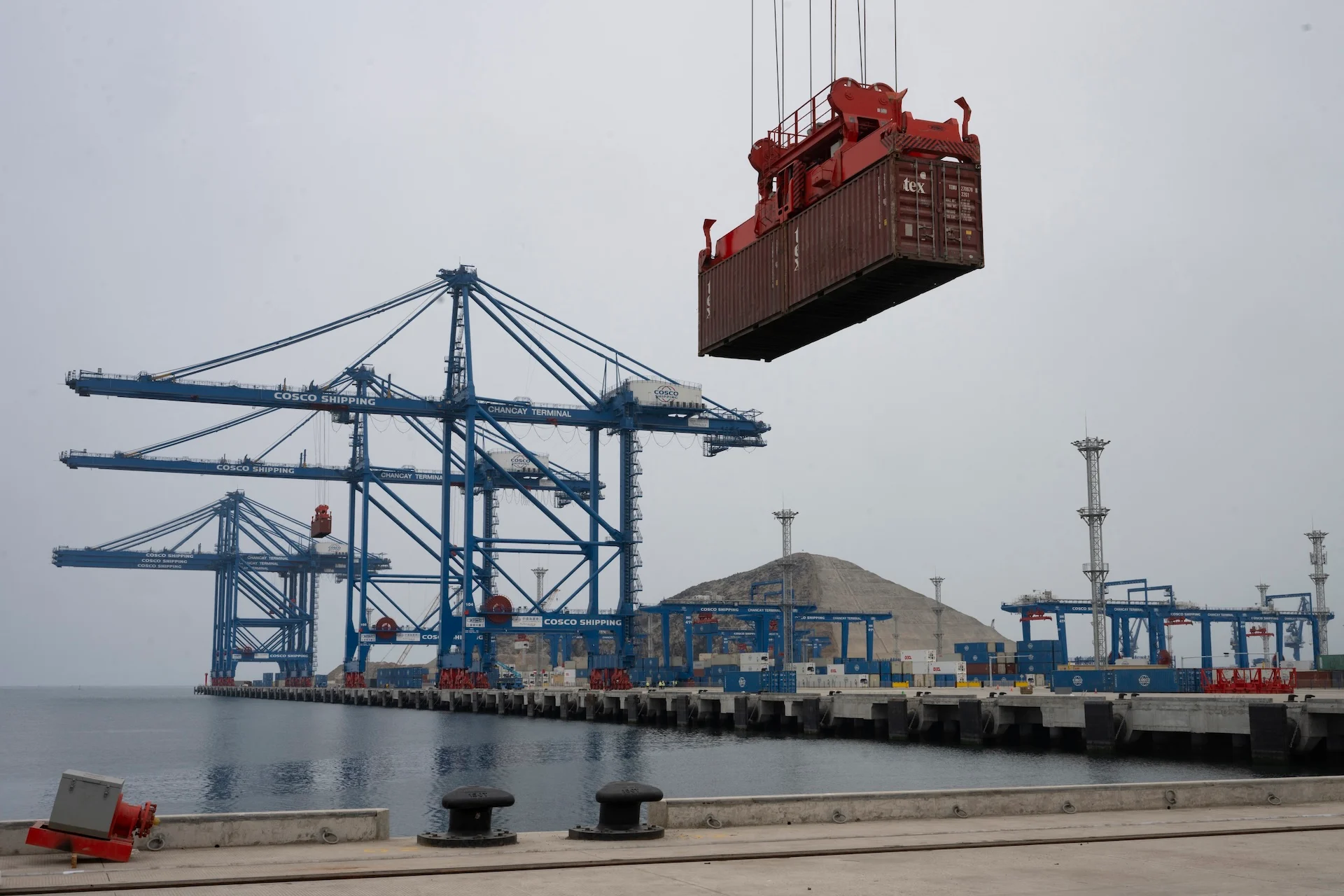
Peru exports rose 36.1% in the opening four months of 2026 to nearly 36 billion dollars, a record start to the year driven almost entirely by soaring sales of copper and gold to a metal-hungry world.
A record start to the year
Peru sold roughly 36 billion dollars of goods to the rest of the world between January and April, the country’s trade ministry reported, a rise of 36.1% on the same months a year earlier. It is the strongest opening to any year the country has recorded, and it extends a remarkable streak: by the government’s count, exports have now grown for 24 months in a row.
For a foreign reader, the simplest way to picture Peru is as one of the planet’s great mineral storehouses. It sits among the world’s largest producers of copper and silver and is a major gold exporter too. When global prices for those metals are high, money pours in; when they fall, the whole economy feels it. Right now prices are high, and the figures show it.
Why Peru exports are climbing so fast
The engine is mining, and it is running hard. Mineral shipments, both metallic and non-metallic, came to around 26 billion dollars in the four-month period, a jump of roughly 52% on the year before. The ministry credits a double tailwind: richer international prices for copper and gold, and larger volumes leaving the country. In plain terms, Peru is selling more metal and getting paid more for each tonne of it.
Copper is the headline act. It is the metal at the heart of electric cars, power grids and data centres, and demand for it has been firm as the world electrifies. Gold has played its familiar role too, prized as a safe place to park money whenever the global mood turns nervous. Together the two metals do most of the heavy lifting in the trade account.
Where the goods are going
Peruvian goods now reach roughly 159 markets, a slightly wider spread than a year ago. The biggest customer by far is China, which bought close to 14 billion dollars of Peruvian goods in the period, up more than 40%. The United States came next at around 3.7 billion dollars, and the European Union followed at about 3.1 billion. The pattern underlines how much Peru‘s fortunes are tied to Chinese industrial appetite, the dominant buyer of its copper.
There is also a quieter story of who, at home, is doing the exporting. The number of companies shipping abroad keeps rising, and a large majority of them are small and mid-sized firms rather than mining giants. That breadth matters for jobs, even if the dollar value is still overwhelmingly concentrated in metals.
More than minerals, but only just
Beyond the mines, other sectors grew, though at a far gentler pace. Farm exports rose around 7% to nearly 4 billion dollars, helped by Peru’s now-familiar strengths in blueberries, grapes and avocados. Fishing shipments climbed about 11% to roughly 1.8 billion dollars, and even tiny forestry exports edged up. These are the parts of the export basket that tend to employ the most people per dollar earned, which is why officials like to highlight them.
Still, the gap in scale is stark. Mining brought in several times what farming and fishing managed combined. The export boom is real, but it is a mining boom with a farming footnote.
The risk behind the record
Headline numbers this good carry a built-in warning. Because the surge rests so heavily on copper and gold, it also rests on prices set in faraway commodity markets rather than anything Peru can steer. A cooling in Chinese demand or a slide in metal prices would show up quickly in these same charts, this time in the other direction. Forecasters have already trimmed Peru’s overall growth outlook for the year even as the metals windfall flatters the trade figures, a reminder that strong exports and a strong economy are not the same thing.
For now, though, the trend is firmly upward, and the streak is intact. Two years of unbroken export growth give Peru a rare patch of good economic news and a useful cushion of foreign earnings. Whether that holds will depend less on decisions made in Lima than on the price of a tonne of copper.
More: Latin America news in English, every day from The Rio Times.
How much did Peru exports grow in early 2026?
Goods exports rose about 36 percent in the first four months of the year, reaching close to 36 billion dollars, according to Peru’s trade ministry, which says it marks 24 consecutive months of growth.
What is driving the increase?
Mining is the main driver, with mineral shipments up about 52 percent on higher prices and volumes of copper and gold, which together account for the bulk of the gain. Farm and fishing exports grew far more modestly.
Who buys the most from Peru?
China is the largest buyer, taking close to 14 billion dollars of Peruvian goods in the period, well ahead of the United States and the European Union. China’s demand for copper makes it the dominant customer.
Connected Coverage
Peru Exports Surge 33.5% to $27 Billion in First Quarter 2026
OECD Trims Peru Growth to 2.9% Despite a Metals Windfall
This article was produced by The Rio Times’ automated newsroom system. How we use AI · Report an error · Editorial responsibility: Matthias Camenzind, Editor-in-Chief