Latin American Pulse for Thursday, July 2, 2026
Executive Summary
July 2, 2026: World Cup joy collides with fatal crushes, rate hikes and razor-thin mandates. The emotional pulse of Brazil, Mexico, Argentina, Chile, Colomb
The Latin American Pulse · Thursday, July 2, 2026 · The 60-second read
The bottom line
- Grief without end in the north. Venezuela’s earthquake toll has climbed past 2,295 and the interim government has declared seven days of national mourning, with tens of thousands still unaccounted for and families searching WhatsApp groups and homemade sites for the missing. Cuba, meanwhile, drags into July in one of the worst blackout stretches in its history — two nations pared down to endurance.
- A continent taking the measure of its leaders. Peru is about to proclaim Keiko Fujimori its first elected woman president after a knife-edge count, Colombia braces for a frosty August handover its president-elect calls a debt-and-power-cuts inheritance, and Uruguay’s once-untouchable president is stuck at 20% approval. Trust is the currency running short.
- And football as the release valve. Paraguay’s shootout defeat of four-time champion Germany still echoes and Mexico marched into the last 16, and today Argentina and Colombia both play the last 32 — a jolt of shared joy running straight alongside the grief.
The regional tape
Wednesday’s close · the one place markets live in this dossier
A quick snapshot, and the only markets in today’s Pulse: the index levels and moves are Wednesday, July 1 closes from The Rio Times’ market data, with the US, currency and oil readings from our July 2 pre-open and morning call. Everything else in this dossier is about the region’s people and politics, not its indices.
The big picture · the region’s mood
Further south it is a cooler, steadier anxiety about who leads and whether they can be trusted — Uruguay’s model president humbled by a discounted-car scandal, Peru’s democracy exhausted by the closest count in memory, Colombia holding its breath before a bitter handover.
And through all of it runs football, the one language the whole continent still speaks in unison. Paraguay’s giant-killing of Germany, Mexico’s march into the last 16, Argentina and Colombia out on the pitch today — a shared euphoria that briefly outshouts both the grief and the grievances.
Live Market IntelligenceLatin America — Cross-Market Board
Rio Times · Live Market Intelligence
Latin America — Cross-Market Board
+2.63%
192,114.55
+2.63%
64,531.68
+1.10%
10,916.57
+0.08%
2,767,663
+0.32%
2,515.02
-0.59%
59,751.67
+0.18%
| Instrument | Last | Change | YoY | Prev. | High | Low | Volume |
|---|---|---|---|---|---|---|---|
| IBOV | 192,114.55 | +2.63% | +21.85% | 187,197.46 | 168,310 | 167,142 | — |
| IPSA | 10,916.57 | +0.08% | — | 10,908.18 | 11,210 | 10,984 | 1,513,213,483 |
| IPC MEX | 64,531.68 | +1.10% | +12.17% | 63,828.60 | 66,121 | 65,405 | 108,886,187 |
| MERVAL | 2,767,663 | +0.32% | +30.51% | 3,022,485 | 3,042,365 | 2,991,150 | — |
| COLCAP | 2,515.02 | -0.59% | — | 9.04 | 9.05 | 9.02 | 4,133 |
| BVL PERÚ | 59,751.67 | +0.18% | — | — | — | — | — |
| USD/BRL | 5.16 | +0.01% | -5.13% | 5.16 | 5.18 | 5.14 | — |
| EUR/BRL | 5.95 | +1.01% | -5.83% | 5.89 | 5.98 | 5.94 | — |
| USD/MXN | 17.06 | -0.24% | -8.58% | 17.10 | 17.08 | 17.01 | — |
| USD/CLP | 913.98 | +0.04% | -5.67% | 913.65 | 915.11 | 906.68 | — |
| USD/COP | 3,140 | +0.03% | -22.04% | 3,139 | 3,141 | 3,105 | — |
| USD/PEN | 3.36 | -0.66% | -4.82% | 3.38 | 3.38 | 3.35 | — |
| USD/ARS | 1,493 | +0.10% | +12.96% | 1,491 | 1,494 | 1,480 | — |
| USD/UYU | 40.27 | +1.24% | +1.80% | 39.77 | 40.27 | 40.23 | — |
| USD/PYG | 5,939 | +1.68% | -19.54% | 5,841 | 5,939 | 5,925 | — |
| USD/BOB | 11.64 | -0.76% | +72.04% | 11.73 | 11.72 | 11.64 | — |
| USD/DOP | 58.34 | +1.25% | -3.44% | 57.62 | 58.34 | 58.04 | — |
| USD/CRC | 445.92 | +0.89% | -9.71% | 441.97 | 448.50 | 445.92 | — |
Deep dive · a crisis of trust
The thread tying the week together is not a market move; it is faith in leaders, and how thin it has worn. Uruguay makes the point most sharply: a president who embodied Latin American stability has fallen to 20% approval over a car bought at a steep discount, with less than half his own movement still behind him.
Peru tells the same story from another angle. A presidency about to be handed, by fewer than 50,000 votes, to a woman who once spent years in pre-trial detention is the fruit of a decade in which leaders arrive under suspicion and leave under investigation.
Colombia lives it in slow motion: a president-elect opening the national books, warning of power cuts and asking for help, while the outgoing government eyes him warily across an August handover both sides dread. From Buenos Aires, where Javier Milei still has no cabinet chief, to Asunción’s frosty summit, the region keeps testing how much doubt a democracy can carry.
Country by country
The death toll from the June 24 twin earthquakes has climbed past 2,295, with more than eleven thousand injured, and interim President Delcy Rodríguez has declared seven days of national mourning. Tens of thousands remain unaccounted for — United Nations estimates run near 50,000 — and families are still combing WhatsApp groups and homemade websites to trace them, even as a three-year-old boy was pulled alive from the rubble after six days. US airmen and Marines are reopening the Caracas airport and the port of La Guaira to move aid into a bankrupt, largely uninsured country that must lean on its old adversary to survive.
Keiko Fujimori is set to be formally proclaimed president-elect on Thursday or Friday, becoming Peru’s first elected woman president after four attempts and more than 500 days once spent in pre-trial detention. Her margin was razor-thin — fewer than 50,000 votes — but OAS and European observers called the count clean, and a caretaker governs until the July 28 handover. It closes one of the most draining election cycles Peru has endured, a country worn thin by a decade of presidents who arrive under a cloud and leave under one.
President-elect Abelardo de la Espriella opened the government’s books and put bond debt at 763.6 trillion pesos (about $222 billion), warning of a real risk of power rationing before he even takes office. He announced $60 million in non-repayable transition aid from the Inter-American Development Bank and said he will tour all thirty-two departments in a ‘territorial handover’ before the tense August 7 transfer from Gustavo Petro. Two Colombias, one leaving and one arriving, are circling each other warily — though tonight they will at least cheer the same team against Ghana.
A Cifra poll has left President Yamandú Orsi’s approval at just 20%, with disapproval at 65%, a collapse set off by a row over a luxury SUV bought at a steep discount (about $25,000 off) days before he took office. Less than half of his own Frente Amplio coalition still stands behind him, nineteen points of added disapproval since February. For a country that markets itself as the region’s calmest democracy, taking the rotating Mercosur presidency this week is thin consolation for so fast a fall.
Paz has cleared the last of the road blockades that paralysed the country for weeks, under a 90-day state of emergency that deploys the army and curbs the right to protest, and is now turning to mining and industry reforms to revive the worst economy in four decades. The move follows the end of Bolivia’s decade-old dollar peg — a devaluation of roughly 30%, with the boliviano near 9.73 to the dollar — as La Paz negotiates an International Monetary Fund programme of at least $2.5 billion. Mercosur peers offered Paz explicit support at the summit, a rare outside hand for an isolated economy.
President Laura Fernández accused organized crime and drug trafficking of ‘seeping into the marrow’ of the Judiciary and demanded a public accounting from judges, citing the extradition of ex-security minister Celso Gamboa. She presented a first security balance claiming a 15% fall in homicides, said some 4,300 people are tied to 261 criminal structures, and is preparing a second security bill that would add extraditable crimes. Sworn in only in May, she is betting the famed institutions of the region’s oldest democracy can still bite.
Asunción hosted the Mercosur leaders’ summit, where President Santiago Peña opened by attacking the bloc’s internal ‘asymmetries,’ demanded concrete results from the long-delayed European Union deal, and handed the rotating presidency to Uruguay. Then, on the pitch, Paraguay did the improbable — knocking four-time champion Germany out of the World Cup on penalties. For a fortnight the smallest economy in the room has been the loudest story in the region.
The risk dashboard
Our 1–5 read on the region’s pressure points · higher = more strain
| Country | Score | Pol | Fin | Sec | Mkt | Ext | What’s driving it |
|---|---|---|---|---|---|---|---|
| Venezuela | 4.9 | 5 | 5 | 5 | 4 | 3 | A quake toll past 2,295 with tens of thousands missing, seven days of national mourning, and an uninsured, bankrupt state leaning on US troops to move aid — a country pared down to survival. |
| Cuba | 4.8 | 5 | 5 | 4 | 5 | 5 | One of the worst blackout stretches in its history drags into July, with a peak deficit above 2,100 megawatts as the ageing grid buckles and Washington keeps up the pressure. |
| Bolivia | 4.6 | 5 | 5 | 3 | 4 | 4 | Road blockades are cleared under an army-backed emergency, but a roughly 30% devaluation and IMF talks frame the worst economic crisis in four decades. |
| Peru | 4.0 | 5 | 3 | 4 | 3 | 3 | A first woman president is about to be proclaimed by fewer than 50,000 votes, with monitors calling it clean, as a caretaker holds a drained country to the July 28 handover. |
| Uruguay | 3.9 | 5 | 2 | 2 | 2 | 3 | President Orsi’s approval has collapsed to 20% over a discounted-SUV scandal, a jolt to the region’s steadiest democracy that the Mercosur chair cannot cure. |
| Colombia | 3.6 | 4 | 4 | 4 | 3 | 4 | A frosty handover looms as de la Espriella warns of power rationing and heavy debt before the August 7 transfer from Petro. |
| Ecuador | 3.6 | 4 | 3 | 5 | 3 | 3 | A 60-day security state of exception grips ten provinces and cheap oil squeezes the budget, with the World Cup distraction now gone. |
| Mexico | 3.3 | 4 | 3 | 4 | 3 | 4 | World Cup joy meets real anxiety as the USMCA review opens, though Sheinbaum casts it as ‘a review, not a termination.’ |
| Costa Rica | 3.2 | 3 | 2 | 4 | 2 | 3 | The president accuses organized crime of infiltrating the Judiciary, exposing how far the cartels have reached into a country that thought itself immune. |
| Brazil | 3.1 | 4 | 4 | 3 | 2 | 4 | A steady Lula poll lead over Flávio Bolsonaro sits against budget strain and the everyday squeeze of high rates, with World Cup hope as the counterweight. |
Scale: 1 calm · 2 favourable · 3 mixed · 4 elevated · 5 severe. Pillars: politics, finances, security, markets, outside ties. A mood read, updated weekly; drivers refreshed daily.
What could lift or darken the mood
If aid finally reaches Venezuela’s survivors and the missing are found, and the World Cup run carries on for Argentina, Colombia and Brazil, a battered region gets a genuine morale boost — with Peru’s result settling cleanly and Colombia’s handover proceeding without rupture.
If Venezuela’s toll keeps climbing, Cuba’s grid stays dark, Uruguay’s trust keeps bleeding and the Milei–Lula rift hardens, the region’s sense of drift deepens even as football briefly distracts.
What to watch — whether Venezuela reaches its missing and restores normal life, the World Cup last-32 and last-16 ties, Colombia’s territorial handover tour, and whether Uruguay’s Orsi can stem his slide. These are our editorial reads, not investment advice.
The briefing · 12 things worth knowing
- Venezuela’s toll passed 2,295. The interim government declared seven days of national mourning as tens of thousands remain missing and families keep searching WhatsApp and homemade sites for the lost.
- A boy was pulled alive after six days. The rescue of three-year-old Klieber Morán gave a grieving country a rare moment of hope amid the rubble.
- Cuba spent another stretch in the dark. One of the worst blackout runs in its history dragged into July, with a peak deficit above 2,100 megawatts as Washington kept up the pressure.
- Peru readies to crown Fujimori. Keiko Fujimori is about to be proclaimed the country’s first elected woman president after a count decided by fewer than 50,000 votes.
- Colombia’s president-elect opened the books. De la Espriella put the debt at 763.6 trillion pesos ($222bn) and warned of power rationing before the August 7 handover.
- Uruguay’s president stuck at 20%. A Cifra poll laid bare the collapse of Yamandú Orsi’s standing after a discounted-SUV scandal.
- Bolivia cleared its last roadblocks. An army-backed state of emergency ended weeks of paralysis, and Paz turned to mining and industry reforms.
- Costa Rica’s president took on the courts. Laura Fernández accused organized crime of seeping into the Judiciary while touting a 15% drop in homicides.
- Panama’s Mulino marked two years. He addressed the nation on crime, fuel and pensions but stayed silent on the shuttered Cobre Panamá copper mine.
- Milei still has no cabinet chief. Manuel Adorni’s resignation left a vacancy in Buenos Aires days after the president snubbed the Mercosur summit.
- Paraguay handed Uruguay the Mercosur chair. After hosting the summit and demanding ‘concrete results’ on the EU deal, Asunción passed on the rotating presidency.
- Football lit up the continent. Belgium and the United States advanced overnight, and today Argentina face Cape Verde and Colombia meet Ghana in the last 32.
Culture & society
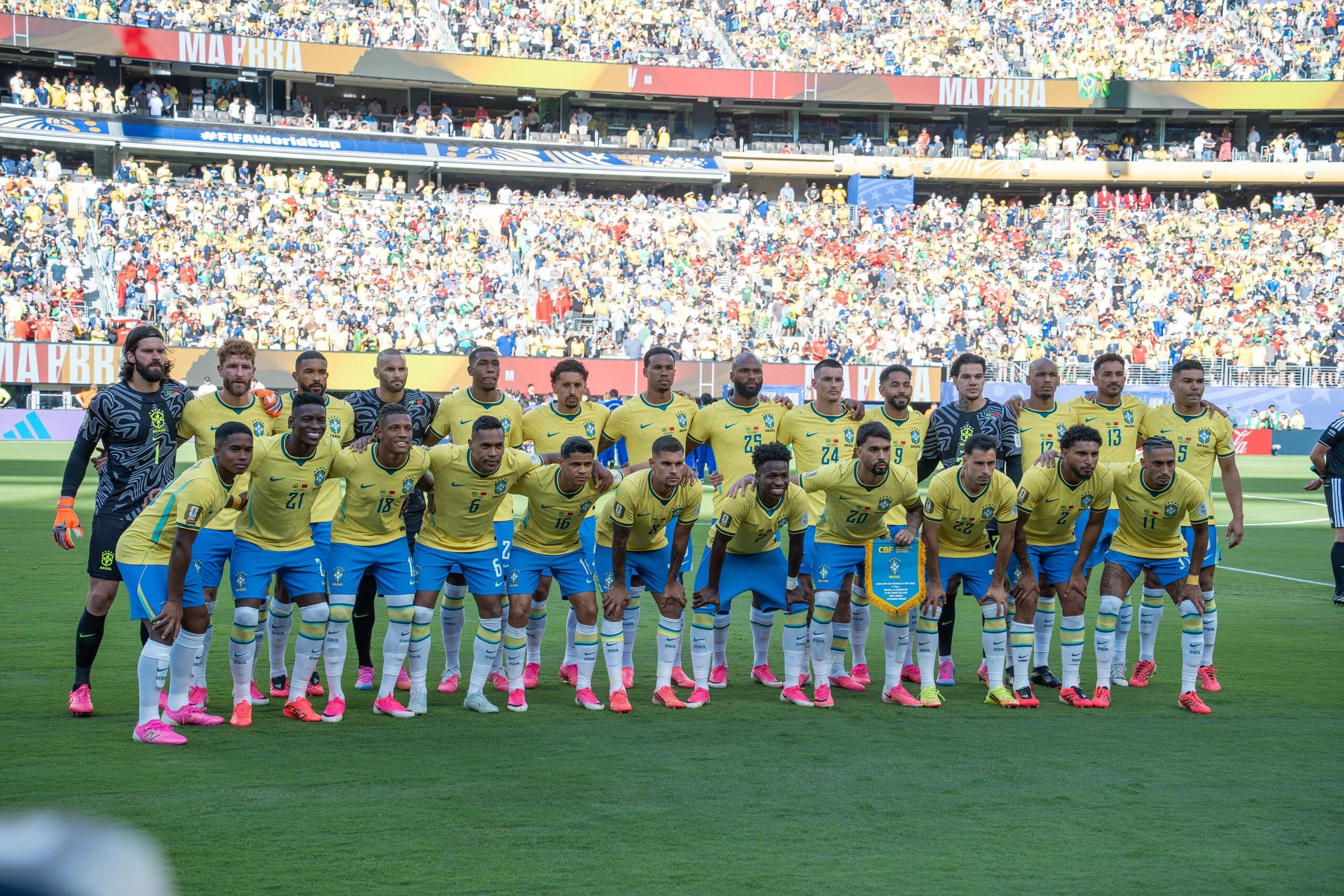
Football, the great equaliser. From Paraguay’s shootout heroics to Mexico’s march and Brazil, Argentina and Colombia still alive, the World Cup is the region’s shared heartbeat this week. It is a rare unison in a fractured continent, and a reminder that a nation’s morale can be lifted overnight by eleven players.
The everyday economy. Beneath the headlines, ordinary households across the region are wrestling with high borrowing costs, thin wages and, in Bolivia and Venezuela, prices that lurch with each currency shock. The daily arithmetic of rent, food and transport is where the year’s political dramas are actually felt.
Memory and reckoning. Costa Rica’s fight to keep cartels out of its courts, Venezuela’s censored grief and Bolivia’s painful devaluation are all, in their way, nations confronting what they would rather not see. Beneath the postcard, much of the region is quietly doing the hard work of facing its darker seams.
The week ahead
Five things that will move the region’s mood
Frequently Asked Questions
The scale is overwhelming and the state is broke. More than 2,295 people are confirmed dead, tens of thousands are still unaccounted for, and almost no property was insured, so the bill falls on a bankrupt government that is leaning on US airmen and Marines to reopen the Caracas airport and the port of La Guaira. A half-blocked internet has forced families to trace the missing through WhatsApp groups and homemade websites, and the United Nations has warned that the information gaps are themselves costing lives.
It is historic because she is about to become Peru’s first elected woman president, after four attempts and more than 500 days once spent in pre-trial detention. It is fragile because the margin was fewer than 50,000 votes and the country is exhausted by a decade of presidents who arrive under suspicion and leave under investigation. A caretaker governs until the July 28 handover, and much of the hard governing will begin only once the celebrations fade.
On paper it is a luxury SUV that President Yamandú Orsi bought at a steep discount just before taking office; in truth it is trust. A country that sells itself as the region’s calmest democracy watched its leader fall to 20% approval with 65% disapproval, less than half his own coalition still behind him. The car was the spark, but the speed of the collapse — nineteen points in four months — says voters were already primed to feel let down.
Because it is the one thing the whole continent still experiences together. Amid Venezuela’s grief, Cuba’s darkness and a wave of political disillusion, Paraguay’s shootout defeat of four-time champion Germany and Mexico’s march into the last 16 delivered a jolt of shared joy, and today Argentina and Colombia both play the last 32. It is a reminder that national morale is its own form of power.
It is grinding through the sharpest adjustment in a generation. Weeks of road blockades that paralysed the country have been cleared under a 90-day, army-backed state of emergency, and the government has ended a decade-old dollar peg — a devaluation of roughly 30%, with the boliviano near 9.73 to the dollar — while negotiating an IMF programme of at least $2.5 billion. Its Mercosur neighbours offered public support, a rare outside hand for the region’s most isolated economy.
Read & watch
- WatchThe World Cup last 32 — Argentina face Cape Verde and Colombia meet Ghana — and Sunday’s last-16 ties, Brazil v Norway and Mexico v England.
- ReadOur reporting on Venezuelan families searching the web for the earthquake missing as the toll passes 2,295.
- WatchPeru’s proclamation of Keiko Fujimori and the road to the July 28 handover.
- ReadColombia’s tense transition as de la Espriella opens the books before August 7.
- WatchWhether Uruguay’s Orsi can stem his slide from 20% approval.
Companion: today’s Latin America Power Map (PDF) — our full daily dossier on who holds power across the region.
Sources & method. This Pulse is a portrait of the region’s mood, drawn from The Rio Times’ July 1 and July 2 reporting and the regional wires: Venezuela’s earthquake toll passing 2,295 and its seven days of mourning; Cuba’s record blackout; Peru’s coming proclamation of Keiko Fujimori; Colombia’s president-elect opening the books before the August 7 handover; Uruguay’s president sinking to 20%; Bolivia clearing its blockades and turning to reform; Costa Rica’s clash over crime in the Judiciary; Paraguay’s Mercosur summit and its World Cup upset of Germany; and today’s last-32 ties. The market tape uses Wednesday, July 1 closes from our market data (Ibovespa 171,689, IPC 67,248, IPSA 10,812, Merval about 3.12 million, COLCAP 2,260), with USD/BRL (about R$5.20), the S&P 500 (7,483.23) and oil (WTI near $68) from our July 2 pre-open and morning call. The 1–5 risk scores are The Rio Times’ own weekly read. Editorial analysis, not investment advice.
This article was produced by The Rio Times’ automated newsroom system. How we use AI · Report an error · Editorial responsibility: Matthias Camenzind, Editor-in-Chief