Hyundai Rotem Nears $2 Billion Peru Tank Deal
Peru · Defense
Key Facts
—The deal. Hyundai Rotem is working to finalize a supply of armored vehicles to Peru worth an estimated US$1.7–2.0 billion.
—The hardware. The framework covers K2 main battle tanks and K808 wheeled armored carriers, replacing Peru’s obsolete Soviet-era T-55s.
—Made in Peru. Korean partners plan an initial US$270 million plant so Peru can locally assemble the vehicles from 2029.
—The politics. Hyundai Rotem sees a calmer post-election Peru as the moment to close the deal.
—The significance. It would be South Korea’s largest defence export to Latin America and the K2’s regional debut.
South Korea’s defence industry is closing in on a landmark Latin American sale. Hyundai Rotem is pressing to finalize the Hyundai Rotem Peru deal, a roughly US$2 billion agreement to supply tanks and armored vehicles, betting that a more stable post-election Peru clears the last obstacles.
For readers unfamiliar with the players, Hyundai Rotem is a division of the Hyundai Motor Group, but it builds trains and defence systems rather than passenger cars. It manufactures the K2 Black Panther, a main battle tank that entered service with the South Korean army and is widely regarded as one of the most advanced tracked combat vehicles in production.
The K808, meanwhile, is an eight-wheeled armored personnel carrier designed to move infantry quickly across roads and rough terrain, offering a modern alternative to the tracked troop carriers of an earlier generation.
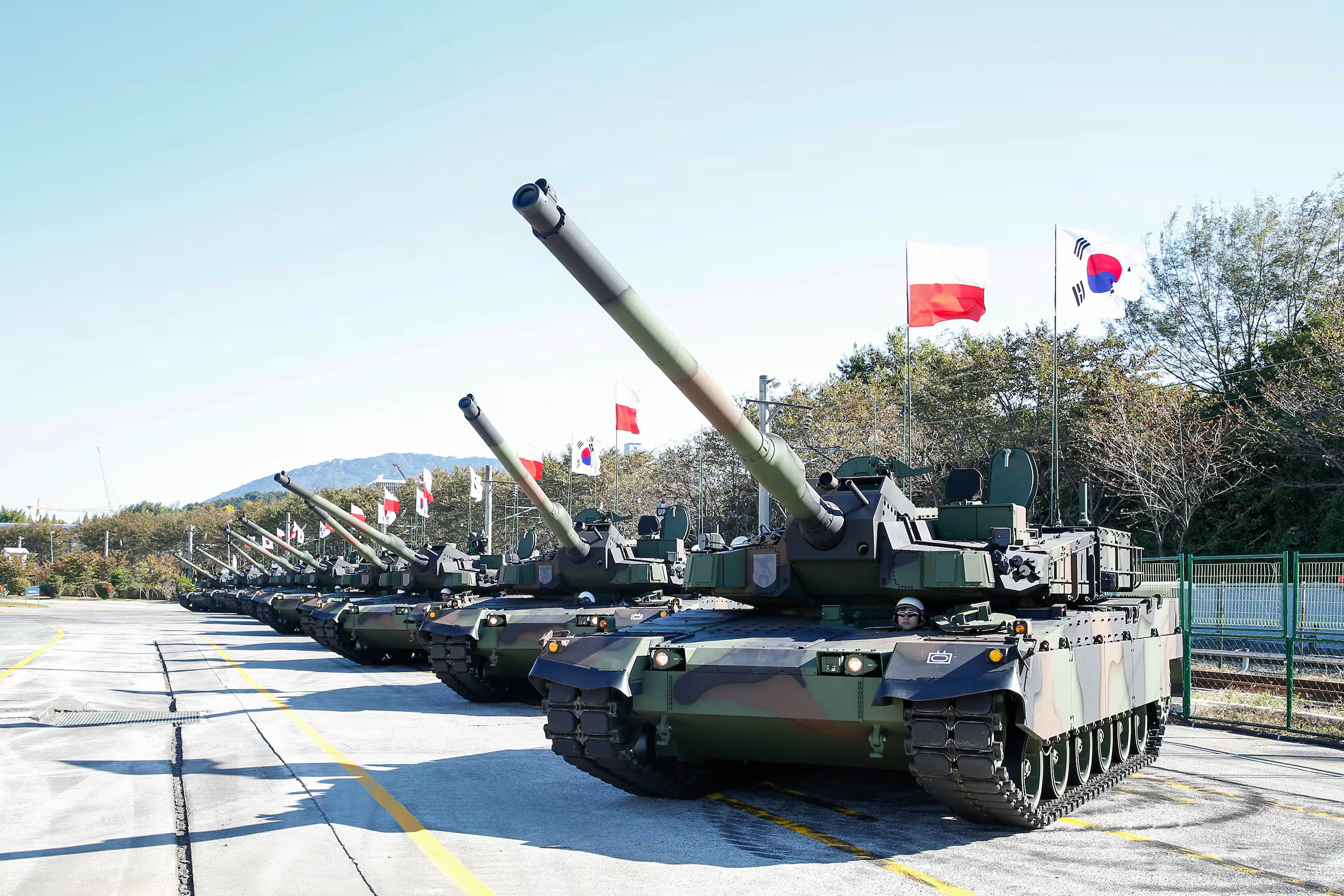
The framework, signed with Peru’s state defence company, covers around 195 vehicles, including K2 battle tanks and K808 wheeled carriers, for an estimated 2.5–3 trillion won, KED Global reports. Hyundai Rotem now wants to convert that outline into a firm contract.
Replacing Cold-War-era armor
For Peru, the appeal is a fleet overhaul. The new K2s would replace obsolete Soviet-built T-55 tanks that officials say no longer offer any real deterrent value.
The K808 carriers would modernize the army’s wheeled mobility at the same time.
The T-55 is a design that first appeared in the years after World War II. Keeping such vehicles operational today means struggling with scarce spare parts, outdated fire-control systems, and armor that cannot stand up to modern anti-tank weapons.
Replacing them is not simply a hardware upgrade; it is a fundamental shift in what a ground force can credibly do.
The deal is structured to build local industry, not just deliver equipment. Korean partners plan an initial US$270 million investment in a specialized plant in Peru, with imports of tanks and carriers running through 2028 and licensed local production of both types beginning around 2029.
This local-assembly model is a signature of South Korean defence exports. Rather than simply selling finished products, Korean firms often offer technology transfer and domestic manufacturing, which helps buyer nations build their own industrial base and creates local jobs.
For Peru, that promise carries political weight because it turns a large foreign purchase into a long-term national capability.
Why the timing matters
Hyundai Rotem has tied the push to Peru’s political calendar, judging that a steadier environment after the country’s election makes it easier to sign a multi-year, multi-billion-dollar commitment. Large defence purchases need budget certainty and political continuity, both easier to promise once an election has passed.
In practical terms, a framework agreement signed before an election can become a political football. A new administration may want to review, renegotiate, or even cancel deals struck by its predecessor.
By waiting for the post-election dust to settle, Hyundai Rotem is betting it can deal with a government that has a fresh mandate and a clearer fiscal picture.
For Seoul, the stakes are strategic. If sealed, it would be South Korea’s biggest defence export to Latin America and the first deployment of the K2 in the region, a beachhead for further sales across a continent long supplied by Western and Russian manufacturers.
South Korea has been climbing the ranks of global arms exporters for years, using competitive pricing, reliable delivery schedules, and the technology-transfer model described above. A successful Peruvian contract would demonstrate that the approach works in a region where Seoul has historically had a limited footprint, potentially opening doors in neighboring countries that also operate aging Soviet or Western equipment.
Still to close
The agreement remains a framework rather than a signed contract, and large arms deals can slip. But the direction is clear: Peru is preparing to modernize its army with Korean armor, and to build some of it at home.
What to watch next is whether the two sides can agree on the final financing structure and production timeline. Another open question is how Peru’s neighbors will react to a qualitative leap in its armored capability, and whether that prompts competing modernization programs elsewhere in the region.
For now, the framework signals intent; the contract will signal commitment.
More: Latin America news in English, every day from The Rio Times.
The big picture: Peru explained — economy, politics, society and daily life in one read.
Frequently Asked Questions
What is Peru buying from Hyundai Rotem?
A framework covering around 195 armored vehicles, including K2 main battle tanks and K808 wheeled carriers, worth an estimated US$1.7–2.0 billion. The K2s would replace Peru’s obsolete Soviet-era T-55 tanks.
Will the vehicles be built in Peru?
Partly. After an initial import phase, Korean partners plan a roughly US$270 million plant so Peru can locally produce K2 tanks and K808 carriers under license from around 2029.
Is the deal signed?
Not yet. It is a framework agreement that Hyundai Rotem is working to finalize, and large defence contracts can still change before signature.
This article was produced by The Rio Times’ automated newsroom system. How we use AI · Report an error · Editorial responsibility: Matthias Camenzind, Editor-in-Chief