€100 Billion for Ukraine: EU’s Unmistakable Signal to Russia and Beyond
The European Union has set aside €100 billion—about $115 billion—in its newly proposed budget just for Ukraine. This massive sum, which dwarfs most single fund allocations in the bloc’s history, makes one thing plain: the EU now treats Ukraine as a core part of its own future.
With this decision, the EU signals it will do everything needed to prevent Russia from forcing its will on Ukraine, and the economic and political consequences could reach every corner of Europe and beyond.
This new budget is not just about Ukraine. Running from 2028 to 2034, the overall plan is worth €2 trillion. Climate and biodiversity spending will take 35% of the total. Defense and space—long-time second-tier items—will see a fivefold funding increase, hitting €131 billion.
Migration controls and border management funds are set to triple. Another €300 billion goes to support farmers. These numbers reflect a much broader reset in priorities across the EU. But the centerpiece is the Ukraine package.
Today’s allocation builds on a previous €50 billion recovery fund for Ukraine and the nearly €165 billion the EU has already spent there since Russia’s 2022 full-scale invasion.
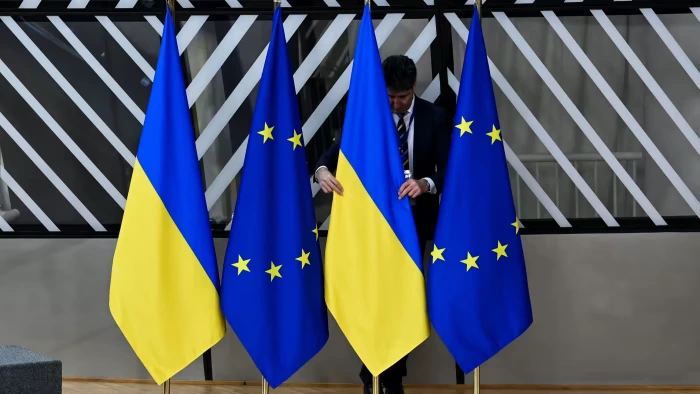
Nearly all these funds are designed to support Ukraine’s reconstruction, resilience, and steady movement toward EU membership.
EU Budget Signals Long-Term Strategic Shift
The EU’s leadership insists that this sort of integrated economic support is a strategic investment in Europe’s stability and prosperity, not only for Ukraine’s benefit, but for the whole region.
Business leaders in Europe and globally will need to pay attention. The competitiveness fund for the coming years, worth more than €450 billion, focuses on supply chains, digital, biotech, and defense.
These choices, explicitly pegged to security and self-reliance, mean less dependency on outside energy, technology, and raw materials.
At the same time, the EU wants to fund much of this expansion through new revenue streams, not bigger member contributions. Plans include new levies on major companies and e-waste, plus some updated taxation channels.
This budget package still needs approval from all 27 EU member states and the European Parliament, and intense negotiation is expected, especially over the scale of Ukraine support and how to balance other priorities.
But the size and structure of the budget tell a clear story: Europe views Ukraine’s future as inseparable from its own. That stance guarantees both greater unity within the EU and a far more complicated, possibly turbulent, relationship with Russia moving forward.
This article was produced by The Rio Times’ automated newsroom system. How we use AI · Report an error
Read More from The Rio Times