Brazil Holds Its Yellow Tariff Flag for a Fifth Straight Month
Brazil · ENERGY
Key Facts
- —Flag level September stays under the yellow tariff flag, a fifth consecutive month.
- —Surcharge R$1.885 (US$0.36) is added for every 100 kilowatt-hours billed.
- —Reservoirs Southeast and Centre-West storage sat at 58.64% on 28 August.
- —Thermal share gas and coal plants supplied 12.2% of August output.
- —Sector fund the CDE budget for 2026 is R$52.66 billion (US$10.1 billion).
Reservoirs in the Southeast are the weak point, and thermal plants are filling the gap.
Brazil will pay a surcharge on its electricity bills again in September, the fifth month in a row. The regulator held the yellow tariff flag on Friday, keeping the extra charge at R$1.885 (US$0.36) for every 100 kilowatt-hours consumed.
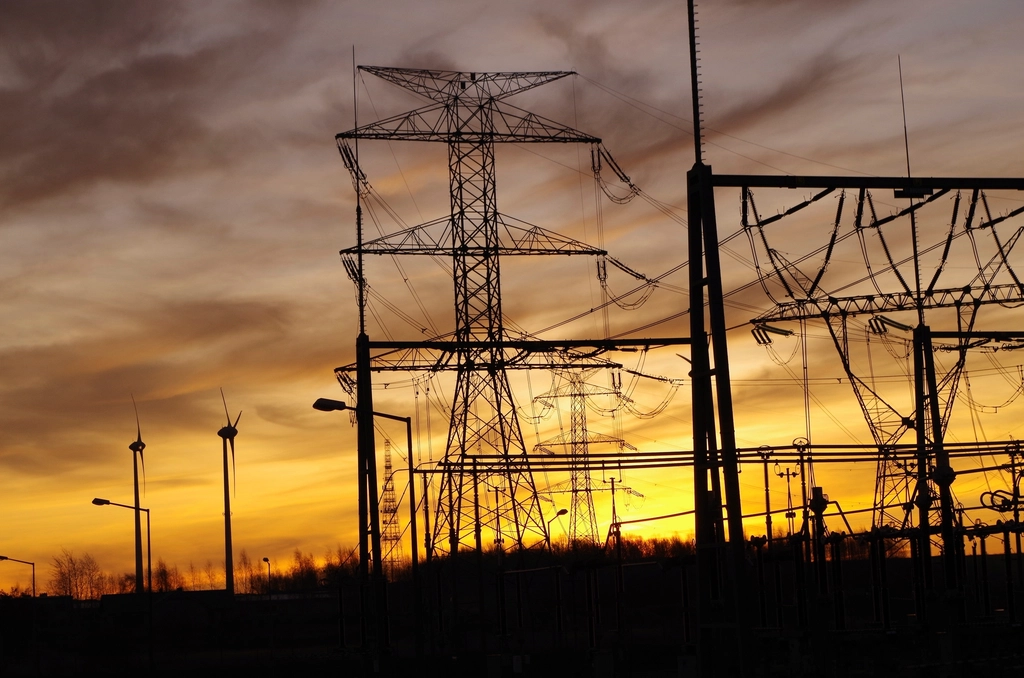
What the regulator decided for September
The Agência Nacional de Energia Elétrica (ANEEL), Brazil’s power regulator, said on 28 August that September stays yellow. The decision keeps the surcharge at R$1.885 (US$0.36) for every 100 kilowatt-hours (kWh) a customer consumes.
ANEEL said the signal reflects less favourable generating conditions and the need to run higher-cost plants. It named no single culprit and published no breakdown of the cost calculation.
The agency’s own wording confirms the run. Its notice states that the yellow tariff flag has been on continuously since May, making September the fifth month.
In its August notice the regulator was more explicit. It pointed to the dry season, falling reservoirs and the need to dispatch thermal power stations.
The notice carries an unusual marker this year. ANEEL is publishing its 2026 announcements in a news section it labels defeso eleitoral, the pre-election restriction period.
How Brazil’s flag system works
Brazil introduced the flags in 2015 to show consumers the real cost of generation each month. The charge was always in the bill, but it used to arrive a year late through annual tariff resets.
Green means favourable conditions and adds nothing. The yellow tariff flag adds R$0.01885 (US$0.0036) per kWh, which is the R$1.885 (US$0.36) per 100 kWh now in force.
Red level one adds R$0.04463 (US$0.0086) per kWh, or R$4.463 (US$0.86) per 100 kWh. Red level two adds R$0.07877 (US$0.0151) per kWh, or R$7.877 (US$1.51) per 100 kWh.
ANEEL’s current table lists only green, yellow and the two red levels. An additional water-scarcity band was applied during an earlier drought emergency, but the agency no longer publishes a rate for it.
The colour tracks the cost of running the system rather than any single reservoir. Hydro storage, thermal dispatch, hydrological risk and the short-run market price all feed into it.
What the reservoirs actually show
The Operador Nacional do Sistema Elétrico (ONS), Brazil’s grid operator, publishes storage daily. On 28 August the national grid held 64.65% of its usable energy.
The averages hide the problem. The Southeast and Centre-West subsystem, which holds roughly seven-tenths of national storage, stood at just 58.64%.
The other three regions look far healthier. The North was at 82.79%, the South at 81.10% and the Northeast at 76.56% on the same day.
Rainfall has been uneven rather than uniformly poor. Southeast inflows ran near 95% of the long-term average through 27 August, against roughly 62% in the North and Northeast.
The South was the outlier at roughly 190% of its long-term average. That subsystem holds only about 7% of national storage, so its wet weather does little to refill the reservoirs that matter.
Thermal plants are filling the gap
Grid operator data shows the shift clearly. Hydro supplied 52.5% of August output, down from 64.5% in April, as the dry season drew down the reservoirs.
Thermal generation moved up to fill that space. Gas, coal and other thermal plants averaged 9,813 megawatts in August, or 12.2% of output, against 9.3% in April.
Wind and solar did much of the heavy lifting. Wind averaged 15,287 megawatts and utility-scale solar 13,122 megawatts, together supplying 35.3% of August generation.
Demand also climbed. Load averaged 79,794 megawatts in August and peaked at 96,535 megawatts, below February’s 101,017-megawatt record.
The price signal is falling, not rising
The short-run cost of operating the system has dropped sharply this year. Weekly marginal cost in the Southeast was R$147.63 (US$28.39) per megawatt-hour for the week from 28 August.
That is well down from March. The same measure averaged R$403.85 (US$77.66) per megawatt-hour across that month, before the yellow run began.
The North stands apart on price. Its weekly cost sat flat at R$581.48 (US$111.81) per megawatt-hour through all four weeks of August.
So the yellow tariff flag is not tracking spot prices alone. Thermal dispatch outside merit order and hydrological risk also sit inside the flag account, and ANEEL did not publish the split.
What it costs households and industry
The direct hit is small. A household consuming 200 kWh a month pays an extra R$3.77 (US$0.72), or about R$18.85 (US$3.62) across the five yellow months.
The base tariff matters far more. The median residential rate in force on 29 August was R$812.58 (US$156.25) per megawatt-hour before taxes, on ANEEL’s own homologated tables.
Spread across distributors, the gap is enormous. Rates run from R$534.16 (US$102.71) per megawatt-hour at the cheapest cooperative to R$1,569.23 (US$301.75) at the dearest.
Large industry mostly escapes the flag entirely. The system bills only captive customers of distributors, so factories buying on the free market pay contract prices instead.
Dollar figures here use the Banco Central do Brasil PTAX selling rate. That rate was R$5.2005 (US$1.00) on 28 August 2026.
Charges and taxes inside the bill
The energy itself is a minority of what households pay. On ANEEL’s component data, the pure energy line is about 29% of the pre-tax residential tariff.
Network costs take the largest slice. The distribution wire charge accounts for roughly 32%, with transmission and system-operator costs adding several points more.
Sector levies come to about 20% of the pre-tax tariff. The single biggest is the Conta de Desenvolvimento Energético (CDE), a subsidy fund worth R$136.87 (US$26.32) per megawatt-hour.
Taxes then sit on top of all of it. Federal PIS and COFINS contributions, state ICMS and a municipal public-lighting levy are added after the tariff is set.
Subsidies and the tariff cuts already made
The CDE keeps growing, up from R$49.23 billion (US$9.47 billion) in 2025. Its 2026 budget is R$52.66 billion (US$10.1 billion), of which R$47.79 billion (US$9.19 billion) comes from consumers.
The fastest-growing line is social. Low-income tariff support rises to R$10.44 billion (US$2.01 billion) this year from R$7.83 billion (US$1.51 billion), a jump of a third.
ANEEL’s tariff tables now carry new discount categories for low-income households. Two Residencial Desconto Social bands appear alongside the older social tariff in 2026 rates.
Bills in the North and Northeast fell on 26 August. ANEEL routed R$5.48 billion (US$1.05 billion) from renegotiated hydro concession payments into the CDE.
Five distributors cut their rates under Law 15,235 of 2025. Energisa Rondônia customers saw a 10.63% reduction, Enel Ceará 6.65% and Energisa Acre 5.20%.
Frequently Asked Questions
How long has Brazil kept the yellow flag on?
Since May 2026. September is the fifth consecutive month under the yellow tariff flag, on ANEEL’s own record.
How much does the yellow flag add to a bill?
R$1.885 (US$0.36) for every 100 kilowatt-hours. A household using 200 kWh pays roughly R$3.77 (US$0.72) more each month.
Why is the flag still yellow if spot prices are falling?
Storage in the Southeast remains weak and thermal plants are running. ANEEL did not publish the calculation behind the yellow tariff flag.
Connected Coverage
Brazil’s 2027 Budget Promises a Primary Surplus of 0.1% of GDP
Sources
- www.gov.br
- www.gov.br
- www.gov.br
- www.gov.br
- dadosabertos.aneel.gov.br
- dadosabertos.aneel.gov.br
- dadosabertos.aneel.gov.br
- dados.ons.org.br
- dados.ons.org.br
- dados.ons.org.br
- www.ons.org.br
- www.bcb.gov.br
This article was produced by The Rio Times’ automated newsroom system. How we use AI · Report an error
Read More from The Rio Times