USA & Canada Intelligence Brief August 18, 2026: Permits Up, Building Down
Executive Summary
USA & Canada Intelligence Brief for 18 August: builders filed more permits and poured less concrete, and a 50% tariff on Canadian goods lands Wednesday.
Rio Times · USA & Canada Intelligence Brief August 18
Key Facts
—Single-family building slumped Starts fell 9.9% in July to an annual rate of 808,000, the slowest pace since November 2022 and 15.7% below a year earlier.
—The total missed badly All housing starts fell 12.4% to 1.239 million against a forecast of 1.35 million.
—But permits rose Building permits increased 5.0% to 1.443 million, with single-family permits up 2.5% to 894,000.
—The tariff lands Wednesday Fifty per cent duties on a defined list of Canadian goods — nearly 20 billion dollars a year on the US trade representative’s estimate, about 5% of Canadian imports — take effect on 19 August, with no agreement announced.
—Canadian inflation went back up The index rose 3.0% in July from 2.8%, on gasoline and travel tours — but both core measures sat at 2.0%, at the central bank’s target.
—Eighteen months of dearer groceries Food from stores rose 3.1%, cooling from 3.9%, but still outpaced the overall index for the eighteenth month running.
USA & Canada Intelligence Brief August 18 — American builders took out more permission to build in July and then built a great deal less.
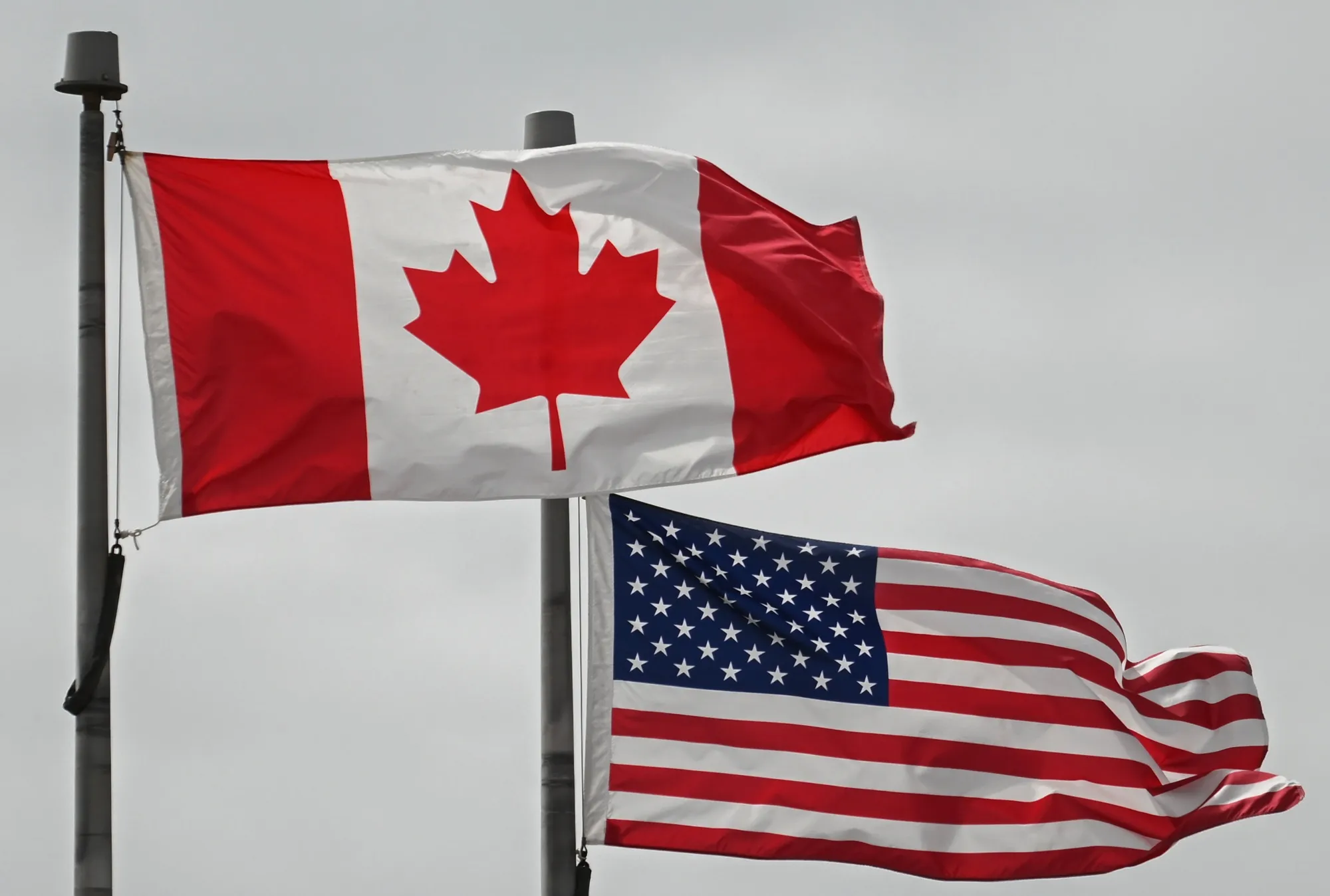
North of the border, a tariff nobody has managed to stop is now one day away.
Housing – The Sharpest Domestic Number of the Week
Eight hundred and eight thousand
Single-family housing starts fell 9.9% in July to a seasonally adjusted annual rate of 808,000, the Census Bureau reported on Tuesday. That is 15.7% below July of last year and the slowest single-family pace since November 2022.
Total starts including apartments fell 12.4% to 1.239 million, against a forecast of 1.35 million. Economists had expected a mild cooling and received something considerably heavier.
Mortgage rates and unsold inventory
Reuters attributed the fall to higher mortgage costs and a stock of unsold new homes already on the market. The thirty-year fixed rate averaged 6.67% in the week to 13 August, against 6.58% a year earlier. Buyers treat 6% as a threshold rather than a number.
Builders do not stop because they lack demand in the abstract. They stop because the houses they already built have not sold.
Permits – The Contradiction Inside the Same Release
Up five per cent
Building permits rose 5.0% in July to an annual rate of 1.443 million, with single-family permits up 2.5% to 894,000. Permits are the leading indicator and starts are the coincident one.
Builders therefore secured more permission to build while doing less building. That is not a contradiction so much as a description of hesitation.
Keeping the option, declining to use it
A permit costs relatively little and preserves the ability to start when conditions improve. Breaking ground commits labour, materials and financing at today’s rates.
The gap between the two numbers is the clearest read available on American business confidence this month. Companies are ready and unwilling at the same time.
Trade – One Day Left and No Announcement
Fifty per cent, from Wednesday
Duties of 50% are scheduled to take effect on 19 August on a defined list of Canadian goods worth nearly 20 billion dollars a year on the US trade representative’s estimate — about 5% of what Canada sells into the United States — covering products from cement to hockey sticks. Unlike most earlier measures, they apply even to goods that qualify under the North American trade agreement.
Energy, potash, fish and certain critical minerals are excluded, as are the goods already covered by the separate steel, aluminium, copper and vehicle measures. The goods being taxed are the finished ones. The legal route is Section 338 of the Tariff Act of 1930, unused for 96 years and chosen precisely because it sidesteps the trade-agreement exemption that limits the other tariff powers.
Five meetings and no draft
Dominic LeBlanc has met the United States trade representative five times in four weeks, including a virtual session on Sunday and another meeting on Monday. Leaving that meeting he said only that the work is continuing.
Reuters reported the two sides remain far from a draft agreement. Canada’s chief negotiator has told her counterparts that tariffs on Wednesday would represent a cliff that risks halting the talks altogether.
American builders filed more permits and poured less concrete in the same month, and Canadian negotiators held a fifth meeting without a draft — two countries doing the paperwork of confidence while declining to commit to anything expensive.
The Federal Reserve – The Argument Is About Raising
Three dissents, and minutes on Wednesday
Three officials formally dissented at the July meeting in favour of raising rates rather than cutting them. The minutes of that meeting are published on Wednesday.
Markets will read them for how widely the concern about persistent inflation was shared. A committee arguing about increases is a very different animal from one arguing about cuts.
Which is why the housing number matters
Homebuilding is the part of the American economy that responds first and hardest to the cost of money. July’s collapse in starts is what a debate about higher rates looks like at ground level.
The thirty-year government yield traded near 5.31% on Tuesday, reported by Reuters as its highest since 2007. That is the number setting mortgage costs in nine months’ time.
Canada – Prices Went Back Up
Three per cent, on fuel and travel
Statistics Canada reported on Monday that the consumer price index rose 3.0% year over year in July, up from 2.8% in June and a touch above the 2.9% expected. Gasoline prices were 25.7% higher than a year earlier, against 20.5% in June.
Travel tours rose 15.2% and air transportation 12.0%, partly on demand for football tournament trips to American cities. Excluding gasoline the index rose 2.2% for a third consecutive month.
Groceries, for the eighteenth month running
The Bank of Canada’s preferred core measures, however, both sat at 2.0%, up from 1.9% — which is to say at target. The headline move is energy and football travel, not broad price pressure. Food purchased from stores rose 3.1%, cooling from 3.9% in June but still outpacing the all-items index for the eighteenth consecutive month. Fresh fruit rose 6.1%, its largest July monthly move since 2011.
Shelter costs rose only 1.3%, with the cost of replacing a home down 2.1% on the year. The official rate and the shopping trolley have been telling different stories for a year and a half.
The Bank of Canada – Holding, and Watching Wednesday
Core measures stayed near target
The bank’s preferred core measures were steady, with the trimmed measure at 1.9% and the median at 2.0%. That is the reading that lets a central bank look through a fuel-driven headline.
The policy rate has been held at 2.25% through six consecutive decisions. The next one is on 2 September.
The tariff is the bigger variable
Economists at TD noted that with no deal to avert Wednesday’s duties, the trade question remains a clear downside risk to the Canadian economy. Inflation is the smaller of the two problems on the bank’s desk.
Regional differences are wide, with Nova Scotia at 5.0% and Ontario at 2.0%. One country, one policy rate, two and a half points of lived experience.
What This Means From Latin America
The construction cycle is the export cycle
American single-family building at its slowest since 2022 reduces demand for copper, lumber, cement and steel through the autumn. Regional suppliers to the North American construction chain should assume weaker volumes before they assume weaker prices.
The permits number is the counter-argument and it is worth respecting. Approved projects can start quickly once the cost of money moves.
And a tariff that ignores a trade agreement
Wednesday’s duties apply to goods that qualify under the North American agreement, which is the detail that matters most outside Canada. Preferential access has been treated as a starting position rather than a protection.
Mexico is on the same annual review clock, and every regional exporter negotiating market access is watching the precedent. What happens to a treaty partner is the best available guide to what happens to everyone else.
The Bigger Picture
American single-family housing starts fell 9.9% in July to 808,000, the slowest pace since November 2022 and 15.7% below a year earlier, with total starts down 12.4% to 1.239 million against a 1.35 million forecast. In the same release, building permits rose 5.0% to 1.443 million.
Fifty per cent duties on roughly 20 billion dollars of Canadian goods take effect on Wednesday with no agreement announced, after a fifth meeting between the two countries’ trade chiefs. The duties apply even to goods qualifying under the North American trade agreement.
Canadian inflation rose to 3.0% in July on gasoline and travel, with core measures near 2% and groceries above the headline rate for the eighteenth month running. Three American central bankers dissented in July in favour of raising rates, and those minutes arrive Wednesday.
USA & Canada Intelligence Brief August 18: What We Are Watching
- 19 August – Whether the 50% duties take effect as scheduled, and what Ottawa does within the hour.
- 19 August – The July Federal Reserve minutes, and how far the case for raising rates extended.
- Coming weeks – Whether July’s collapse in starts was a single month or the start of a run.
- Coming weeks – Whether the 5% rise in permits converts into ground being broken.
- 2 September – The Bank of Canada decision, after six consecutive holds at 2.25%.
- Coming days – Whether provincial alcohol bans are lifted as part of any settlement.
- 26 August – The American price index that the long-term yield is reacting to.
- Ongoing – The annual review clock on the North American trade agreement.
Go Deeper
The full USA & Canada Intelligence Dossier — the interactive risk dashboard, the six people who matter and the downloadable PDF — is updated daily by the Rio Times Intelligence Desk.
More from the Rio Times Intelligence Desk on August 18: the Africa Intelligence Brief, the Asia Intelligence Brief and the Europe Intelligence Brief. For how these stories developed, see the USA & Canada Intelligence Brief for August 17 and the USA & Canada Intelligence Brief for August 15.
The USA & Canada Intelligence Brief August 18 returns tomorrow morning.
Frequently Asked Questions
How far did American homebuilding fall in July?
Single-family housing starts fell 9.9% to a seasonally adjusted annual rate of 808,000 in July, 15.7% below the same month last year and the slowest single-family pace since November 2022, while total starts including apartments fell 12.4% to 1.239 million against a forecast of 1.35 million. Reuters attributed the decline to higher mortgage rates and the inventory of unsold new homes already on the market.
Why did building permits rise while starts fell?
Permits rose 5.0% to an annual rate of 1.443 million, with single-family permits up 2.5% to 894,000, in the same Census Bureau release that recorded the fall in starts. Permits are a leading indicator that preserves the option to build at low cost, while breaking ground commits labour, materials and financing at current interest rates, so the gap between the two measures reflects builders keeping their options open rather than using them.
What tariffs take effect on 19 August?
Duties of 50% apply to roughly 20 billion dollars of Canadian goods, covering products from cement to hockey sticks and citing provincial bans on American liquor, Canada’s supply-managed dairy system and quotas on certain American vehicles. Unlike most earlier measures they apply even to goods qualifying under the North American trade agreement, while energy, potash, fish and critical minerals are excluded.
What did Canadian inflation do in July?
The consumer price index rose 3.0% year over year in July, up from 2.8% in June, as gasoline prices rose 25.7% and travel tours 15.2%, while excluding gasoline the index rose 2.2% for a third consecutive month. Groceries rose 3.1%, cooling from 3.9% but outpacing the all-items index for the eighteenth month running, and the Bank of Canada’s core measures stayed near 2% ahead of its 2 September decision.
Sources: Reuters via Investing.com, US Census Bureau, Statistics Canada, Associated Press
This article was produced by The Rio Times’ automated newsroom system. How we use AI · Report an error