Milei Sells Transener Power-Grid Stake for US$356 Million

Key Facts
— — Argentina’s Milei government opened the economic-bid envelopes for the Argentina Transener privatization Tuesday April 28, with the Genneia + Edison Transmisión consortium winning at US$356.17 million for the 50 percent state stake in Citelec — the holding that controls 52.65 percent of Transener, Argentina’s largest electricity-transmission operator. The winning bid is 73 percent above the floor price of US$206.2 million, with total bids reaching US$887 million across three groups.
— — Other bidders: Central Puerto (Argentina’s largest power generator) bid US$301 million; Edenor (electricity distributor) bid US$230 million. The winning Genneia-Edison consortium represents the third Milei-era privatization. Genneia is Argentina’s largest renewable-energy generator (1,580 MW capacity), led by banker Jorge Brito (Banco Macro chairman). Edison Transmisión is part of the Neuss family group, also linked to Newsan and Inverlat.
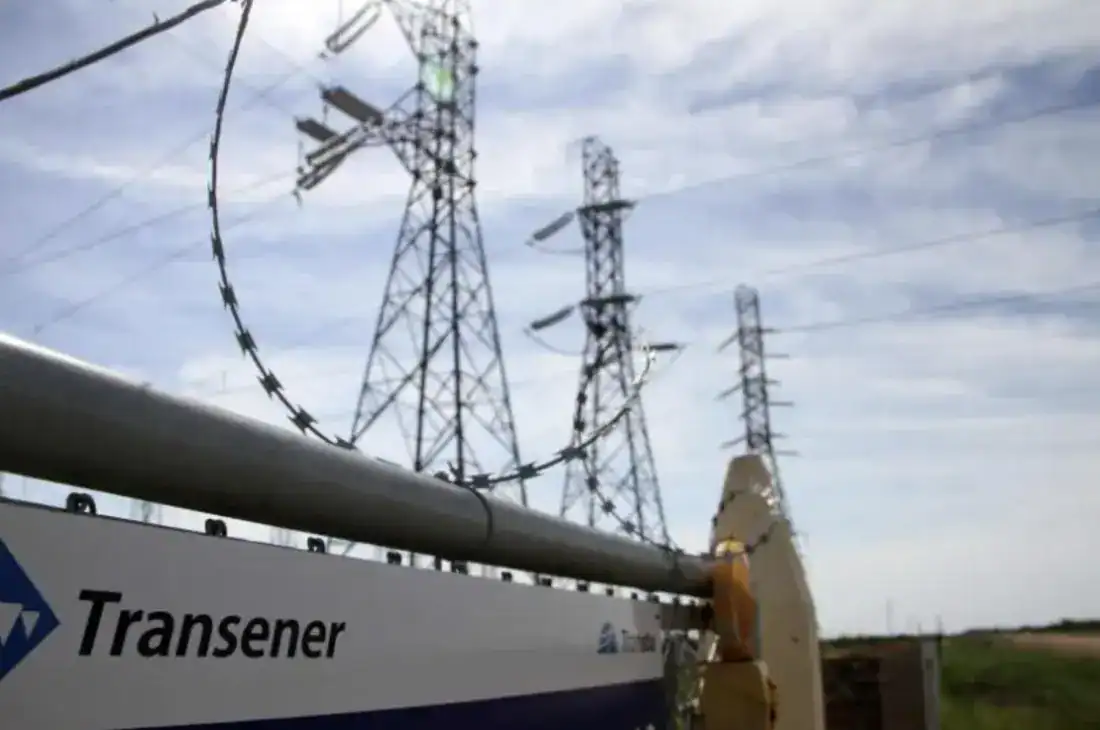
— — Transener significance: the company operates 12,400+ km of 500kV high-tension lines (plus 6,228 km via subsidiary Transba), responsible for approximately 85 percent of Argentine electricity transmission. Network spans approximately 3,700 km from Jujuy in the north to Santa Cruz in the south. Final adjudication: scheduled for May 2026. Annual profits exceed US$200 million per recent balance sheets. No international bidders participated despite government efforts to attract foreign capital.
The Argentina Transener privatization concluded Tuesday demonstrates that Milei’s structural reform program continues to deliver — but the absence of international bidders signals that foreign-capital re-engagement with Argentina remains incomplete despite 18 months of policy stability.
Milei’s structural privatization program just delivered its most consequential transaction. The Rio Times, the Latin American financial news outlet, reports that the Argentina Transener privatization concluded Tuesday April 28 with the Genneia + Edison Transmisión consortium winning the 50 percent state stake at US$356.17 million — 73 percent above the US$206.2 million floor price — with total bids of US$887 million across three Argentine consortia. Final adjudication is scheduled for May 2026, with no international bidders despite explicit government efforts.
“The level of bids reflects private-sector interest in investing in essential infrastructure for the Argentine electricity system,” Argentina’s Energy Secretariat said in its bid-opening communication. The bid level — 73 percent above floor — represents one of the strongest demonstrations of Argentine domestic-investor confidence in the post-Milei reform framework, even as international capital remains structurally absent.
The Argentina Transener Privatization Mechanics
The transaction structure: Energía Argentina (Enarsa, the state energy company) sells its entire 50 percent participation in Citelec — the holding that controls 52.65 percent of Transener. The remaining 50 percent of Citelec is held by Pampa Energía (Marcelo Mindlin), which previously waived rights of first refusal (ROFR) and tag-along rights to facilitate the transaction.
Effective economic stake post-transaction: the winning consortium gains approximately 26.3 percent indirect economic participation in Transener, plus shared control with Pampa Energía at the holding level. The shared-control structure mirrors successful Argentine infrastructure privatizations of the 1990s, providing operational continuity while injecting capital and governance discipline.
The privatization framework operates under Law 27.742 (Ley Bases) which declared Enarsa subject to privatization, and Decree 286/2025 which authorized specific asset divestments. Final regulatory and administrative approvals are expected to conclude through May 2026, with the formal share transfer planned for late May or early June.
The Three Bidders
Genneia + Edison Transmisión consortium (winning bid US$356.17 million): Genneia is Argentina’s largest renewable-energy generator with 1,580 MW capacity across 8 wind parks and 6 solar facilities, led by banker Jorge Brito (Banco Macro chairman). The Brito family ranks #13 in Forbes Argentina’s 50-richest list with US$1.45 billion estimated wealth. Edison Transmisión is part of the Neuss family group (Juan and Patricio Neuss, also linked to Newsan and Inverlat).
Central Puerto (US$301 million): Argentina’s largest electricity generator, controlled by the Miguens-Bemberg family, Eduardo Escasany, and Guillermo Reca. The bid reflects existing operational synergies — Central Puerto generates power that flows through Transener’s transmission network — but the company was unable to match the Brito-Neuss financial commitment.
Edenor (US$230 million): Argentine electricity distributor controlled by José Luis Manzano, Daniel Vila, and Mauricio Filiberti. The lowest bid reflects Edenor’s distribution focus rather than transmission expertise. The bid demonstrated participation but did not represent the highest strategic priority for the Manzano-Vila-Filiberti group.
Transener’s Strategic Significance
Transener operates 12,400+ kilometers of 500kV high-tension lines, with subsidiary Transba adding 6,228 kilometers of additional transmission infrastructure. Combined, the two companies represent approximately 85 percent of Argentine electricity transmission capacity. The network spans 3,700 kilometers from Jujuy in the north to Santa Cruz in the south, connecting all major generation centers to consumption centers.
Operational metrics: Transener maintains availability above 99.7 percent across the high-tension network, with 1,770+ employees across 5 operational regions and integrated control centers providing constant monitoring. Annual profits exceed US$200 million per recent balance sheets. The transmission monopoly structure provides predictable cash flows essential for renewable-energy expansion (Vaca Muerta gas, Patagonian wind, northern solar).
For the Brito-Neuss consortium, Transener represents access to Argentina’s most strategic energy infrastructure plus operational synergy with Genneia’s renewable-generation portfolio. The combined entity will be the only major Argentine energy group with integrated generation + transmission positioning in the post-privatization framework.
The International Capital Question
No international bidders participated in the Transener privatization despite government efforts to attract foreign capital through pliego adjustments. The absence is structurally consequential — Milei’s reform program has demonstrated 18 months of policy stability, FX-control liberalization, and structural fiscal discipline, yet international energy-infrastructure investors did not engage with the country’s most strategic transmission asset.
Possible explanations: residual Argentine capital-control risk perceptions, US Treasury (post-FED rate cuts) keeping Argentine emerging-market spread compression incomplete, and competing emerging-market opportunities (Mexico nearshoring, Brazilian RIGI, Indonesian transmission) absorbing the available infrastructure-investor capital pool. Each contributes to the international-bidder absence.
The implication for Milei‘s broader reform program: domestic Argentine capital has stepped in to absorb the privatization wave, but international participation remains structurally pending. The May 2026 AySA water-utility privatization (51 percent stake) will be the next major test — if AySA also lacks international bidders, the structural read becomes that Milei’s reform credibility is sufficient for domestic investors but not yet for international ones.
What This Means for Argentine Capital Markets
For Transener (TRAN ADR/local) shareholders, the privatization confirmation supports continued share-price appreciation. TRAN shares rose 6 percent Tuesday on the bid-opening news, taking the year-to-date gain to 11.3 percent in Argentine peso terms (though approximately flat in real terms after April inflation accumulation).
For Argentine sovereign-credit investors, the Transener privatization adds approximately US$356 million to FX reserves once the transaction closes — incremental but meaningful liquidity support. Combined with the previous Comahue hydroelectric privatization (US$700 million), Milei’s privatization program has now generated over US$1 billion in fresh FX reserves through Q2 2026.
For Latin American emerging-market investors comparing Argentina to alternatives, the successful Transener auction provides confidence-building precedent. But the international-bidder absence is the more important data point — institutional global infrastructure capital is not yet ready to deploy meaningfully into Argentina, and that delay materially affects Milei’s structural-reform timeline through 2027-2028.
More: Argentina news in English, every day from The Rio Times.
This article was produced by The Rio Times’ automated newsroom system. How we use AI · Report an error · Editorial responsibility: Matthias Camenzind, Editor-in-Chief