Italy’s Eni Signs Major Venezuela Crude and Gas Deal
Key Facts
— — Italy’s Eni signed a new Junin-5 development contract with Venezuela’s PDVSA Tuesday April 28 at Miraflores Palace — the latest Eni Venezuela deal that relaunches a key Orinoco-belt heavy-crude project. Junin-5 holds approximately 35 billion barrels of crude reserves. Signed by Hydrocarbons Minister Paula Henao, PDVSA President Hector Obregon, and Eni Venezuela Operations Director Guido Brusco. Eni-Repsol joint plan: US$2 billion combined investment over 5 years across Venezuelan ventures.
— — Parallel US move: Treasury contracted a consultancy to audit Venezuelan oil revenues abroad as part of post-Maduro normalization. Audit covers monetary operations, asset management abroad, and FX mechanisms — aimed at building international confidence and certifying transparency in public-fund use. The framework is part of restoring Venezuela’s relationships with multilateral organizations including the IMF and Federal Reserve.
— — Broader Venezuela oil reopening: Chevron crude exports tripled from 100,000 bpd (Dec 2025) to 300,000 bpd (Mar 2026). Chevron raised Petroindependencia stake from 35.8% to 49% on April 15. Repsol regained operational control of Petroquiriquire (45,000 bpd, targeting 135,000 bpd in 3 years) on April 16. PDVSA targets 1.3 million bpd in 2026. Less than 30% of Venezuelan oil wells currently active. Maduro captured by US forces January 3, 2026; interim President Delcy Rodriguez leading post-Maduro framework.
The Eni Venezuela deal signed Tuesday represents the most significant European-energy-major commitment to post-Maduro Venezuelan production restoration — reinforcing the structural reopening of the Latin American hemisphere’s largest oil reserves.
Italy’s energy major just made the biggest European bet on post-Maduro Venezuela. The Rio Times, the Latin American financial news outlet, reports that the Eni Venezuela deal signed Tuesday April 28 at Miraflores Palace launches Junin-5 Orinoco-belt heavy crude development with approximately 35 billion barrels of reserves — while parallel US Treasury action contracts a consultancy to audit Venezuelan oil revenues abroad as part of the post-Maduro normalization framework.
“This is one of the most important bets for our country in recent times,” interim President Delcy Rodriguez said about the Eni agreement. The framing positions Venezuela’s post-Maduro reopening as a structural pivot toward foreign capital reentry, dismantling the absolute-state-control framework that defined Maduro’s energy-sector approach.
The Eni Venezuela Deal Mechanics
The Junin-5 contract was signed by Hydrocarbons Minister Paula Henao, PDVSA President Hector Obregon, and Eni Venezuela Operations Director Guido Brusco. The development covers heavy-crude operations in the Orinoco belt — one of the world’s largest petroleum reserves. Eni and Repsol jointly committed approximately US$2 billion combined investment over 5 years across their Venezuelan ventures.
Eni’s investment plan remains in development, with details expected by year-end 2025, according to CEO Claudio Descalzi — the agreement also includes light-crude operations and additional gas-development initiatives. Eni’s existing partnerships in Venezuela include the Petrosucre offshore oil venture and the Cardon IV offshore gas project (jointly with Repsol), plus methanol production. 2025 Eni Venezuela production: 64,000 barrels of oil per day.
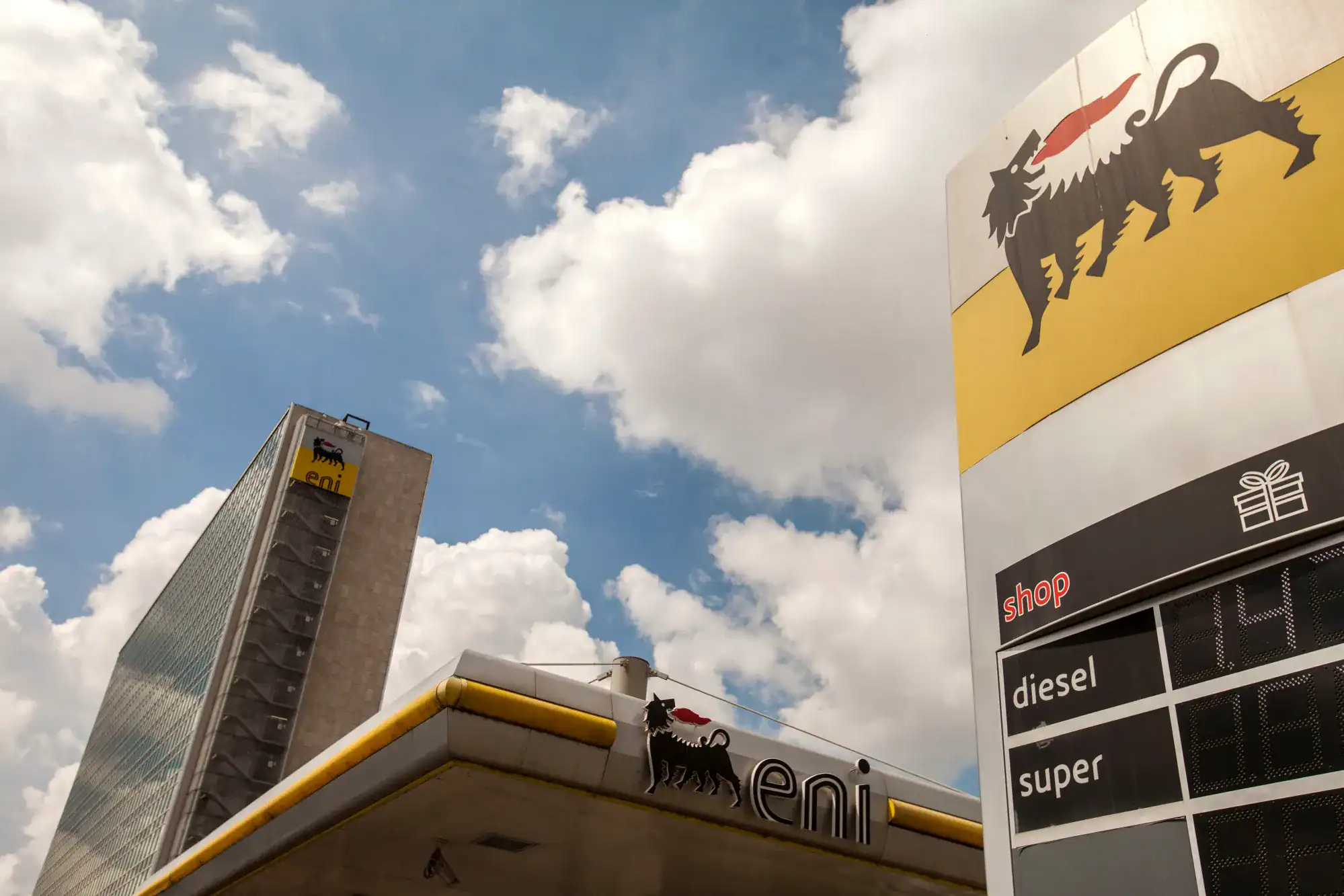
Junin-5 itself sits within the Faja Petrolifera del Orinoco (Orinoco Heavy Oil Belt), a region historically managed via PetroJunin (the PDVSA-Eni joint venture). Under the Maduro framework, PDVSA held majority participation in the venture. Under the new Hydrocarbons Law approved February 1 by the Venezuelan National Assembly, direct PDVSA-private contracts are now permissible without forced joint-venture creation, providing structural flexibility for the Junin-5 development.
The Parallel US Audit Framework
US Treasury contracted a consultancy Tuesday to audit Venezuelan oil revenues abroad. The audit covers monetary operations, asset management abroad, and FX mechanisms. The framework is explicitly designed to build international confidence and certify transparency in public-fund use, particularly given the multi-decade history of Venezuelan oil revenues being misappropriated through opaque mechanisms during the Chavez-Maduro period.
The audit framework is part of restoring Venezuela’s relationships with multilateral organizations including the IMF and Federal Reserve. Without verified oil-revenue accounting, Venezuela cannot rebuild credit relationships with international financial institutions or attract significant non-oil-sector foreign investment. The Treasury audit is therefore structurally consequential beyond the immediate transparency objective.
The Venezuelan Petroleum Chamber (CPV) revealed that less than 30 percent of Venezuelan oil wells are currently active. The structural challenge: rebuilding production capacity from approximately 1 million barrels per day (current) toward the 1.3 million bpd 2026 target, ultimately aiming for 2-3 million bpd over 5-10 years — the production levels Venezuela achieved in the early 2000s before the Chavismo decline.
The Broader Venezuela Oil Reopening
Chevron’s Venezuelan crude exports tripled from 100,000 bpd in December 2025 to 300,000 bpd in March 2026. April 15: Chevron raised its Petroindependencia joint-venture stake from 35.8 percent to 49 percent. April 16: Repsol regained operational control of Petroquiriquire (currently 45,000 bpd, targeting 135,000 bpd in 3 years).
“This underscores our commitment in Venezuela since 1993,” Repsol Exploration and Production Director Francisco Gea said about the Petroquiriquire restart. The European energy-major continuity is structurally important — Eni and Repsol both maintained Venezuelan operations through the Maduro-era sanctions regime, providing institutional knowledge and operational infrastructure that Western newcomers would need years to develop.
Dozens of drill rigs stored in eastern Venezuela fields and Lake Maracaibo are being transported to Trinidad and Guyana shipyards for inspection. Eni-Repsol-Chevron operational ramp-up implies tens of rigs reactivating across the rest of 2026. PDVSA’s 1.3 million bpd 2026 target requires sustained execution; the multi-year recovery toward 2-3 million bpd requires substantial capital deployment that only a fully-normalized investment environment can support.
What This Means for Energy Investors
For Eni shareholders (BIT:ENI, NYSE:E), the Junin-5 contract adds significant medium-term reserves replacement at favorable economics. Venezuelan crude operates at structurally attractive cost positions when production infrastructure functions. The 35-billion-barrel reserves base provides multi-decade development potential supporting Eni’s reserves-base strategy through 2040.
For Chevron and Repsol shareholders, parallel Venezuelan operations expansion adds incremental upstream production at a time when major-oil-company production growth is structurally constrained by ESG-investment limits and reserve-replacement challenges. Venezuelan reserves represent one of the largest available greenfield-equivalent opportunities globally.
For Latin American energy investors more broadly, Venezuelan production restoration introduces structural supply implications — Brazilian Petrobras and Argentine YPF face medium-term competitive pressure from rising Venezuelan output through 2027-2030, with the Mexican Pemex and Colombian Ecopetrol facing similar dynamics. Combined with the Iran-Hormuz war’s elevated oil-price environment, the Venezuelan-recovery framework creates complex sector dynamics — supportive for European energy majors with Venezuelan exposure (Eni, Repsol), neutral-to-negative for Latin American national oil champions through 2030. The Tuesday Eni Junin-5 deal accelerates the structural transition toward a normalized hemispheric oil-supply framework.
More: Latin America news in English, every day from The Rio Times.
This article was produced by The Rio Times’ automated newsroom system. How we use AI · Report an error · Editorial responsibility: Matthias Camenzind, Editor-in-Chief