Bolivia’s Political Turmoil Escalates as Government Considers Military Intervention
The Bolivian government faces a critical decision as roadblocks in Cochabamba persist. Supporters of former President Evo Morales have intensified their resistance, using weapons to maintain blockades. This situation has prompted authorities to consider military intervention to clear the roads.
Minister of Government Eduardo del Castillo addressed the issue in a press conference. He stated that the government might deploy armed forces to clear the roads. This decision will be evaluated by departmental commanders in the coming hours.
The blockades have significantly impacted Bolivia’s economy and daily life. Essential goods and fuel cannot reach their destinations, causing shortages and price hikes. The government estimates losses exceeding $1.5 billion due to these disruptions.
Del Castillo criticized the protesters’ use of firearms against law enforcement. He argued that this escalation necessitates a stronger response from the government. The minister emphasized the need to protect police officers and restore order.
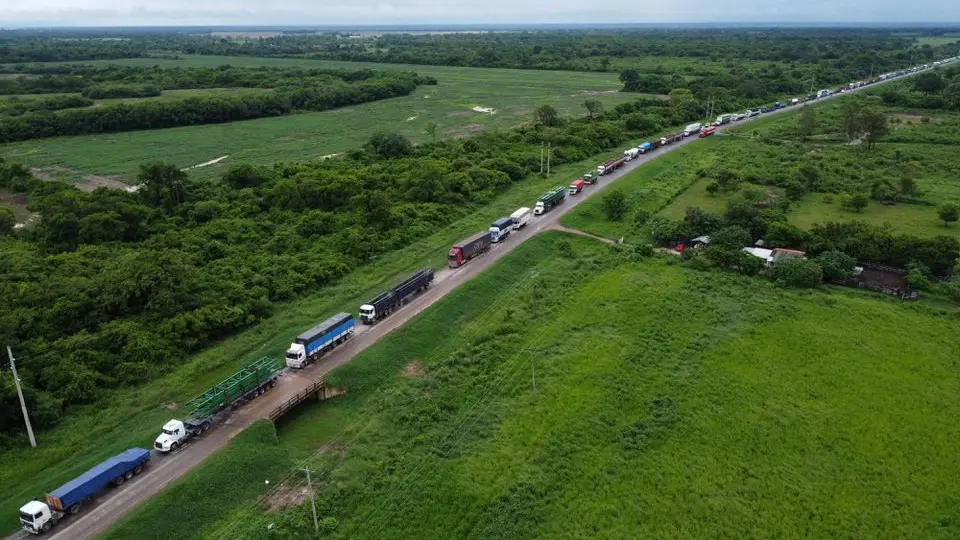
The blockades are concentrated in 24 locations within Cochabamba. They have effectively halted the transportation of vital supplies across the region. This has led to widespread economic consequences for producers and merchants.
Various business and political sectors view military intervention as a necessary step. They argue it’s crucial to restore freedom of movement throughout the country. However, this approach raises concerns about potential escalation of conflict.
Bolivia’s Political Turmoil Escalates as Government Considers Military Intervention
The government faces a delicate balancing act. It must weigh the economic impact of the blockades against the risks of forceful intervention. The situation highlights the ongoing political tensions in Bolivia since Morales’ departure in 2019.
As the crisis unfolds, the international community watches closely. The government’s decision will have significant implications for Bolivia’s stability and economic recovery. It also tests the country’s ability to resolve internal conflicts peacefully.
Bolivia’s Economic Dream Crumbles: The Perils of Unsustainable Policies
The current situation stems from a deep-rooted political divide within Bolivia’s ruling party. Evo Morales, who served as president from 2006 to 2019, is locked in a power struggle with current President Luis Arce. This conflict has intensified as Bolivia approaches the 2025 elections, with Morales facing legal challenges that could prevent his candidacy.
Morales faced a harrowing ordeal on Sunday. He claims the current government tried to kill him. He shared a video showing bullet holes in his car’s windshield. Morales’ supporters have been blocking roads for weeks. They’re backing him in his legal troubles. The blockades have disrupted food and fuel deliveries across the country.
More: Bolivia news in English, every day from The Rio Times.
This article was produced by The Rio Times’ automated newsroom system. How we use AI · Report an error
Read More from The Rio Times